Compartilhar
Education: The Bedrock of Eritrea’s Development and Social Justice
(Paraphrased from interview with Dr. Halima Mohammed, Minister of Education)
As the nation celebrates the 35th anniversary of its independence, Eritrea renews its focus on one of its most vital sectors: education. Regarded as far more than a mere social service, education is recognized as a fundamental human right and the primary engine of national development and social justice.
The government’s firm conviction that a nation’s greatest asset is its people draws deep inspiration from the history of the liberation struggle. Long before independence, the Eritrean People’s Liberation Front (EPLF) understood that education was indispensable to the people’s emancipation and active participation in the struggle for self-determination. This far-sighted vision led to the establishment of schools and literacy campaigns in the rear bases.
In a recent extensive interview, Dr. Halima Mohammed, Minister of Education, underlined that the state’s educational policy is designed to deliver quality education equally and equitably across all corners of the country. She stressed that the most fundamental policy of education in Eritrea is tied to the realization of social justice. During the colonial era, educational opportunities were heavily skewed toward urban centers, leaving vast peripheral regions neglected. Since independence, the Government has worked relentlessly to reverse this historical imbalance by expanding access to even the most remote corners of the country. In Eritrea’s diverse, multi-ethnic society, education serves as a vital bridge, narrowing regional gaps and fostering a shared national identity.
The Ministry of Education’s vision is to produce all-round citizens with a firm commitment to their country, people, and the ideals of social justice. It aims to develop creative and productive individuals who can contribute to the building of a modern, competitive, harmonious, and self-reliant Eritrea.
Its mission focuses on improving educational outcomes through access to high-quality schools, programs, and resources; promoting equity regardless of gender, socioeconomic status, region, or ethnicity; enhancing teacher quality through continuous professional development; ensuring that curricula remain relevant and aligned with national standards; supporting students’ holistic growth via extracurricular activities, sports, and life skills programs; and encouraging lifelong learning to prepare citizens for a rapidly changing world. The Ministry collaborates closely with parents, communities, other government bodies, and international partners to make the education system responsive to societal needs.
The Ministry operates through a robust organizational structure that cascades from the central headquarters in Asmara to regional educational offices, Sub-zonal branches, and individual schools. This arrangement ensures that even the smallest schools in remote areas remain fully integrated into the national framework. Key departments — including General Education, Research and Human Resource Development, Technical and Vocational Education and Training, Adult Education and Media, Finance and Administration, and Special Needs Education — work closely to effectively implement national policies.
The guiding principles of Eritrea’s educational policies affirm that education is a fundamental human right, a lifelong process for citizen empowerment, and the key to national development and improved living standards. Special attention is given to women, girls, and marginalized groups. Mother-tongue instruction is used at the primary level in all nine Eritrean languages, followed by English. The country maintains a unified national curriculum with a strong emphasis on science, technology, and ICT. The four strategic objectives remain Access, Equity, Relevance, and Quality.
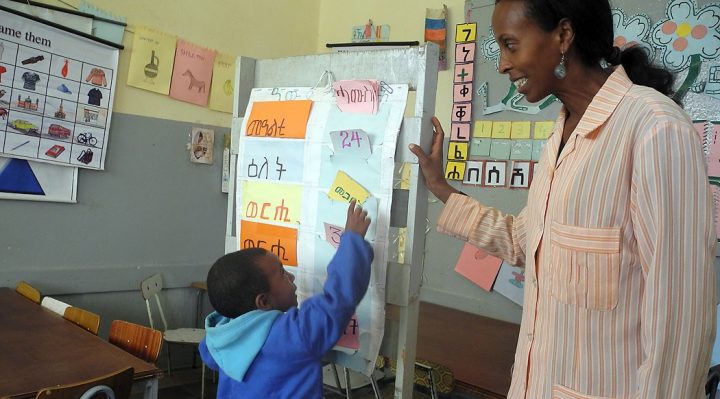
At the foundation lies pre-school education, which seeks to create conditions for all children to receive early schooling. Although national participation currently falls short of satisfactory, the Ministry has taken determined steps to bridge this gap by recruiting and training around 3,000 new teachers to expand services into rural and lowland regions last year.
Basic education, covering Grades 1 to 8, is free and compulsory. It aims to ensure students’ progress in line with their age while systematically eliminating regional and gender inequalities. A defining feature of this stage is the pioneering policy of compulsory mother-tongue instruction in all nine national languages. This major undertaking required training specialized teachers and publishing textbooks in multiple languages. This policy removes language barriers and reinforces national unity. Despite progress, quality challenges remain evident.
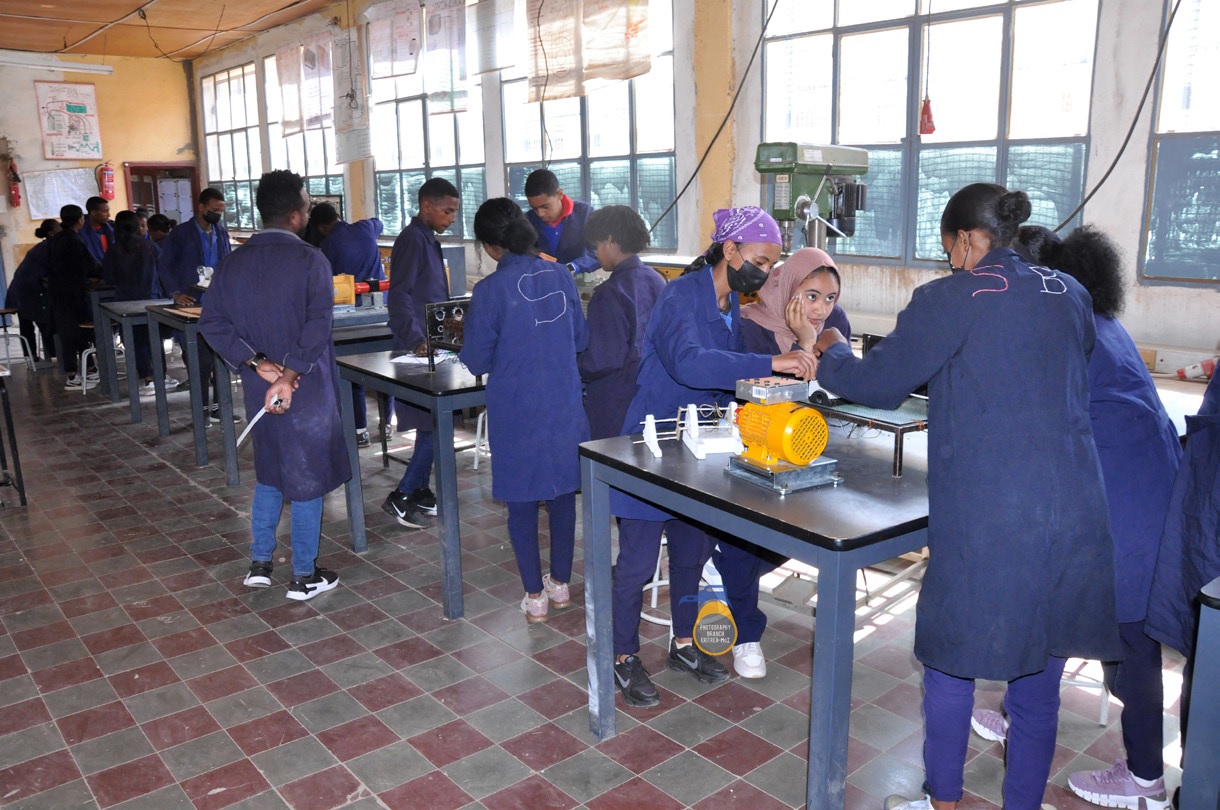
Technical and vocational education and training (TVET) addresses this gap by equipping learners with practical skills for self-sufficiency and immediate contribution to the national economy. Students usually join after Grade 10 for intensive two-year programs that incorporate industrial attachments and apprenticeships. Nine dedicated vocational schools are currently available. Although demand is very high, capacity remains limited due to the substantial investment required. Graduates from these centers are highly competent and readily absorbed into the workforce. Expansion of TVET remains a major priority for the future.
Adult and non-formal education has recorded remarkable success. Through sustained literacy campaigns and collaborative efforts involving the Ministry of Defense, the National Union of Eritrean Women (NUEW), the National Union of Eritrean Youth and Students (NUEYS), and other partners, the national literacy rate has risen to approximately 89 percent. Complementary Elementary Education (CEE) crash programs enable out-of-school children to complete five grades in three years. Radio Bana, the Ministry’s dedicated educational radio program, broadcasts programs in multiple languages to reach remote and nomadic communities. Recent initiatives include English language programs developed in cooperation with the Ministry of Information, while plans for television-based education are advancing.
Higher education is steadily expanding through the establishment of additional colleges to build the professional and technical capacity needed for national development and economic growth. Special Needs and Inclusive Education continues to receive greater attention. At the same time, Information and Communication Technology (ICT) is being integrated both as a subject and as a tool for teaching, learning, and administration.
Significant achievements have been recorded over the past 35 years. The student population has grown from approximately 200,000 at independence to around 800,000 today. Schools have been constructed across the country, national curricula have been developed in all Eritrean languages, and ongoing efforts are being made to strengthen the teaching force by creating opportunities to enhance their qualifications.
Nevertheless, important challenges persist. To address these challenges, the Ministry is focusing on expanding access, particularly in lowland and remote areas; reforming curricula to strengthen vocational pathways; improving teacher recruitment, training, and working conditions; decentralizing operations; strengthening research and evidence-based planning; modernizing schools with ICT, virtual labs, and digital libraries; and enhancing parental and community involvement. Greater investment in boarding facilities, laboratories, and teaching materials is also underway.
Other critical areas receiving attention include strengthening research activities, further decentralizing decision-making, timely budget allocation, continuous professional development for teachers and staff, and combating administrative inefficiencies.
As Eritrea marks 35 years of independence, its education system reflects both impressive progress and a clear determination to overcome remaining obstacles. The experience accumulated and the foundation built during these decades provide renewed hope and confidence. With sustained commitment, increased investment, and focused reforms, education will continue to serve as the very soul of the nation’s march toward social justice, harmony, and self-reliance.
Fonte: Shabait