Compartilhar
International Day of Plant Health Observed at National and International Levels
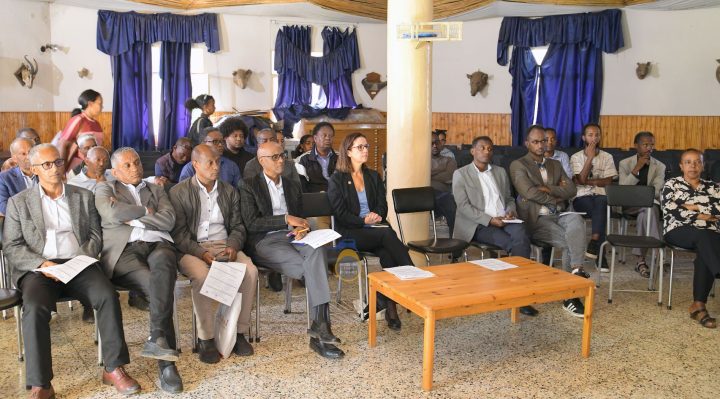
Asmara, 13 May 2026 – International Day of Plant Health, observed annually on 12 May, is being commemorated at national and international levels under the theme “Plant Biosecurity for Food Security.” Since its inception in 2022, this year marks the fifth celebration of the Day in Eritrea and around the world.
The observance provides an important opportunity to raise awareness about the critical role plant health plays in ensuring food security and economic stability. By highlighting the threats posed by pests and diseases, it also reminds us of the need to take proactive measures, including surveillance, research, and the adoption of sustainable agricultural practices.
Plant biosecurity focuses on preventing the introduction, establishment, and spread of pests and diseases that can reduce crop yields and ultimately diminish ability to feed a growing population, thereby affecting livelihoods and economic stability. Food security, on the other hand, means ensuring that all people have access at all times to sufficient, safe, and nutritious food.
Given that plants constitute 80% of human food consumption and produce 98% of the oxygen we breathe, the theme “Plant Biosecurity for Food Security” clearly underscores the fact that plant biosecurity is not only the foundation of food security but also essential to sustaining life on Earth. The concept of plant biosecurity and food security, therefore, carries immense strategic importance.
Eritrean agriculture relies heavily on crop production, including field crops and horticultural crops. The introduction of new pests and diseases can have devastating effects on national food security and the livelihoods of farmers. To prevent such introductions, it is essential to establish effective quarantine legal frameworks and appropriate phytosanitary measures.
In this regard, Plant Quarantine Proclamation No. 156/2006 is currently in force. Appropriate phytosanitary measures are being implemented to inspect imported plants and plant products at ports of entry. The International Plant Protection Convention, to which Eritrea is a party, has developed 48 International Standards for Phytosanitary Measures to assist member countries in trading pest- and disease-free plants and plant products. In addition to national regulations and standards, Eritrea benefits significantly from these international standards.
To strengthen quarantine control, Eritrea currently operates four quarantine stations: Asmara International Airport, Massawa and Assab seaports, and the Tesseney land port. Human and infrastructural capacities at these stations are being continuously enhanced. Surveillance activities, early detection systems utilizing rapid diagnostic tools, farmer training, and collaborative monitoring are also being strengthened to ensure plant biosecurity.
It is important to note that the theme “Plant Biosecurity for Food Security” aligns closely with the Ministry of Agriculture’s 2024–2028 strategy, which is being implemented under the strategic objective: “Safe and Nutritious Food for Everyone, Everywhere.” Achieving this objective depends heavily on maintaining healthy plant systems, which directly influence both crop yields and the nutritional quality of food.
Recognizing the vital role of plant health in building healthy food systems, the Ministry of Agriculture is making every effort to prevent the introduction of exotic pests and diseases while strengthening routine pest and disease control activities. Particular attention is being given to the management of major pest outbreaks, such as desert locusts and fall armyworm.
To maximize the contribution of plant biosecurity to food security, it is also essential to consider additional factors, including climate change, which is occurring at an unprecedented rate and creating environmental conditions favorable to the emergence and spread of new pests and diseases. This presents new challenges to research institutions such as the National Agricultural Research Institute of the Ministry of Agriculture, which is tasked with developing crop varieties resistant to major diseases and pests. Strengthening the capacity of regulators, extension workers, farmers, and laboratory personnel through training on plant biosecurity is critical to enhancing prevention, detection, and response efforts.
Underlining that the International Day of Plant Health is not merely a commemorative event, the Ministry of Agriculture said that it is an opportunity to reaffirm collective commitment to safeguarding plant health as the foundation of safe and nutritious food security, resilience, and a prosperous national future.
Fonte: Shabait