Compartilhar
Eritrea: the Long Road to Independence
Introductory note: Eritrea, strategically positioned along the Red Sea in the volatile Horn of Africa, is a country shaped by resilience, sacrifice, and an unrelenting struggle for self-determination. With its long, unspoiled coastline and deep historical roots stretching back to the dawn of humanity, the nation occupies a unique place in both African and world history. Yet Eritrea’s modern story has been defined above all by decades of foreign efforts at domination, political betrayal, and one of the longest liberation wars on the African continent. As Eritreans worldwide celebrate the 35th anniversary of independence, this three-part series revisits the historical forces, international interventions, and popular resistance that forged the Eritrean nation
* * *
To understand Eritrea’s modern struggle for sovereignty and identity, one must first appreciate the country’s far deeper historical significance. This history stretches back to the very beginnings of human civilization.
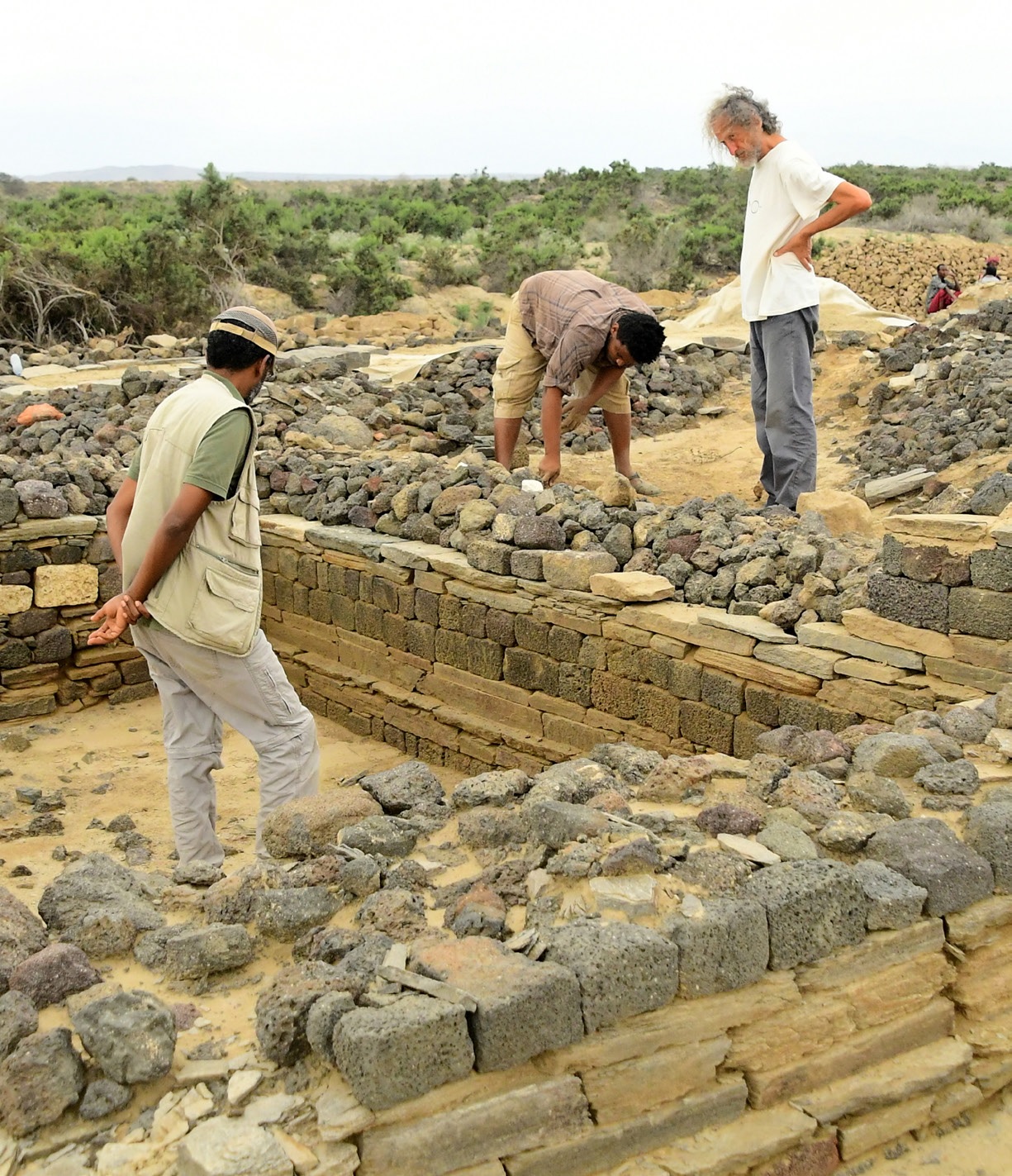
Archaeological discoveries in Eritrea’s Danakil Depression – particularly in Buya – have uncovered hominid remains estimated to be between 1.5 and 2 million years old, placing the region among the earliest known centers of human existence. Across the country, prehistoric sites containing rock art, stone tools, and ancient artifacts testify to a long and continuous human presence. At the same time, evidence of early farming and animal domestication dates back to roughly 5000 BCE.
Many historians and archaeologists have also identified Eritrea as the most likely location of the ancient Land of Punt, the prosperous trading partner frequently referenced in Egyptian records. This connection further underscores the region’s significance in the development of early civilization and long-distance trade networks.
Yet Eritrea’s strategic location and economic importance also made it a frequent target for outside powers long before the colonial era. Different parts of present-day Eritrea experienced periodic invasions and occupations by regional empires and foreign rulers. Egyptian and Ottoman authorities controlled coastal centers such as Massawa and sections of the lowlands at various times. At the same time, neighboring monarchs, feudal chiefs, and rival armies launched repeated incursions into the territory. These occupations were often temporary and met with determined resistance from local populations.
These repeated foreign incursions eventually gave way to full-scale European colonialism. Toward the end of the nineteenth century, Italy began seizing territory along the Eritrean coast, then steadily expanding inland in pursuit of a settler-colonial project. Backed quietly by Britain, which viewed Italian expansion as useful in countering French influence in the region, Italy officially proclaimed Eritrea its “colonia primogenita” — or first-born colony — on January 1, 1890. Massawa initially served as the capital before the role was transferred to Asmara in 1897, where it remains today.
For the next half-century, Eritrea remained under Italian colonial rule. Eritreans endured land confiscations, racial segregation, forced labor, political repression, and systematic discrimination under a rigid colonial order. Educational opportunities for Eritreans were deliberately restricted and designed largely to produce a subordinate labor force that served colonial interests. Many sections of Asmara were inaccessible to Eritreans, while apartheid-style policies governed much of daily life.
At the same time, the colonial era transformed Eritrea’s physical infrastructure and economy. The period saw the construction of roads, railways, ports, airports, hospitals, factories, and communication systems, making Eritrea one of the most industrialized territories in Africa. The Teleferica Massawa- Asmara, a 75-kilometer aerial tramway connecting the coast to the highlands, was once the world’s longest cableway.
Writing in 2006, Eritrean scholar Rahel Almedom observed that when the British took control of Eritrea after Italy’s defeat, they inherited “a thriving local economy.” Brigadier Stephen H. Longrigg, who served as chief administrator of the British Military Administration between 1942 and 1944, similarly described Eritrea as “highly developed,” noting that it possessed “superb roads, a railway, airports, a European city as its capital, [and] public services up to European standards.”
Other foreign observers also remarked on Eritrea’s level of development during the period. Asmara was regarded as one of the most modern and progressive cities across the region, while Massawa possessed one of the finest harbors between Alexandria and Cape Town. Elsewhere, cities such as Tessenei emerged as important transportation and commercial hubs, while Dekemhare — south of Asmara — became known for its concentration of factories and industrial activity, earning labels such as “zona industria” and “secondo Milano.”
Beyond infrastructure and industrialization, the colonial era also played a major role in shaping the foundations of the modern Eritrean state. Despite the brutality and exploitation that accompanied colonialism, the period contributed to the emergence of shared political institutions, common historical experiences, and a distinct national consciousness among Eritrea’s diverse communities.
In April 1941, following the decisive British-led victory over Italian forces at the Battle of Keren, Eritrea was placed under British Military Administration. During the war, British officials had promised Eritreans independence in exchange for assistance against Italy, but these pledges were quickly abandoned once victory was secured. British propaganda openly encouraged Eritrean nationalism, declaring: “Eritreans! You deserve to have a flag! This is the honorable life for the Eritrean: to have the guts to call his people a Nation.” In the end, however, such promises proved empty.
Instead of duly paving the way for Eritrea’s independence, the British dismantled and sold large portions of the country’s industrial infrastructure for profit. The prominent British activist Sylvia Pankhurst condemned the plunder as “a disgrace to British civilization.” At the same time, the British administration deliberately deepened social and political divisions inside Eritrea, seeking to portray the country as too fragmented and economically weak to survive as an independent state. British officials explored plans to partition Eritrea between the Anglo-Egyptian Sudan and the imperial Ethiopian Empire.
At the same time, Ethiopia aggressively advanced similar arguments. Ethiopian representatives insisted that Eritrea lacked the economic and political viability necessary for independence. In a speech delivered to the United Nations in 1947, Aklilu Habtewold argued that Eritrea “could not live by itself.” The United States, increasingly preoccupied with Cold War rivalries and strategic influence in the Red Sea region, echoed many of these claims.
In reality, however, Eritrea’s infrastructure, industrial capacity, and strategic location were precisely what made the territory so valuable to outside powers.
On September 20, 1949, the United Nations General Assembly sent a commission to examine Eritrea’s political future. The commission found that the overwhelming majority of Eritreans favored independence. Pakistani delegate Sir Muhammad Zafrulla Khan warned that forcing Eritrea into union against the wishes of its people would create lasting instability, stating that denying Eritreans their “elementary right to independence” would “sow the seeds of discord.”
Despite these findings, geopolitical interests prevailed. On December 2, 1950, the UN adopted Resolution 390 (V), federating Eritrea with Ethiopia under the Ethiopian crown. Strongly backed by the United States, the decision subordinated Eritrean self-determination to Cold War strategic calculations. In words that are still bitterly etched into the hearts of Eritreans everywhere, US Secretary of State John Foster Dulles bluntly summarized Washington’s position:
“From the point of justice, the opinions of the Eritrean people must receive consideration. Nevertheless, the strategic interest of the United States in the Red Sea basin and considerations of security and world peace make it necessary that the country be linked with our ally, Ethiopia.”
Thus, unlike other former Italian colonies that achieved independence following the Second World War, Eritrea was denied the right to determine its own future. Only days after the UN decision, Emperor Haile Selassie declared a national celebration marking the illicit incorporation of Eritrea to Ethiopia and personally thanked the United States for its decisive support.
In return, Washington secured major military advantages in the region. On May 22, 1953, Ethiopia granted the United States permission to establish military installations in Eritrea, including Kagnew Station in Asmara, which would become one of the largest American intelligence and communications facilities outside the United States. Additional agreements soon followed, bringing extensive American military assistance and training to Ethiopia.
Under the United Nations-mandated federal arrangement, Eritrea was supposed to retain full and unencumbered autonomy over its internal affairs through its own legislative, judicial, and executive institutions. In practice, however, the Ethiopian monarchy steadily dismantled the “Federal Arrangement” from the outset. Eritrea’s autonomous status was systematically eroded, its institutions weakened, and constitutional guarantees ignored. Finally, Ethiopia abrogated the Federal Act and annexed Eritrea in November 1962 with impunity. These escalating violations would ultimately ignite one of Africa’s longest and bloodiest wars for national liberation.
Fonte: Shabait