Compartilhar
Youth empowerment program transforms lives in informal settlements
An empowerment programme spearheaded by Youth for a Sustainable World (YSW), continues to transform the lives of hundreds of underprivileged young people at the grassroots level, who otherwise would have been left without opportunities for growth and development.
The YSW organisation has empowered many young people with entrepreneurship and vocational skills, preparing them to start life-changing businesses, within informal settlements.
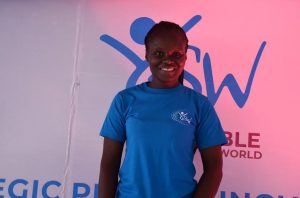
Speaking to media during an interview, Peer Educator at Youth for a Sustainable World, Maurine Jumah, said the Organisation has been conducting awareness programmes on Sexual and Reproductive Health Rights (SRHR), HIV prevention, drug and substance abuse, and life skills targeting young people aged between 18 and 24 years.
These initiatives are aimed at reducing unemployment and crime among youth living in areas such as Mukuru Kwa Njenga by expanding access to finance, linking young people to jobs and markets, supporting youth-led enterprises, and addressing the intersection of economic inequality with sexual and reproductive health rights (SRHR) and gender inequality.
To ensure the success of the initiatives, the Organisation unveiled an ambitious five-year Strategic Plan aimed at transforming the lives of young people by expanding access to sexual and reproductive health services and promoting gender equality, youth leadership, and economic empowerment.
The 2026–2030 Plan strategically positions young people at the centre as drivers of social change, sustainable development, and inclusive growth.
The locally led, youth-centred feminist organisation works with adolescents and young people aged between 10 and 24 years across at least 17 counties.
She said most young people within this age bracket face numerous challenges that require greater attention and support, to help them achieve their dreams.
According to Maurine, one of the major breakthroughs of the initiative was implementing the Vijana Vuka na Afya project programme, which involved boys within the informal settlement, something she described as a first in the community.
“For us in Mukuru Kwa Njenga, incorporating boys into the project was the first time such a programme was being done,” said Maurine.
“It has changed the lives of many boys because they are now actively involved in productive activities.”
She explained that through the project, young men have been trained in entrepreneurship, photography, filmmaking, and other vocational skills, enabling many of them to start businesses and earn livelihoods independently.
“Some of the boys have opened businesses, others are now doing photography and film after receiving vocational training through the Vijana Vuka na Afya project under YSW,” she added.
Maurine noted that before the intervention, many young men in the area struggled with unemployment as they idled around, therefore, exposing them to criminal activities and drug abuse.
“In the past, many boys were idle in the community, and some ended-up engaging in crime. But now they are working and using the skills they acquired through the training,” she said.
She identified unemployment as one of the biggest challenges facing youth in the community, saying the Organisation is helping bridge the gap by connecting young people to training opportunities that improve their employability and self-reliance.
“Through YSW, we bring them together for entrepreneurship and vocational training so they can acquire skills and market themselves,” she said.
Jumah explained that beneficiaries are recruited through referral pathways involving youth groups, community-based organisations (CBOs), and local youth officers who identify vulnerable young people in need of support.
The peer educator said YSW also works closely with grassroots organisations and youth-led CBOs to create platforms where young people can showcase their work, share experiences, and inspire others within their communities.
“These CBOs help us reach young people at the grassroots level. They also provide platforms where youth can showcase what they are doing back in their communities,” she said.
She expressed optimism that the continued empowerment of young people through skills training and mentorship, would help build safer and more economically stable communities in the future.
“We want a secure community where young people are working and building their lives instead of engaging in crime,” she said.
Following the launch of the 5-year plan, the Organisation targets to expand youth-friendly sexual and reproductive health rights (SRHR) information and services, promoting youth enterprise and market systems development.
The Plan also intends to advance gender equality and young women’s empowerment by youth participation in development policy and strengthening institutional resilience and sustainability.
Through the Strategy, YSW seeks to also improve health outcomes for adolescents and young people, support youth-led enterprises, promote women’s rights, and create opportunities for meaningful youth engagement in governance and decision-making processes across the country.
By Ian Chepkuto
Fonte: Kenya News