Compartilhar
Avoid preventable blindness – invest in eye care, Experts

Eye health experts have today called for increased investment in eye care services, warning that about 700,000 people are currently awaiting cataract surgery, with preventable blindness continuing to undermine livelihoods and economic productivity.
Cataract remains the leading cause of blindness in Kenya, disproportionately affecting older people and rural communities. Experts further note that for every one person who receives cataract surgery, an estimated four others remain without access to the procedure.
Although the country has reduced blindness prevalence by nearly half over the past three decades, access to essential eye care remains limited for millions.
Speaking during a press briefing ahead of an international eye health conference in Nairobi, Acting Head of the Eye Health Section at the Ministry of Health, Dr. Monica Bitok, said Kenya is working toward achieving WHO targets on cataract surgery and refractive error coverage by 2030.
She noted that effective cataract surgical coverage stands at 27 percent, while refractive error coverage is about seven percent, while the national surgical rate remains at 800 surgeries per million people annually, below the WHO recommendation of 2,000.
Dr. Bitok said refractive errors affect an estimated 9.6 million Kenyans, yet only seven percent have access to corrective spectacles, and all this is because of barriers that include high costs, shortage of optometrists in public hospitals, and stigma around wearing glasses.
“Although Kenya has trained about 800 optometrists, only 17 are currently in public service,” she said.
She, however, noted that Kenya has reduced blindness prevalence from 0.7 percent in 1990 to 0.37 percent in 2023 through joint efforts by the government and partners but emphasized that about 30 percent of Kenyans still require eye health services.
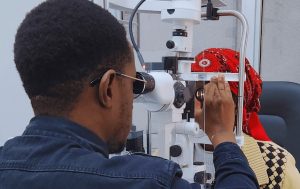
The Ministry priorities include expanding workforce capacity, strengthening referral systems, increasing access to affordable spectacles, and adopting technologies such as teleophthalmology and Artificial Intelligence, Dr. Bitok said
Fred Hollows Foundation Country Director Peter Milo said the scale of avoidable blindness in Kenya demands urgent and coordinated action from the government, development partners, and County Administrations.
Milo described the situation as both a health and socio-economic challenge. “A simple surgery that takes about 30 minutes can completely transform someone’s life and unlock them from poverty,” he said.
He explained that investing in eye care generates an estimated 28 US dollars in economic benefit through improved productivity and reduced poverty.
Milo added that an estimated investment of 25 million US dollars between 2026 and 2030 could generate more than 265 million US dollars in economic returns for Kenya.
“Eye care is no longer just a clinical issue. It is a socio-economic agenda that directly affects productivity, learning, and national development,” he said.
The upcoming conference, dubbed ‘the 2030 Insight Live International Conference’, to be held next week, is the first to be held in Africa and is expected to bring together nearly 500 delegates from around the world, including policymakers, health practitioners, development agencies, and private sector players, to discuss innovations and partnerships aimed at eliminating avoidable blindness.
Milo underscored the importance of county governments, saying they play a central role in delivering eye care services through county referral and Sub-county hospitals, particularly in conducting surgeries and creating public awareness.
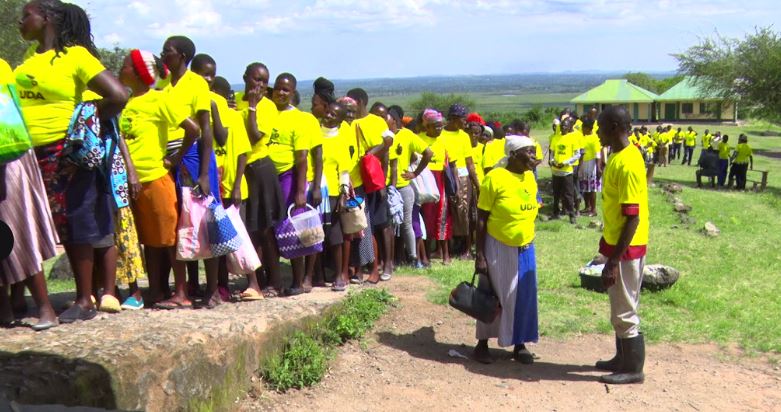
Operation Eyesight Universal Country Director in Kenya, Caroline Ikumu, highlighted community-based screening efforts using Community Health Promoters and mobile technology to expand early detection and treatment
“We have been using mobile technology like the Peek Vision app. and trained teachers and community health promoters to screen students and residents at large scale for impact and reach,” she said.
Kenya aims to raise effective coverage for refractive errors by 40 percent and drastically reduce preventable sight loss by 2030.
Aligned with the Kenya Universal Health Coverage Policy, the Ministry of Health (MoH) is executing long-term eye health strategies through various programmes.
By Wangari Ndirangu
Fonte: Kenya News