Compartilhar
ODPP sensitizes public on plea bargaining and diversion policies
The Office of the Director of Public Prosecutions (ODPP) has intensified public sensitization on alternative justice mechanisms, including plea bargaining and diversion, as part of efforts to enhance access to justice, reduce court case backlogs and promote harmony within communities.
Speaking during the Community Dialogue Forum themed ‘Chapa Gumzo na Prosecutor’ held at the Catholic University of Eastern Africa (CUEA), Eldoret, Uasin Gishu County, Director of Public Prosecutions (DPP) Renson Ingonga said justice should not only focus on punishment but also on restoring peace and strengthening coexistence within communities.
Ingonga noted that many Kenyans still believe justice can only be achieved through lengthy criminal trials, yet the law provides alternative mechanisms such as reconciliation, mediation, diversion and plea bargaining in suitable cases.
“Justice is not only about punishment or imprisonment. True justice should also restore peace within the community,” said the DPP.
He explained that many disputes involve neighbours, relatives, or friends who must continue living together even after a conflict is resolved, making reconciliation an important component of justice delivery.
The DPP said some disputes can be resolved through dialogue and compensation instead of prolonged court proceedings.
“If an offender accepts responsibility and compensates the victim, reconciliation can help restore harmony and prevent future conflict within the community,” he added.
The DPP clarified that when prosecutors or magistrates encourage parties to seek amicable solutions, the public should not misconstrue the process as corruption or bribery, noting that such mechanisms are anchored in law.
At the same time, Ingonga emphasized that not all offences qualify for out-of-court settlement, citing sexual offences involving children, terrorism, and other serious crimes as matters that must proceed through the formal justice system.
Ingonga reaffirmed the constitutional mandate of the ODPP, noting that Article 157 guarantees the independence of the prosecution service while Articles 10, 48 and 50 underscore national values, access to justice and the right to a fair hearing for every Kenyan.
Ingonga further observed that justice cannot be discussed without addressing the painful reality of Gender-Based Violence (GBV), noting that sexual offences, domestic violence and intimate-partner abuse continue to devastate families and communities, contributing to rising femicide and GBV cases nationwide.
“The law must speak firmly and compassionately for survivors,” he stated, underscoring that the Constitution of Kenya, the Sexual Offences Act (2006), the Children Act (2022), and the Protection Against Domestic Violence Act (2015) provide vital safeguards for survivors.
Senior Deputy Director of Public Prosecutions Vincent Monda said the main objective of the engagement forum was to educate wananchi on the legal frameworks governing plea bargaining and diversion.
“These are lawful policies that complement the criminal justice system. They are not meant to release offenders without accountability but rather to ensure justice is delivered efficiently while reducing backlog within the courts,” said Monda.
He added that the ODPP’s sensitisation campaign seeks to help the public understand that diversion and plea agreements are not secret deals between prosecutors and accused persons but legal processes intended to strengthen justice delivery.
Monda further said that the policies also help decongest remand prisons while promoting reconciliation and social harmony within communities.
The ODPP Rift Valley Regional Coordinator Tommy Imbali revealed that prison congestion informed the need for enhanced use of plea bargaining and diversion policies.
Imbali said Nakuru Prison, which was designed to accommodate about 800 inmates, had at one point housed more than 1,800 prisoners, prompting stakeholders in the justice sector to explore lawful alternatives aimed at easing congestion.
“The main aim of decongesting prisons is not to release offenders but to use lawful mechanisms such as plea bargaining and diversion to expedite justice while ensuring accountability,” said Imbali.
He explained that the ODPP worked closely with the Judiciary, Probation Department, Police Service, and prison authorities to implement plea bargaining and diversion mechanisms while ensuring justice is upheld.
Imbali added that accused persons benefiting from the process must voluntarily accept responsibility for offences committed before the ODPP considers their cases for diversion or negotiated plea agreements.
He disclosed that during the prison decongestion exercise, more than 250 cases were reviewed, with about 150 accused persons expressing willingness to enter plea agreements.
On her part, Caroline Kiarie from the International Justice Mission (IJM) reaffirmed the organisation’s partnership with the ODPP and other justice sector agencies in strengthening access to justice.
“The work that we do is aimed at strengthening the justice system so that it serves wananchi the way it was intended to,” said Kiarie.
She noted that while investigation, prosecution and adjudication remain the responsibility of government institutions, civil society organisations play an important supportive role through capacity-building and public engagement initiatives.
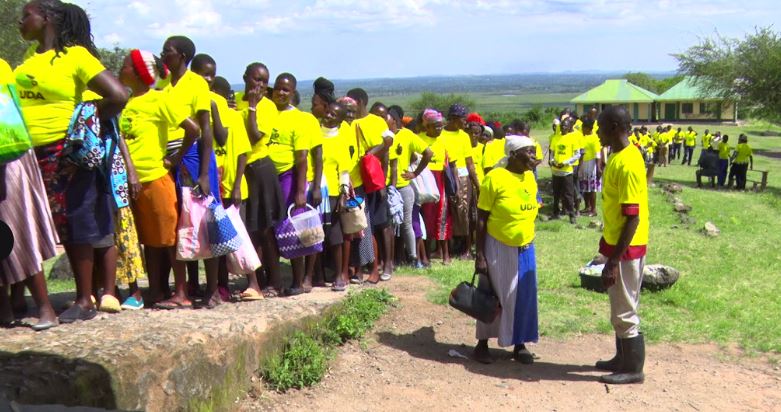
The Eldoret forum brought together prosecutors, judicial officers, National Government Administration Officers (NGAO), police officers, prison officials, civil society organisations, lawyers, students and members of the public to discuss ways of enhancing trust, transparency, accountability and efficiency within the criminal justice system.
By Fredrick Maritim and Nelson Obwana
Fonte: Kenya News