Compartilhar
Eritrea At 35: Progress, Resilience, and Pride
Over the past month, Eritreans at home and across the diaspora have been enthusiastically celebrating the 35th anniversary of the country’s independence. And so they should. Freedom was not handed to Eritrea on a silver platter. Rather, it was won through immense sacrifice during one of Africa’s longest and bloodiest liberation struggles.
One of the first things Eritreans can take pride in is the country’s developmental progress, particularly because conditions on the ground often contrast sharply with some portrayals from abroad. Recall that Eritrea emerged from its war of independence absolutely devastated: infrastructure was shattered, economic foundations were weak, and much of the country had to be rebuilt from scratch. As many have observed, the nation began independence “below zero.”
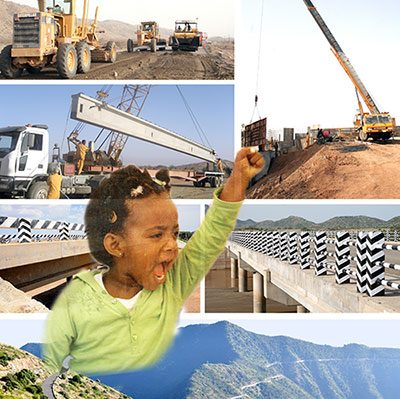
Yet since achieving independence in 1991, Eritrea has made steady advances across several key sectors. Improvements in healthcare have contributed to substantial reductions in maternal and child mortality and dramatic increases in life expectancy. Access to education has expanded considerably, with rising enrolment and literacy rates, alongside policies such as mother-tongue instruction during early schooling. Infrastructure projects – from roads and dams to telecommunications and health facilities – have strengthened national connectivity, supported economic activity, and raised living standards. Agricultural initiatives have aimed to improve food and nutrition security, while investments in renewable energy reflect an increasing focus on sustainability and long-term self-reliance.
Notably, many of Eritrea’s development indicators and broader social trends compare favorably – sometimes considerably so – with those of numerous countries across Africa and the wider developing world. Moreover, these achievements, impressive as they are in their own right, become even more significant when viewed against the backdrop of the immense challenges that Eritrea has faced, including external aggression, sanctions, regional instability, economic constraints, and climate-related pressures.
Another important quality that distinguishes the country is its resilience. Indeed, the country’s developmental gains cannot be fully understood apart from the sheer determination and endurance of its people. As noted, the progress made has come against the backdrop of years of external aggression, sanctions and other coercive measures, recurring regional instability and crises, and resultant economic constraints.
That Eritrea has continued to move forward, in spite of all these hurdles and externalities, is in many ways remarkable. More importantly, it stands as a powerful testament to the resilience of the Eritrean people, who emerged from a thirty-year liberation struggle only to confront a new set of challenges as they worked to build and sustain their nation.
Closely connected to this resilience is Eritrea’s longstanding emphasis on self-reliance. This principle, despite often being misunderstood or misrepresented, remains another source of pride for the country. Emerging from a long liberation struggle during which Eritreans frequently found themselves forced to depend primarily on their own people and resources, self-reliance became deeply embedded in the country’s national outlook and approach to development.
In practice, this approach does not mean and should not be misconstrued as an isolationist policy that rejects international engagement. Rather, Eritrea has generally sought forms of cooperation that strengthen domestic capacity and national ownership, rather than fostering long-term dependency. Rooted in the experience of the independence struggle, this philosophy emphasizes resourcefulness, collective responsibility, and the importance of safeguarding sovereignty while pursuing development grounded in local realities and priorities. Moreover, at a time when the global landscape is rapidly changing and many countries are confronting declining aid flows and growing economic uncertainty, Eritrea’s emphasis on self-reliance appears increasingly relevant and, in some respects, forward-looking.
The strong sense of social cohesion, peace, and harmony that prevails across Eritrea is also something that distinguishes the country positively. For many years, much of Africa, the developing world, and indeed many other parts of the globe have been affected by internecine conflict, sectarian violence, and recurring instability. Sadly, in many areas, safety and security are luxuries. In this regard, Eritrea stands in notable contrast.
Despite its considerable ethnolinguistic and religious diversity, Eritrean society has generally remained peaceful and cohesive. Across communities, there is often a strong culture of tolerance, mutual respect, and solidarity. Interethnic and interreligious marriages are common and widely accepted. In many towns and neighbourhoods, religious institutions of different faiths stand side by side, and neighbours from different backgrounds coexist with little tension or hostility. In many locations, individuals, including women, can walk freely and comfortably, even after dark, while children play freely outside with their parents safe in the knowledge that little harm will come their way.
At a time when so many societies across the region and the wider world continue to grapple with rising polarization, communal violence, and social fragmentation, Eritrea’s relative harmony and unity represent something genuinely valuable. It is a reality that many Eritreans understandably view with great pride.
While much of this harmony is rooted in the country’s traditions, cultural values, and strong religious foundations, it is also closely connected to longstanding efforts to promote equality and social justice. Government social and development policies have consistently sought to reduce inequality and uplift marginalized communities across the country. Inclusive education, rural agricultural support programs, free healthcare and schooling, adult literacy campaigns, micro-credit initiatives, and efforts to eliminate harmful social practices all reflect a broader commitment to expanding opportunity and creating a more equitable society.
In a diverse nation composed of multiple ethnic and religious communities, such measures contribute not only to development outcomes, but also to social cohesion and national unity. By working to ensure that different communities feel included in the country’s progress and development, Eritrea has helped foster a strong sense of shared identity and collective belonging.
Another often overlooked aspect that Eritreans can take pride in is the country’s comparatively low levels of corruption. Numerous individuals and organizations with long-term experience working in Eritrea have remarked upon the absence of the pervasive, normalized corruption that affects many administrations elsewhere.
Viewed alongside the country’s broader emphasis on discipline, equality, and national ownership, this reflects a distinct social and governing ethos. In everyday life, there is generally little sense that officials, guards, administrators, teachers, or others in positions of authority can simply be bribed in exchange for favors, preferential treatment, or special access. At a time when corruption remains a major obstacle to development and public trust across much of the world, this relative institutional integrity is something Eritreans can remain proud of.
Beyond the above, there are many other qualities and values that Eritreans can take pride in. These include a deep respect for nature and the environment, as well as a strong culture of humility, modesty, and simplicity that continues to characterize much of Eritrean society. In many communities, ostentatious displays of wealth and status are discouraged, while values such as dignity, mutual respect, hospitality, and collective responsibility remain highly regarded. Together, these qualities form an important part of Eritrea’s social fabric and national character.
35 years of independence is a proud milestone, and Eritreans everywhere have every reason to celebrate it. Freedom was not given to Eritrea. It was earned through immense sacrifice, perseverance, and struggle. Moreover, the Eritrean people have continued to make sacrifices in the years since independence to safeguard their sovereignty and build their nation.
While the preceding discussion has highlighted many positives, this should not be interpreted to mean that Eritrea is without challenges or shortcomings. Like every country in the world, it continues to confront important difficulties and obstacles. Yet what this discussion demonstrates is that the country possesses strong foundations upon which to continue moving forward.
The resilience of the people, the spirit of self-reliance, the strong sense of social cohesion, the commitment to equality and national ownership, and the developmental gains achieved under difficult circumstances together provide a solid platform for future progress. As Eritrea marks 35 years of independence, there is ample reason not only for reflection, but also for confidence, pride, and hope in the country and its people.
Fonte: Shabait