Compartilhar
The Light of Resilience: How the Candlelight Vigil Embodies Eritrean Pride
Eritrea is a nation forged by its martyrs. For generations, its people paid the ultimate sacrifice to shatter centuries of foreign oppression. The Eritrean liberation struggle was, fundamentally, a people’s revolution that literally exacted unparalleled sacrifices from each and every family. Today, the Certificates of Martyrs hanging prominently on the walls of virtually every Eritrean household serve as a quiet, powerful testament to this profound love for the homeland. Citizens from all walks of life—regardless of age, gender, or social status, both at home and in the diaspora—flocked to the revolutionary fields, placing their lives on the line. Because of their absolute devotion, Eritrea emerged as a free, sovereign state on May 24, 1991.
To ensure the eternal remembrance and glory of these fallen heroes, Eritrea solemnly observes National Martyrs’ Day every year on June 20. Communities worldwide engage in commemorative activities: visiting martyrs’ cemeteries, reciting patriotic poetry, sharing stories of battlefield heroism, supporting the families of the fallen, and planting memorial trees.
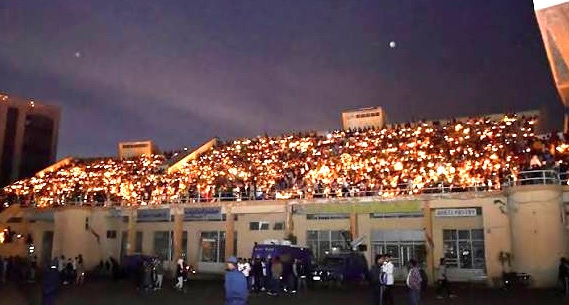
Yet, it is the eve of June 20 that brings the most visually stunning and emotionally charged tribute. As night falls, every household and street across Eritrea fills with the soft, flickering glow of candles. In this collective moment, the nation engages in a silent, sacred dialogue with the values and vision of its fallen heroes.
While the exact historical origin of the candle remains obscured by time, its journey spans millennia. More than 5,000 years ago, the ancient Egyptians developed early lighting materials by soaking the pithy core of river reeds in melted animal fat—though these early lights lacked a true wick. It was the Romans who were widely credited with pioneering the wick, repeatedly dipping rolled papyrus into melted tallow or beeswax. These early candles illuminated homes, guided travelers through the dark, and became central to sacred religious ceremonies.
Despite the invention of the incandescent light bulb and modern electricity, the candle has never lost its cross-cultural significance. Today, it remains a universal symbol used in celebrations, home decor, prayer, and ceremonies of honor. Beyond its physical flame, candlelight carries a profound psychological weight, symbolizing light, resilience, personal transformation, and collective renaissance.
In religious texts, folklore, and classical literature, the candle represents a path cleared through darkness. By conquering the night, it symbolizes the overcoming of adversity, the pursuit of truth, and the offering of solace.
This metaphor directly mirrors the legacy of Eritrea’s martyrs. They stepped forward to illuminate the colonial darkness that had imprisoned the Eritrean people for centuries. Much like a candle that bestows light by slowly consuming and melting itself, Eritrea’s martyrs surrendered their precious lives so that the living could inherit a legacy of peace, dignity, and liberty.
The light of a candle defies uncertainty. In moments of immense historical challenge, the resilience and optimism of the martyrs served as a guiding beacon through the fog of war, and they continue to inspire the ongoing process of nation-building.
Lighting a candle also represents the cyclical nature of life, death, and transformation; it marks the closing of one chapter and the dawn of another. Through their sacrifices, the martyrs fundamentally transformed society, closing a long, brutal chapter of subjugation and ushering in a proud era of human dignity and national independence.
On a community level, the candlelight vigil plays a vital role in social and mental well-being. It provides a shared space for collective grief, reflection, and ultimate triumph. As thousands of citizens stand shoulder-to-shoulder holding their flames, a powerful connection is forged between the living and the dead. The light brings individuals inward, connecting them directly to the core national values that define the Eritrean identity: unity, creativity, self-reliance, nationalism, and unbreakable comradeship.
The candlelight vigil carries a timeless wisdom that continues to shape Eritrea’s national endeavors. It is an annual renewal of an oath—a moment where feelings of deep sorrow give way to profound pride. On the streets, children draw chalk maps of Eritrea, surrounding the borders with burning candles and writing, “Glory to our Martyrs!” ensuring the generational transfer of this sacred memory.
As June 20 approaches, let us all lift our candles high, embracing the serene and honorable pride of a grateful nation.
Eternal Remembrance and Glory to our Martyrs!
Fonte: Shabait