Compartilhar
Virtual labs to bridge science practical gap in Busia JSS schools
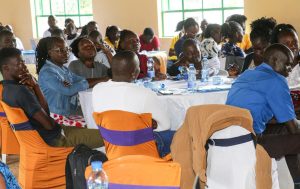
Junior Secondary School (JSS) teachers in Busia County have been trained on the use of virtual laboratories to enhance the teaching of science and mathematics as a way that seeks to address the shortage of physical laboratories in schools.
The three-day training, organised by The Centre for Mathematics, Science and Technology Education in Africa (CEMASTEA) at Nambale Boys National School, equipped teachers with digital skills aimed at improving practical learning while promoting equitable access to science education.
Speaking after the training, CEMASTEA representative Clotilda Nyongesa said virtual laboratories will play a key role in bridging the long-standing gap in science and mathematics practical lessons by providing learners with access to standardised experiments.
“The virtual lab is going to promote equity and inclusion because it can be accessed from anywhere, enabling every learner to use the same standard apparatus regardless of location or time. This will address the challenges JSS teachers have been facing while teaching science and mathematics practicals,” she said.
Nyongesa explained that virtual laboratories are not intended to replace conventional laboratories but to complement them by giving learners an opportunity to carry out practical experiments repeatedly until they fully understand scientific concepts.
“Virtual laboratories allow learners to explore, practise and repeat experiments as they learn and discover. Teachers now have an alternative method of delivering practical lessons, especially in schools without adequate laboratory facilities,” she added.
Busia County Director of Quality Assurance and Standards, Isaac Wasai, said the Ministry of Education is promoting resource sharing among schools to help bridge the shortage of physical laboratories in junior secondary schools.
“We have limited physical laboratories, which is why virtual laboratories are becoming important. We are also encouraging schools within the same locality to share laboratory facilities. Junior secondary schools can use laboratories in nearby secondary schools, and the mapping exercise has already been done,” he said.
Wasai further revealed that the ministry has identified several schools to serve as community digital hubs where internet connectivity will be extended to neighbouring institutions to support digital learning.
He said Busia has over 459 junior secondary schools, but so far 122 teachers have been trained under the programme. According to him, the county plans to train at least one teacher from every JSS to ensure knowledge is cascaded across all schools.
“We are also working towards improving internet connectivity in schools so that learners and teachers can effectively access digital learning resources,” he added.
Busia County KEPSHA Chairperson Bonface Obari welcomed the initiative, noting that many primary schools hosting junior secondary sections lack fully equipped science laboratories.
He expressed confidence that the virtual laboratory programme will significantly improve the teaching and performance of science and mathematics, particularly in rural schools where access to laboratory facilities remains a major challenge.
“This training is a major boost for school heads and teachers. It will improve learners’ understanding of practical concepts and encourage more students to pursue science-related career pathways,” he said.
JSS teachers who participated in the training also welcomed the initiative, describing it as a practical solution to the challenges they have faced in conducting science practical lessons.
Speaking on behalf of the participants, Austine Olang’o said teachers have often been forced to rely on nearby secondary schools for practical sessions due to the absence of laboratories in their own institutions.
“This training has equipped us with digital skills that will enable us to integrate ICT into classroom teaching and conduct virtual practical lessons using digital devices. It is a big step towards improving science education in our schools,” he said.
Olang’o, however, noted that poor internet connectivity in many rural areas remains a major obstacle and urged the government to expedite the installation of reliable Wi-Fi infrastructure in schools.
Noel Barasa, another JSS teacher, echoed the concerns, saying inadequate internet access could slow down the adoption of virtual laboratories despite the successful training.
“Most JSS schools still lack laboratories, making practical lessons difficult. The virtual lab bridges the gap between physical and digital practicals and provides learners with a safe environment to conduct experiments. For the programme to succeed, the government must improve internet connectivity in all parts of the country,” she said.
By Salome Alwanda and Rodgers Omondi
Fonte: Kenya News