Compartilhar
A day in the life of boda boda rider in Vihiga
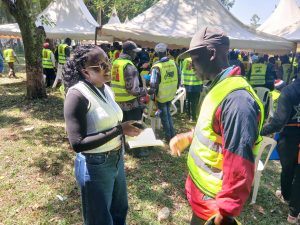
The life of a boda boda rider in Vihiga County is a daily struggle for one has to compete for the little money in circulation to make ends meet.
According to Grain Inawet, one of the rider who granted KNA an interview, his day starts at the crack of dawn, a routine he has mastered for the last ten years to bring food on the table of his family.
Over the period, the routes linking Sabatia, Kisangula, Shamakhokho, Serem, Chavakali and Mbale have been his office, his source of livelihood and the means through which he provides for his family.
Like thousands of other boda boda riders across the country, every new dawn brings hope that the day’s earnings will be enough to fuel his motorcycle, settle expenses and put food on the table.
Inawet ventured into the boda boda business in 2016 after acquiring a TVS 125 motorcycle through a payment plan. At the time, he says, the business offered a decent income.
“Fuel cost about Sh140 per litre then. One trip could cover fuel, loan repayment and still leave something for daily needs,” he recalls.
Today, however, every journey comes with uncertainty. The rising cost of fuel, now exceeding Sh200 per litre, has drastically reduced his earnings.
“Fuel takes the biggest share. There are also repairs and county charges, but fuel determines whether you eat at the end of the day,” he says.
According to the Vihiga County Transport Office, the county had 8,247 registered boda boda operators as of June 2026, although the actual number is believed to be much higher.
In towns such as Mbale, Chavakali and Luanda, motorcycles have become the backbone of transport, connecting residents to markets, schools, hospitals and other essential services. Yet behind the convenience they offer lies a daily struggle for survival.
For Inawet, negotiating fares with passengers has become increasingly difficult as customers resist fare adjustments, despite the soaring cost of fuel.
“Sometimes a passenger simply walks away when you quote a fare. They say they don’t have money, yet our operating costs continue to rise,” he says.
After paying for fuel, repairs and other operating expenses, some days he is left with as little as Sh100, barely enough to support his family. Faced with mounting financial pressure, many riders have sold their motorcycles to pay school fees or meet medical expenses, while others have abandoned the sector altogether in search of alternative sources of income.
Although boda boda riding has sustained him for years, Inawet hopes to leave the trade within the next five years if he finds another opportunity.
Away from the financial challenges, insecurity has become another burden riders carry every day.
Vihiga Boda Boda Association Chairperson David Owino says motorcycle theft has become more frequent, with criminals increasingly posing as genuine customers before stealing motorcycles in isolated areas.
“Motorcycle theft is not just about losing a bike; it threatens the livelihoods of many families who depend entirely on this business,” he says.
Owino also calls for better management of impounded motorcycles, saying some riders have reported finding their motorcycles missing when they return to collect them.
At Chamakanga Market stage, Silas Alivisia begins his day at 4am ferrying schoolchildren before attending to other passengers throughout the day. Despite the hardships, he remains grateful for what the business has enabled him to achieve.
“This job has educated my child, who is now in college. I have bought land and a cow and built a house through boda boda riding,” he says.
Like many riders, Alivisia accepts both cash and mobile money payments, although he occasionally falls victim to fraud through reversed transactions or counterfeit currency.
To cushion themselves against financial difficulties, he belongs to a group of 40 riders who each contribute Sh100 daily, with one member receiving the pooled amount on a rotational basis.
However, he says the sector still lacks basic facilities such as sheds at boda boda stages, while frequent police enforcement operations sometimes disrupt their work.
“Sometimes we feel harassed, and we still lack proper shelters at our stages,” he says.
But even with such challenges, Alivisia believes the boda boda sector remains a lifeline for thousands of families across Vihiga County.
For riders like inawet, every sunrise signals another day of determination, resilience and hope. As they weave through the roads connecting villages and trading centres, they continue to keep the county moving, even as rising costs, insecurity and inadequate support threaten the future of a sector that has become an indispensable part of Kenya’s transport system.
by Convivian Khasoha
Fonte: Kenya News