Compartilhar
Technology as a Bridge Between Generations: A Conversation with Shambko Apps Group
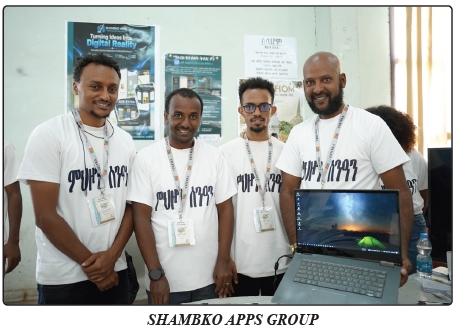
Every year, the community of young tech innovators in Eritrea continues to expand. Across vital national development sectors—including education, healthcare, and agriculture—many young professionals are applying technology to drive tangible progress. Among them is the Shambko Apps Group, a collective using software engineering skills to bridge generational gaps and preserve national culture through specialized mobile applications. Eritrea Profile spoke with the group to discuss their recent achievements, vision, and plans.
Please introduce yourselves to our readers.
- Yacob Merhawi: I was born in 1982 and graduated in pedagogy from the Asmara Teachers Training Institute (ATTI) in 2002. Over the past 24 years, I have served as a teacher, head of pedagogy, and director for Tigrinya language training programs. In 2011, I collaborated with Eng. Sham Mesfin to co-develop Tigrinya language-learning software, and I have authored seven educational textbooks for students. I also contribute regularly as a columnist for the Termuma and Crossword Puzzle sections in the Hadas Eritrea newspaper. Within Shambko Apps Group, I draw on this background to serve as project coordinator and language expert.
- Samson Girmay: Born in 1994, I earned my degree in Computer Technology from the College of Engineering and Technology in 2012. Assigned to the Eritrean Air Force, I have spent the last decade designing software and mobile applications for operational and administrative use. My projects include inventory management systems for the Air Force, specialized mobile platforms for educators, and a container control system implemented at Massawa Port. I also teach computer science and provide IT consulting for private institutions.
- Yonatan Tesfu: Born in 1997, I graduated from Mai Nefhi College in 2020 with a degree in Computer Applications. I currently work at the Beit Gergish Adi Halo workshop, focusing on Android application development and systems programming. In 2023, I designed a student record management application that is currently used by the Kidane Mihret Church in Sembel.
- Nazrawi Gidey: Born in 2003, I studied Computer Applications at the College of Technology and Engineering and currently work as an IT specialist at Asmara International Airport. Passionate about software architecture, I have built custom applications for local organizations and have co-developed five apps with the Shambko Apps Group.
What is the meaning behind the name “Shambko Apps Group”?
Shambko is the Tigrinya word for a traditional flute—a simple yet iconic musical instrument known for its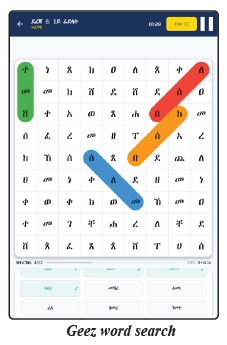 clear, resonant sound. Historically, pastoral herders crafted the shambko using readily available natural materials to entertain themselves and their herds. We selected this name to reflect our operational philosophy: creating high-impact, accessible, and intuitive educational tools using practical local resources.
What is the core vision of your group?
Our overarching goal is to leverage digital technology to strengthen academic performance by designing mobile apps aligned with the official national curriculum across all nine Eritrean languages.
Our initial research highlighted a clear gap: there was virtually no digital educational software, mobile applications, or video content available in local languages that mirrored the national school syllabus. To address this need, we began by developing Tigrinya-language platforms and plan to expand into Eritrea’s eight other national languages.
What applications has the group developed so far?
We have successfully launched five mobile applications:
- ‘Fidelatey’ (My Alphabets): Teaches the Ge’ez script used in Tigrinya using standard classroom pedagogical methods. Featuring interactive exercises, audio guides, and quizzes, it is designed primarily for kindergarten and primary school pupils.
- ‘Zitemesaqele Qalat’ (Crossword Puzzle): A language enrichment tool featuring vertical and
 horizontal word grids. It allows students and adults to expand their Tigrinya vocabulary through engaging word puzzles.
 - ‘Habesha Jigsaw’: A puzzle application showcasing high-resolution imagery of Eritrea’s natural landscapes, historical monuments, traditional artifacts, and prominent figures, reinforcing cultural heritage while building spatial reasoning skills.
- ‘Qalat Dileyu’ (Word Search): A classic word-search platform featuring multiple difficulty levels to help users systematically build vocabulary skills in Tigrinya.
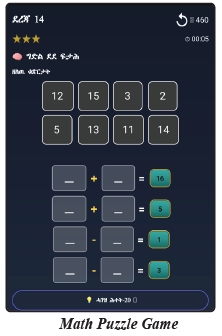
- ‘Gidel Dede’ (Dede’s Puzzle): Focused on mathematics and logic, this numerical puzzle helps primary students build core arithmetic and analytical skills. Players use basic addition and subtraction operations on an eight-number setup to derive missing values.
What are your plans?
Our primary goal is to adapt our existing frameworks into Eritrea’s other national languages. Additionally, we are prioritizing mathematics education. Given the recent national emphasis on improving STEM performance, we are developing gamified modules to simplify core mathematical concepts for young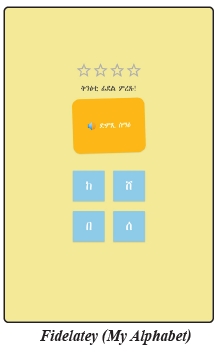 learners.
Furthermore, all our applications are structured to serve members of the Eritrean diaspora, offering young people abroad an accessible way to learn their native languages and maintain ties to their cultural roots.
Do you have any message for our readers?
We invite fellow software developers, translators, and educators — particularly native speakers of Eritrea’s various national languages— to collaborate with us on this initiative. By combining our efforts, we can expand digital learning tools for young students across the country.
Finally, we extend our gratitude to everyone who has supported our work. We welcome partnership opportunities with relevant institutions, ministries, and community organizations to help us scale these tools nationally.
Fonte: Shabait