Compartilhar
Lamu’s land grievances to be addressed under proposed NLC regulations
Lamu County residents who have for decades pursued claims over ancestral land, amid missing title deeds and threats of displacement, could soon have a clearer legal path for redress under proposed regulations by the National Land Commission (NLC).
The draft National Land Commission (Historical Land Injustices) Regulations, 2026, and the draft Review of Grants and Dispositions of Public Land Regulations, 2026, set out how the Commission would investigate past wrongs and re-examine how public land was allocated.
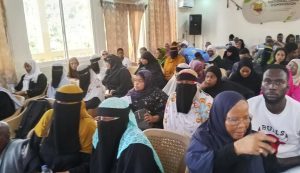
Speaking in Lamu during Lamu’s public participation forum on the draft policy on public land regulations, Mohammed Abdi Haji, a commissioner at NLC, acknowledged that land problems in Lamu County are long-standing and in dire need of resolution.
He stated that earlier reports have indicated that more than 60 per cent of land in the county is classified as public, that most residents lack title deeds and that land has not been demarcated or surveyed since Independence.
Haji further noted that historical injustices have traced many of the conflicts to the colonial period, when land in Lamu was declared government land in 1908.
“Families displaced during the Shifta War of the 1960s have also been among those seeking to be settled and issued with titles,” he said.
He further revealed that the National Land Commission anticipates that the draft regulation policy document will be ready to be presented to Parliament and assented to early next year, with public participation already underway in at least 15 counties.
The NLC commissioner also said that the regulations are meant to address the kind of claims that have persisted in Lamu, and what the Commission wants from Lamu residents are their views in the proposals being forwarded in the regulations.
In the Grants and Dispositions of Public Land Regulations, 2026, communities can bring claims under which, through the historical injustices draft, a claim can be lodged by an individual, a group or a community through an authorised representative, or the Commission can start an investigation on its own initiative.
The draft regulation matters in the sense that in Lamu, many families hold land through long occupation rather than registered titles.
Claims may be made orally and are then put in writing by a Commission officer, and the Commission must help claimants who cannot supply all the required information, and the Commission may also receive oral evidence alongside documents.
Also, where claims cluster in one locality, the Commission may gazette a consolidated investigation covering that area and invite all claimants to lodge claims within 30 days.
It may also consolidate claims on the same parcel or arising from similar facts, which could help in places with multiple or overlapping allocations.
The draft’s admissibility checklist covers injustices that occurred between June 15, 1895, and August 27, 2010 and it further lists grounds, including illegal acquisitions, multiple allocations, politically motivated or conflict-based evictions and exclusion from sources of livelihood.
The County Chief Officer for Lands, Ahmed Loo, in his remarks stated that the regulations will aid the county in resolving pending land disputes and records, especially in areas that have the most unresolved claims.
He stated that the draft regulation considers the nature of the injustice, the status of the land, the interests of bona fide purchasers, and the principles of equity and restorative justice.
“Authorities responsible for implementing a recommendation must do so within the legal period, report progress when asked, and give written reasons if they fail to act, and the draft also encourages reconciliation and alternative dispute resolution,” Loo stated.
Feisal Mirji, local leader and Lamu West Constituency MP aspirant who was also at the forum, said that the residents expect the regulations to provide the safeguards they need for public land management.
By Amenya Ochieng
Fonte: Kenya News