Compartilhar
Statement by Foreign Minister Osman Saleh at the Sixth Edition of the Aswan Forum for Sustainable Peace and Development
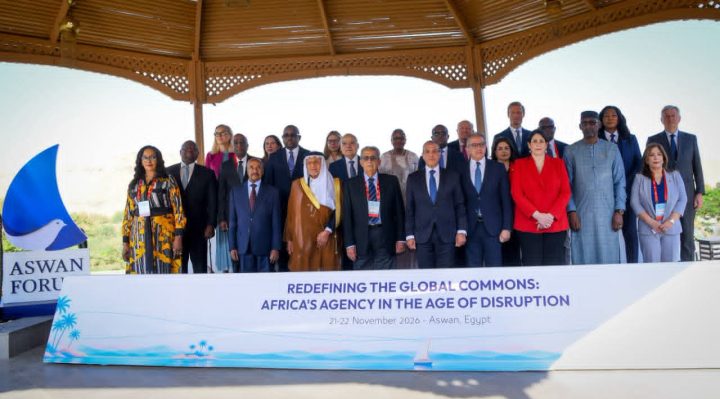
Statement by H.E. Osman Saleh
Ministry of Foreing Affairs of the State of Eritrea
Sixth Edition of the Aswan Forum for Sustainable Peace and Development:
Redefining the Global Commons: Africa’s Agency in the Age of Disruption
Aswan, Egypt
21-22 November 2026
Your Excellency Abdel Fattah El-Sisi, President of the Arab Republic of Egypt,
Excellencies,
Heads of State and Government,
Chairperson of the African Union Commission,
Distinguished Ministers,
Ladies and Gentlemen,
It is a great honour for the State of Eritrea to participate in this 6th Edition of the Aswan Forum for Sustainable Peace and Development.
Allow me, at the outset, to convey the warm greetings of H.E. President Isaias Afwerki, and to express our profound appreciation to the Government and People of the Arab Republic of Egypt as well as the Cairo International Center for Conflict Resolution, Peacekeeping and Peacebuilding (CCCPA), for once again convening this vital, African-owned platform. The Aswan Forum remains one of the few platforms where peace, security and development are approached not as isolated or externally prescribed agendas, but as interconnected and indivisible imperatives of Africa’s collective advancement.
This year’s theme – Redefining the Global Commons: Africa’s Agency in the Age of Disruption – could not be more timely or consequential for Eritrea and our continent.
We convene at a juncture when the international system is undergoing acute structural transformations. Geopolitical fragmentation, the erosion of multilateral norms, unilateral economic coercion, climate volatility, and rapid technological advancements are fundamentally reshaping the global landscape.
For Africa, however, this age of disruption must not be viewed just as a period of heightened vulnerability to be managed through external prescriptions. Rather, it is an urgent call to reclaim, assert, and translate genuine African agency into action, both within our continent and in the governance of our shared global commons.
Excellencies,
Africa’s agency begins with a foundational and principled conviction: there can be no equitable governance of global commons without and at the expense of inviolable national sovereignty and the sovereign equality of states.
The maritime corridors that connect our economies, the climate systems upon which our livelihoods depend, the digital architecture shaping the future of our youth, and the collective security mechanisms intended to safeguard our common interests are, indeed, true commons. But for too long, their governance has reflected neither genuine collective ownership nor equitable participation. Instead, decision-making authority has remained concentrated in the hands of a privileged few, often at the expense of the legitimate interests and aspirations of the wider international community.
To meaningfully redefine the global commons, therefore, we must first confront a fundamental deficit of structural inequity in global governance and decision-making.
Africa cannot exercise authentic agency while the rules and institutional arrangements governing these shared domains global commons continue to be formulated without its full and equal participation, or while multilateral institutions remain entrenched in power configurations inherited from a bygone era.
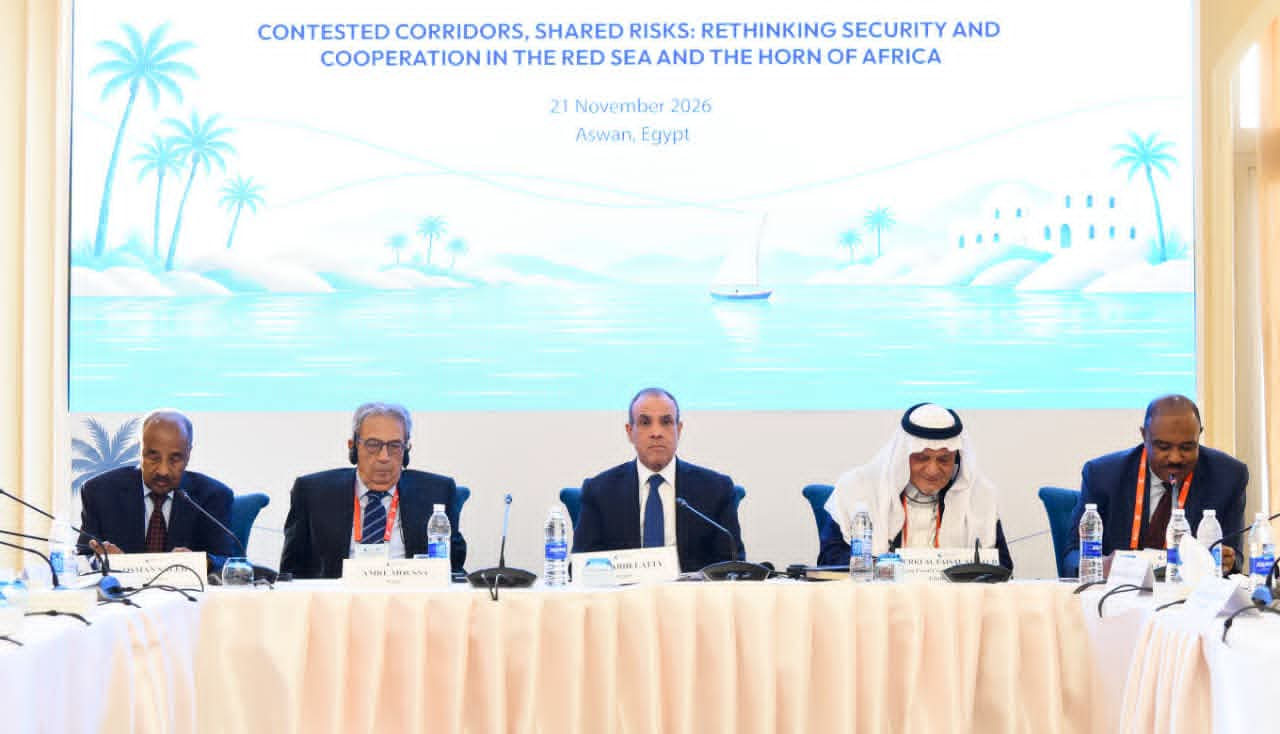
Allow me to share Eritrea’s perspective for redefining the global common across three important points:
- Reforming Global Governance and the International Financial Architecture: Excellencies, Africa’s agency in this age of disruption demands nothing less than substantive reform of the multilateral system. We cannot credibly speak of an equitable international order or the collective governance of global commons when the United Nations Security Council continues to exclude 1.4 billion Africans from permanent representation, while international financial institutions operate through governance and voting structures that largely reflect the geopolitical realities of 1945 rather than those of 2026.
We therefore call for meaningful and structural reform, rather than cosmetic adjustments, anchored in the democratization of international decision-making, the sovereign equality of nations, and strict adherence to non-interference and non-coercion as indispensable pillars of a just, and equitable multipolar order.
Africa’s immense human capital, strategic geographical position, and critical natural resources must translate into commensurate representation in global decision-making, equitable access to development finance, and the restoration of national policy space. This also requires an end to punitive conditionalities and unilateral coercive measures that undermine sovereign development choices, constrain productive capacities, and obstruct the continent’s pursuit of self-reliant and sustainable development.
- Upholding International Law, Sovereignty, and Territorial Integrity: As a Red Sea coastal state endowed with over 1,000 km of mainland coastline and more than 350 islands, Eritrea regards the Red Sea as both a sacred national heritage and a vital global maritime common.
As always, Eritrea comes to Aswan as a nation that has paid the ultimate price, first to secure its hard-won independence and subsequently to defend its sovereignty and territorial integrity. Our commitment to peace and peaceful coexistence remains unwavering. We harbor no ambitions for confrontation with any neighbor, nor do we seek anything beyond the reciprocal respect for sovereignty, territorial integrity, and the principles of international law. However, peace cannot be sustained through declarations alone; it must be founded upon respect for law and the rejection of threats and the use of force.
It is in this context that I must draw the Forum’s attention, with utmost gravity, to the escalating threats and acts of aggression directed against Eritrea’s sovereignty and territorial integrity.
Since 2023, the Ethiopian leadership has pursued an increasingly belligerent rhetoric, repeatedly portraying Eritrea’s hard-won independence as a “historical mistake” that must be rectified, characterizing Ethiopia’s lack of maritime access as an “existential” imperative, and openly advancing unlawful claims and ambitions over Eritrea’s sovereign port of Assab as well as the whole of Eritrea’s southern coastline for “projecting a phantom Naval force with strategic depth”.
Eritrea regards this perilous campaign as an unprovoked declaration of war. Indeed, we must recall that Ethiopia has “notified” the UN Security Council of its intentions to launch a war of aggression against Eritrea, under the spurious invocation of self-defense through its letter of 9 October last month. This act of war and belligerence constitutes a grave act of violation of international law, the UN Charter, the Constitutive Act of the African Union, as well as the sacrosanct principle of the intangibility of inherited borders.
Eritrea calls upon this Forum, the African Union, and the United Nations to uphold, without selectivity, equivocation or silence, the cardinal principles of sovereignty, territorial integrity, non-aggression, and non-interference. Equally, there must be an unequivocal rejection of bellicose rhetoric, territorial revisionism, and any attempt to legitimize the acquisition of territory through the threat or use of force.
Africa’s agency cannot be reconciled with selective indignation or impunity in the face of aggression, while the continent is simultaneously called upon to uphold peace and stability. Genuine African solutions must begin with the consistent application of African law, including the AU Constitutive Act’s categorical rejection of the acquisition of territory by force. These principles are universal and indivisible; they cannot be invoked selectively or applied differently depending on the state concerned.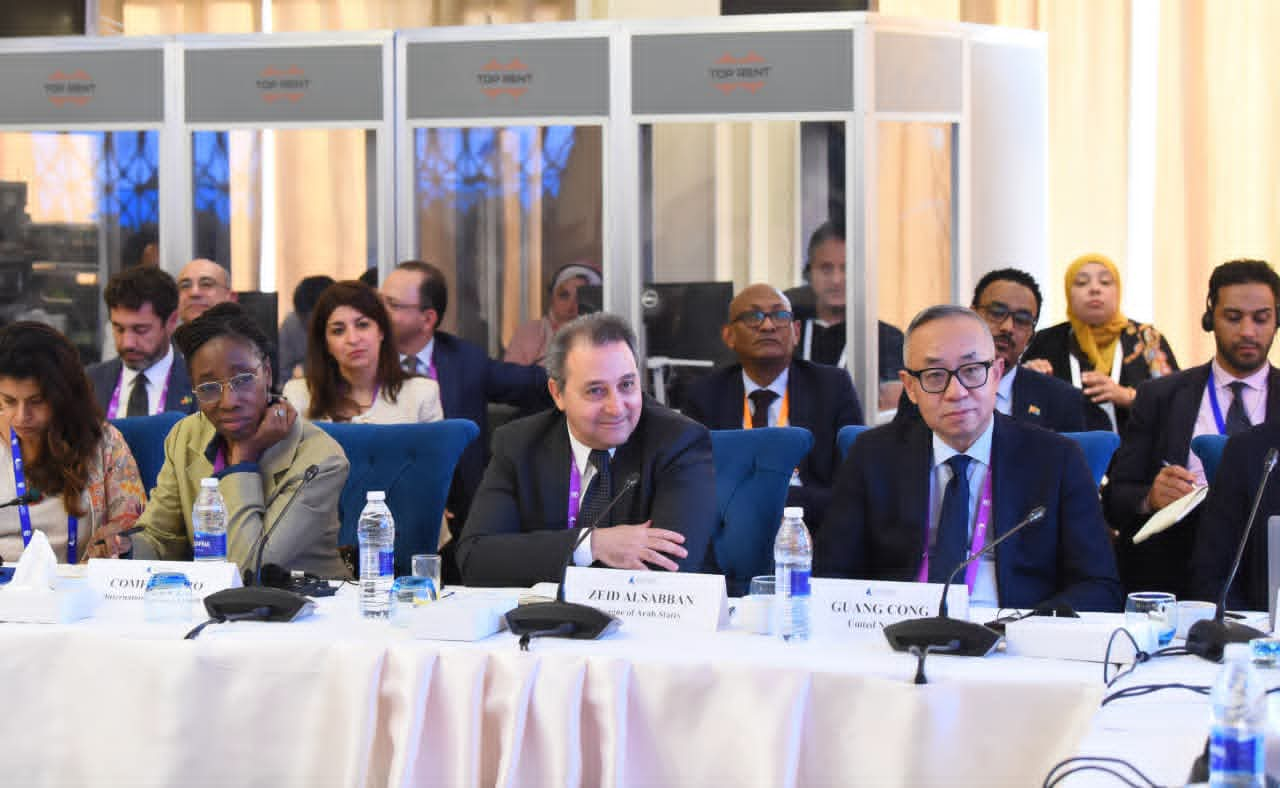
- Securing Strategic Maritime and Regional Commons: Situated along one of the world’s most strategically important maritime arteries, Eritrea recognizes that the security and stability of the Red Sea are intricately linked to the peace, security, and prosperity of our wider region.
Indeed, the prevailing dynamics of destabilization in the Horn of Africa underscore precisely why the governance of strategic maritime commons must be reconsidered and redefined.
The Red Sea cannot function as a secure and shared global commons while the sovereignty and territorial integrity of its littoral states remain under threat. Its security and governance must be primarily the responsibility of the littoral states themselves in full conformity with international law and established practices. This must also be safeguarded against destabilizing external militarization, proxy rivalries, and unlawful territorial encroachments.
Peace and stability in the Horn of Africa and the wider region are inseparable from security in the Red Sea. Equally, sustainable maritime security cannot be achieved by transforming these strategic waters into an arena for hegemonic power competition, competing foreign military installations, and coercive geopolitical agendas. The legitimate interests of littoral states must remain paramount, and regional security arrangements must be founded upon their sovereignty, consent, and collective ownership.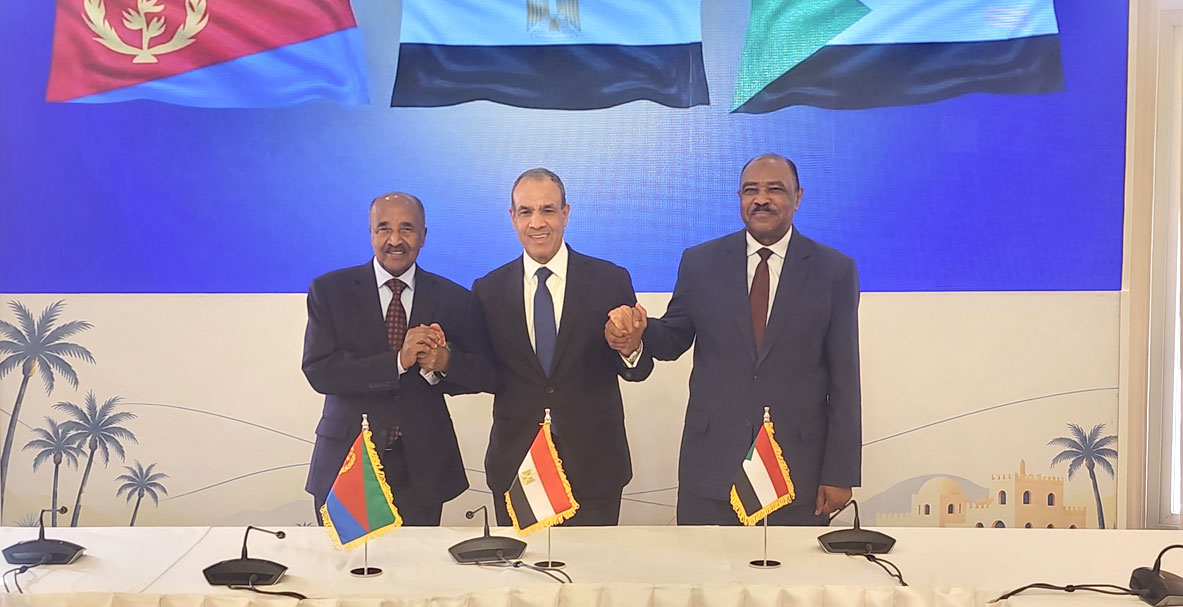
Excellencies,
Ladies and Gentlemen,
If Africa is to exercise meaningful agency in shaping the global commons, it must simultaneously strengthen its resilience and capacities from within. Genuine agency is ultimately built upon self-reliance, strong national institutions, productive economic capacities, and authentic regional integration.
In Eritrea, our national development philosophy has long been anchored in the conviction that sustainable peace and development are mutually reinforcing and that both depend fundamentally on domestic ownership, social justice, and strategic investment in our people and sovereign infrastructure. Across our continent, deepening genuine regional integration, strengthening indigenous technological and industrial capabilities, and mobilizing our own human and material resources remain among the most effective safeguards against external shocks and the disruptive dynamics of an increasingly uncertain global environment.
Furthermore, our collective approach to the peace-development nexus must move beyond the perpetual management of crises towards addressing their underlying structural causes. When sovereign nations are afforded the necessary policy space to pursue homegrown development strategies, strengthen social cohesion, and sustainably harness their natural resources, they are better positioned to address the root causes of conflict and prevent emerging vulnerabilities from escalating into instability.
Ultimately, sustainable peace cannot be externally engineered or imposed. It must be cultivated through national ownership, inclusive development, regional solidarity, and respect for the sovereign choices of peoples and nations.
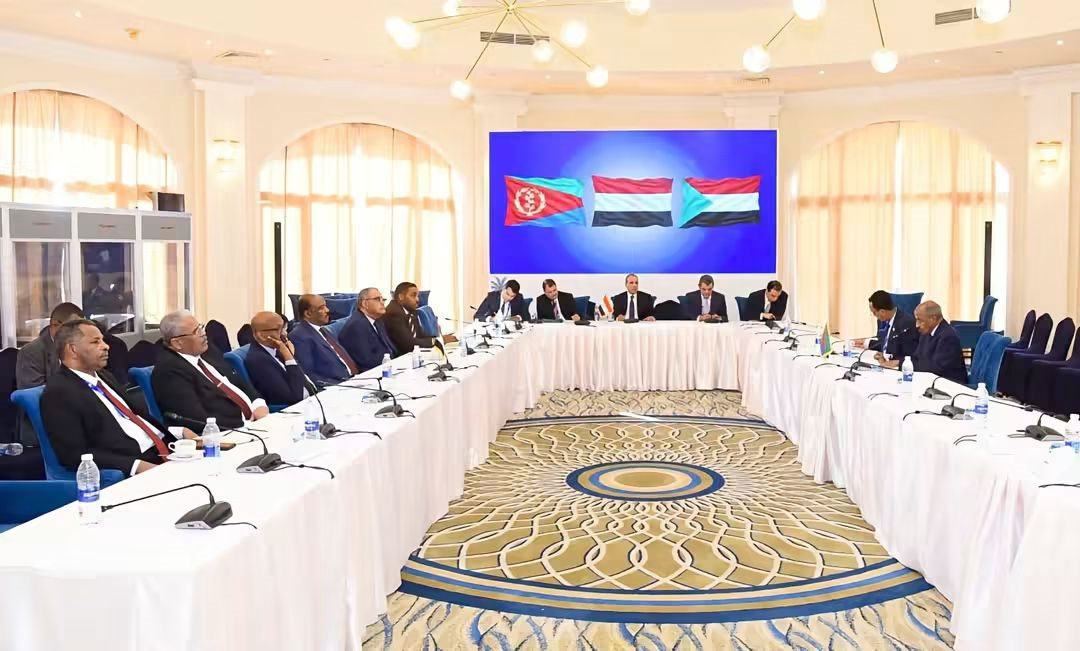
In conclusion, Excellencies,
An age of disruption inevitably dismantles old orthodoxies, while creating historic opportunities for the emergence of new norms, institutions, and global governance frameworks.
In the event that Africa fail to assert its collective agency during this critical transition, our continent risks remaining a passive bystander in the making of global decisions and, worse, a contested arena for competing external ambitions. Conversely, by speaking with moral and political clarity, steadfastly defending the sovereignty and territorial integrity of our states, strengthening regional solidarity, and insisting upon a genuinely equitable, international law based order, Africa can, and must emerge as a decisive architect in redefining the global commons.
Let us ensure that Africa is no longer present at the international table merely as a subject of deliberation, but to lead, to decide, and to own.
The State of Eritrea remains fully committed working constructively with our African brothers and sisters, as well as with all genuine partners, in advancing a peaceful, self-reliant, sovereign, and prosperous continent.
Thank you / Shukran Jazeelan.
Fonte: Shabait