Compartilhar
Statement by Mr. Biniam Berhe at the 20th Extraordinary Summit of the African Union Assembly on Health
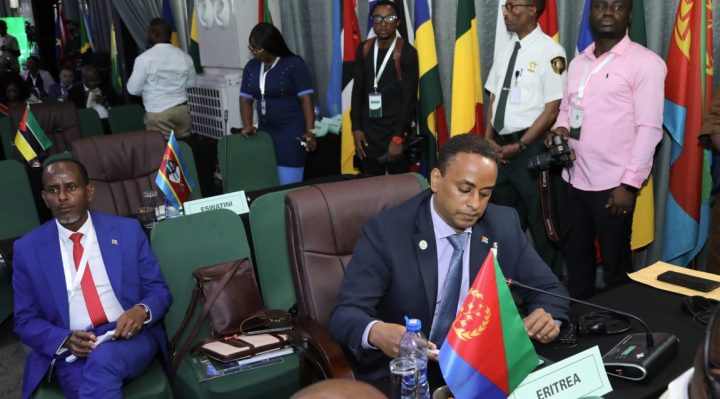
Statement by the
Delegation of the State of Eritrea at the
20th Extraordinary Session of the African Union Assembly on
“Ending AIDS by 2030, Addressing Preventable Maternal Deaths, Communicable and Non-Communicable Diseases Endemic to the Continent, and Strengthening Health Systems by 2030”;
22 July 2026, Accra, Ghana
Your Excellency Chairperson,
All Protocol Observes,
I wish, at the outset, to express my delegation’s gratitude to the people and Government of the Republic of Ghana for the warm hospitality accorded to us since our arrival in the beautiful city of Accra.
The holding of this Extraordinary Summit with the theme ‘Health Justice, Equity and Universal Health Coverage in Africa’ is important and timely. The draft AU Roadmap to 2030 and beyond towards ending HIV/AIDS by 2030, addressing preventable maternal deaths, communicable and non-communicable diseases and strengthening health systems, presented for adoption by this Summit is an important initiative.
Mr. Chairperson,
In the spirit of experience sharing that can accelerate that implementation of the Roadmap, I wish to briefly share Eritrea’s experience in advancing maternal, newborn, and child health; and health equity.
Eritrea considers health as a fundamental human right. Guided by the principle of social justice, Eritrea is committed to ensuring that every citizen—regardless of where they live—has equitable access to quality healthcare at nominal cost or free of charge.
This commitment is operationalized through a strong Primary Health Care system. Today, more than 80 percent of Eritrea’s population lives within 10 kilometers of a functional primary health facility, including health stations and health centers. By decentralizing health services, Eritrea has shifted resources into rural communities, bringing preventive, maternal, and essential healthcare closer to the people and reducing geographic disparities.
However, expanding access alone is not enough. Between 2022 and 2026, Eritrea strengthened quality assurance across all levels of primary healthcare, ensuring that increased access is matched by high standards of care.
Mr. Chairperson,
One of the areas where Eritrea has made significant progress is maternal and newborn health. The country has placed mothers and newborns at the center of its national development agenda through sustained investment in a resilient and expanding healthcare system.
Coverage of antenatal care has steadily improved, with the proportion of pregnant women receiving at least one skilled antenatal consultation increasing from 83 percent in 2022 to 87 percent in 2025. Facility-based deliveries also rose significantly—from 73 percent to 85 percent over the same period—reflecting growing confidence in the health system and improved access to skilled birth attendance. At the same time, Eritrea expanded surgical capacity in zonal hospitals, increasing the national Caesarean section rate from 3.8 percent to 6.5 percent by 2025, bringing it within the World Health Organization’s recommended range of 5 to 15 percent.
A key contributor to this success has been the establishment of 159 functional Maternity Waiting Homes located near hospitals and health centers. These facilities provide expectant mothers from remote communities with safe accommodation before delivery, helping to overcome the challenges posed by difficult terrain and long travel distances.
Mr. Chairperson,
These investments have translated into tangible health outcomes. Maternal mortality declined significantly, from 291 deaths per 100,000 live births in 2023 to 184 in 2026. Neonatal mortality also fell markedly, from 34 to 18 deaths per 1,000 live births.
Community-based healthcare remains the backbone of Eritrea’s health system. Community Health Workers, known locally as Community Health Agents, connect formal health services with remote villages, ensuring continuity of care through health promotion, disease prevention, and early treatment.
Eritrea has consistently maintained routine immunization coverage of approximately 98 percent. Community Health Agents play a central role in the Expanded Programme on Immunization.
The same community-driven model has contributed to Eritrea’s internationally recognized progress toward malaria elimination. Community Health Workers diagnose and manage around 80 percent of uncomplicated malaria cases directly at the village level, ensuring prompt treatment and reducing transmission.
To reach the country’s most isolated populations, Eritrea has also revitalized its Barefoot Doctor initiative. Originally developed during the struggle for independence and reintroduced in 2019. The program provides a flexible, community-based healthcare safety net for remote and nomadic communities. Following six months of formal training, Barefoot Doctors deliver essential preventive and basic curative services, extending the reach of the national health system to populations that would otherwise remain underserved.
Through its long-standing unwavering commitment to social justice, strong primary healthcare, community participation, and equitable access, Eritrea continues to demonstrate that meaningful health gains are possible when no community is left behind.

Mr. Chairperson,
Following the adoption of the roadmap, the issue that requires the full attention of the African Union and its Member States is the practical implementation of the plan by putting in place conducive policies, dedicating adequate human and financial resources, with a focus on the needs of disadvantaged section of the societies.
In conclusion, I wish to reaffirm that Eritrea will redouble its efforts towards expediting the achievement of health-related development goals at national level and remains committed to working hand in hand with sisterly African countries for the achievement of the goals at regional and continental levels.
Thank you!
Fonte: Shabait