Compartilhar
President Hichilema Sworn-In: Calls for Unity, Promises Massive Economic Growth
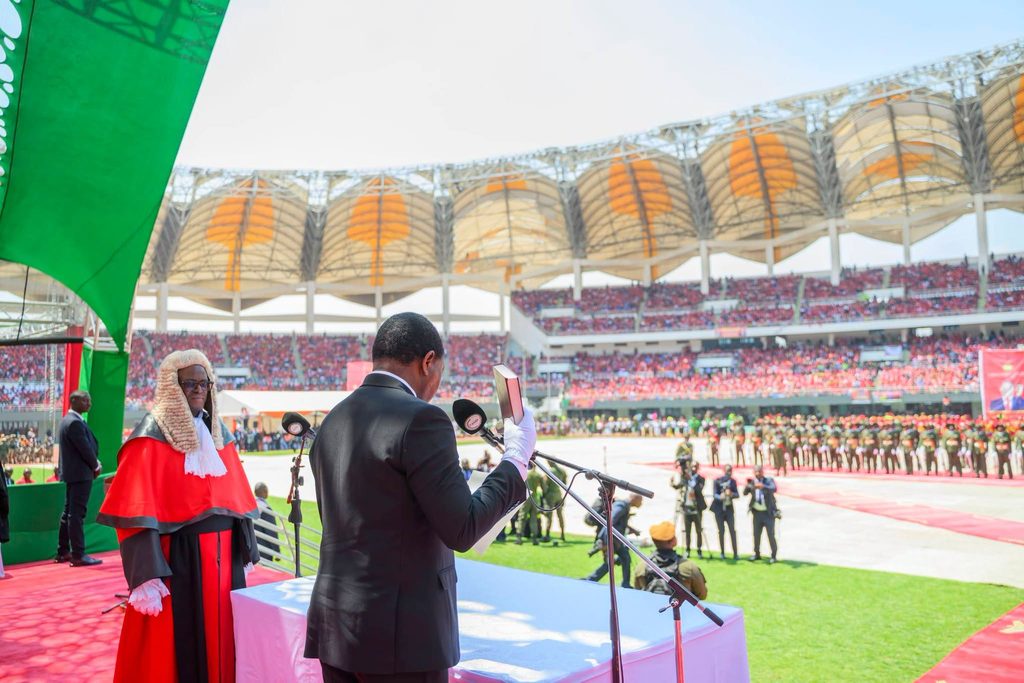
President Hakainde Hichilema and Vice-President Mutale Nalumango have officially taken the oath of office for their second five-year term, with the Head of State unveiling the ambitious “Grow Zambia” agenda designed to shift the nation from post-crisis economic stabilization toward aggressive wealth creation.
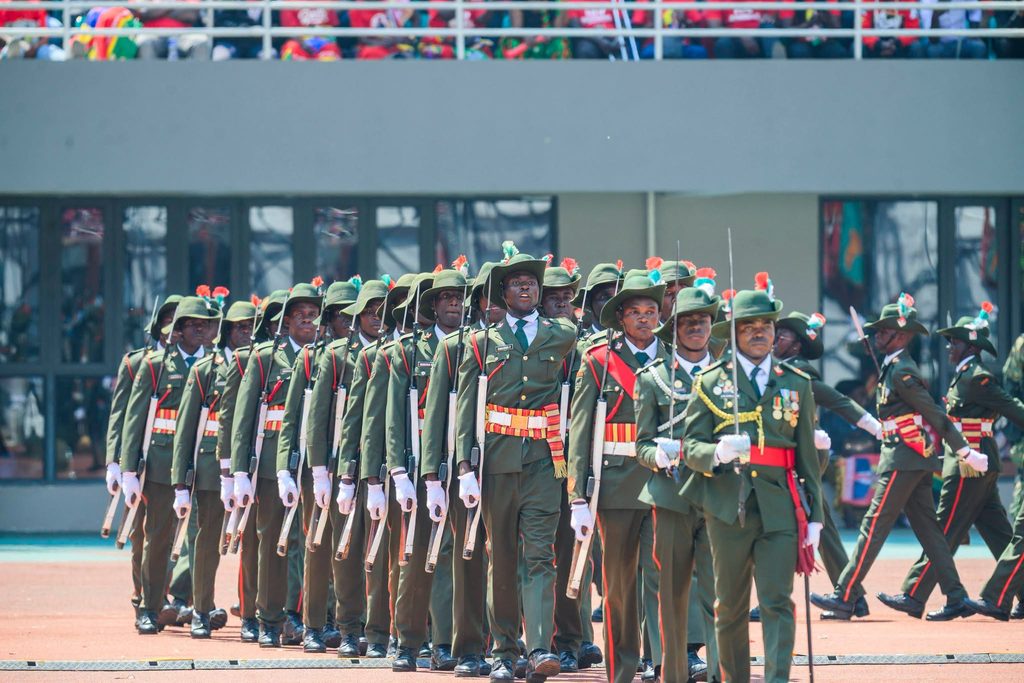
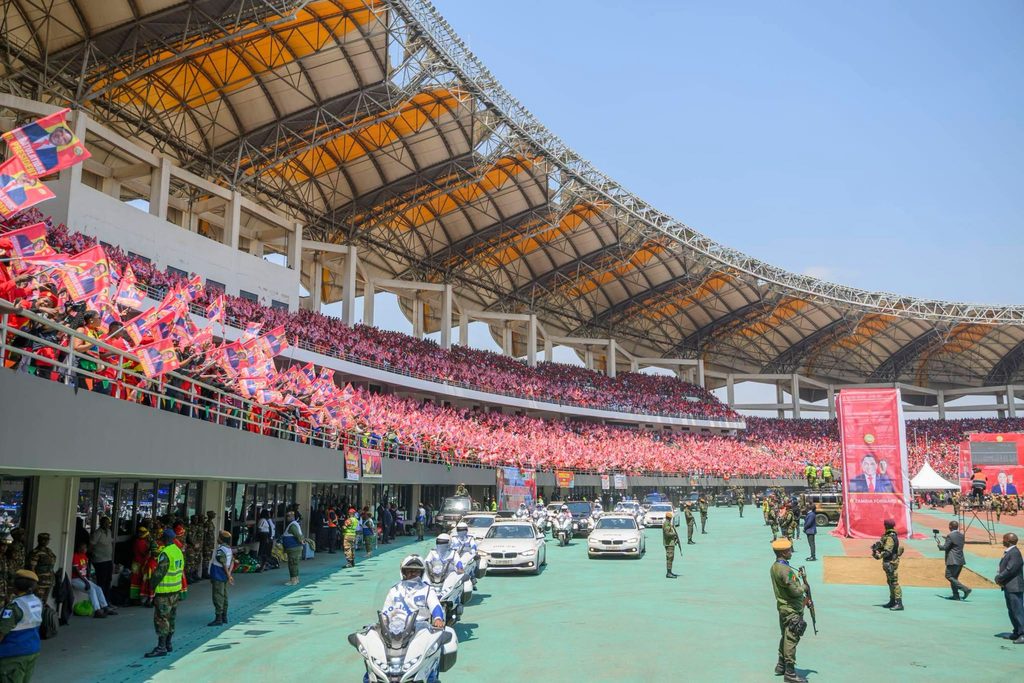
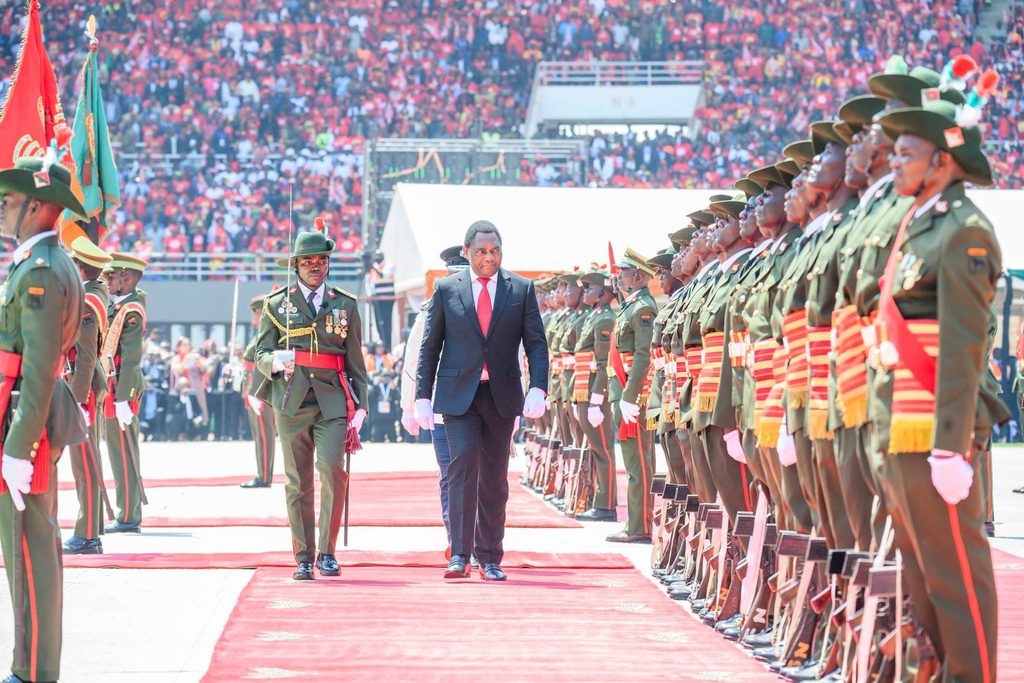
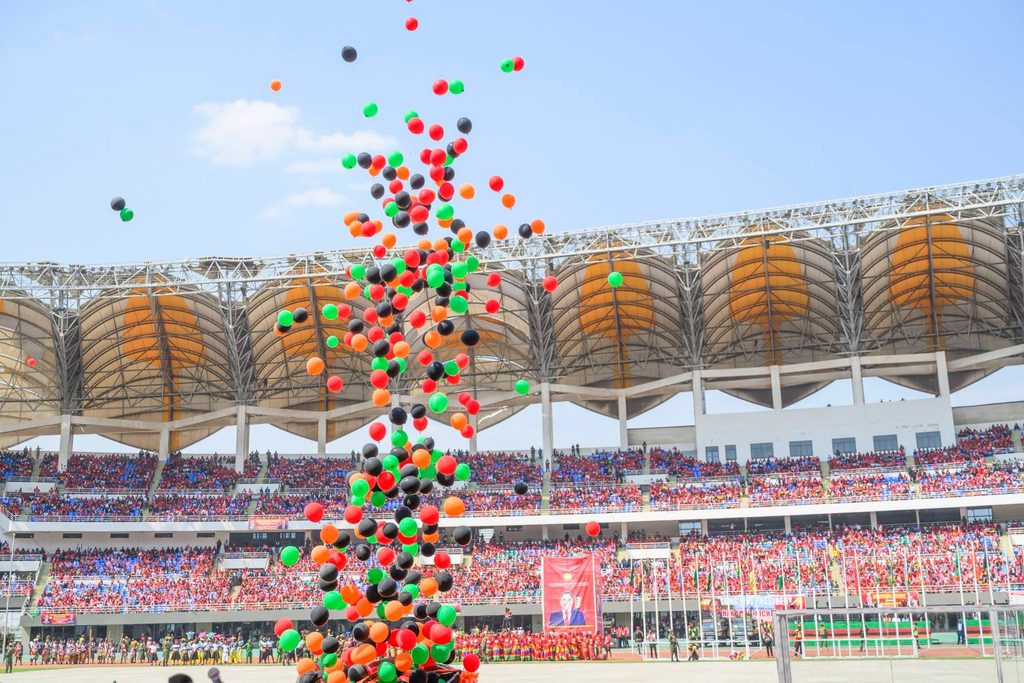
The swearing-in ceremony took place before a packed National Heroes Stadium in Lusaka, attended by thousands of citizens, visiting heads of state, regional dignitaries, and members of the diplomatic corps.
Heads of state in attendance included President Emmerson Mnangagwa of Zimbabwe, President Samia Suluhu Hassan of Tanzania, President William Ruto of Kenya, President Netumbo Nandi-Ndaitwah of Namibia, and President Duma Boko of Botswana.
Other notable leaders present were the Prime Minister of Lesotho, Samuel Matekane; the Deputy Prime Minister of Eswatini, Thulisile Dladla; and the Vice-Chairperson of the Chinese People’s Political Consultative Conference (CPPCC), Shen Yueyue. Several traditional leaders from across the country also attended the ceremony.
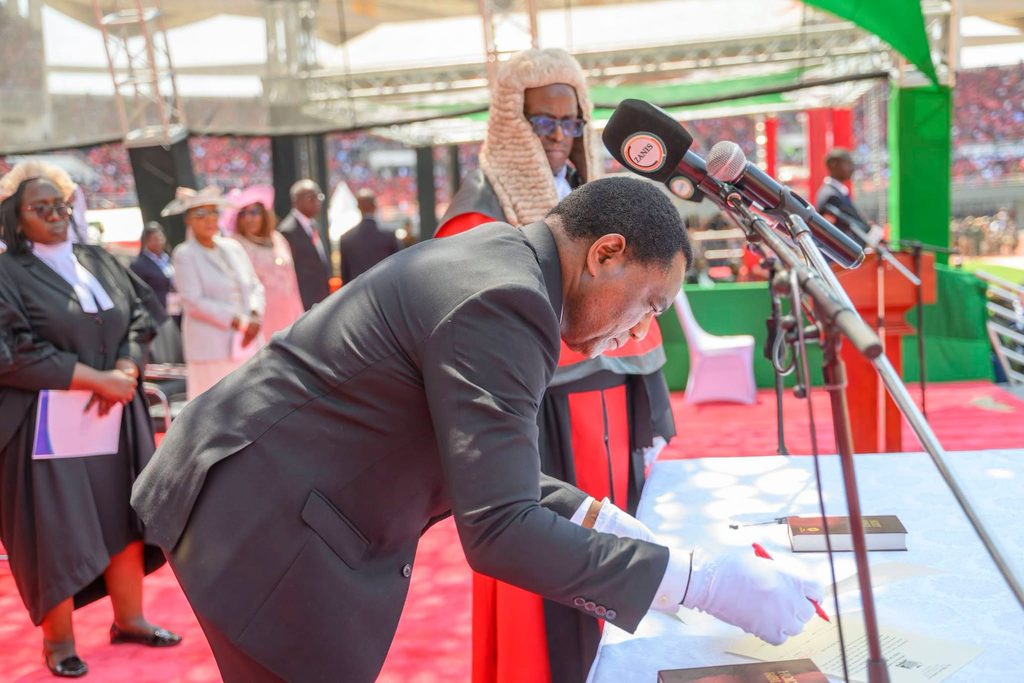
Chief Justice Mumba Malila administered the oaths of office.
“I, Hakainde Hichilema, do swear that I will faithfully and diligently discharge my duties and perform my functions in the high office of President of the Republic of Zambia, and that I will uphold and defend the Constitution of Zambia as by law established.”
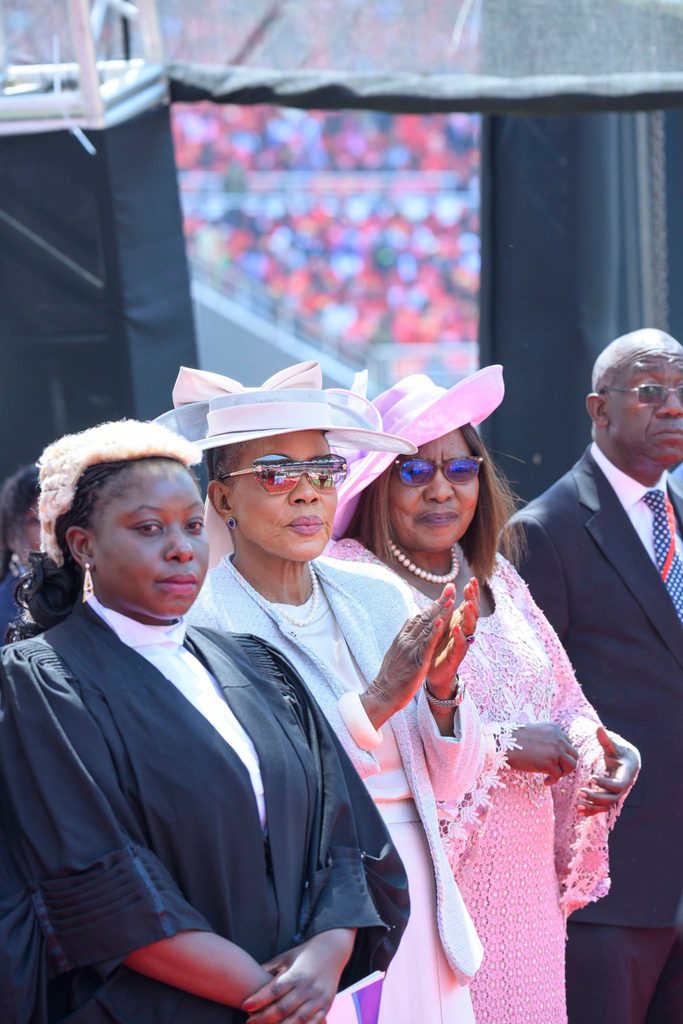
Vice-President Mutale Nalumango also took her oath of office and allegiance before Chief Justice Malila to serve alongside President Hichilema in the second term.
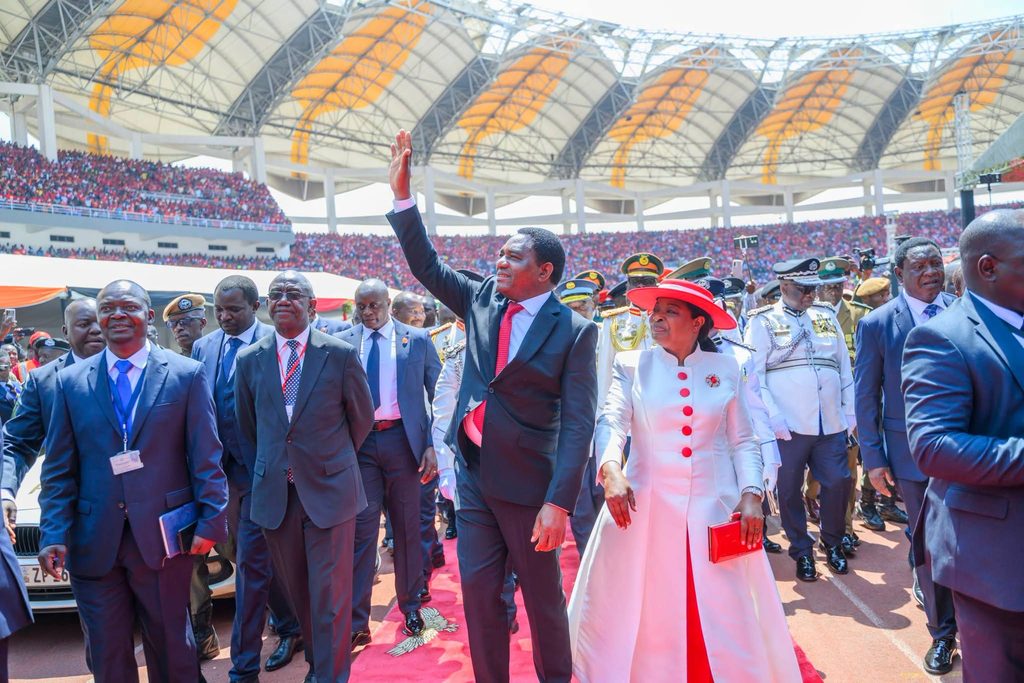
Delivering his inaugural address, President Hichilema reflected on his initial election five years ago under the “New Dawn” administration, formally announcing the transition to a production-driven national framework.
“This renewed five-year mandate marks the birth of the ‘Grow Zambia’ agenda,” President Hichilema said, adding that the re-election was not a personal victory, but a sacred public trust granted by the Zambian people to expand democratic resilience and economic opportunity.
President Hichilema emphasised national unity and healing stating that political contestation must never breed permanent enmity among citizens. He expressed gratitude to both his supporters and those who voted for other political parties, noting that political competitors are brothers and sisters who deserve equal respect.
He appealed to opposition leaders to provide constructive development ideas under the enduring national motto: “One Zambia, One Nation.”
Reflecting on his administration’s track record, President Hichilema outlined the key structural milestones of his first five years in office, pointing to major gains in fiscal discipline, education, decentralization, and democratic governance.
The Head of State cited the successful conclusion of Zambia’s external debt restructuring process as a turning point that restored international confidence, rebuilt foreign exchange reserves to record highs, tamed runaway inflation, and stabilised the Kwacha to offer long-term predictability to commerce.
President Hichilema also highlighted the enactment of free primary and secondary education which has reintegrated 2.6 million previously out-of-school children nationwide. He further noted the strategic expansion of the Constituency Development Fund (CDF), which has redirected resources to directly fund community projects, alongside electoral reforms facilitating representation for women, youth, and persons with disabilities.
President Hichilema however acknowledged that the benefits of macroeconomic stability are yet to be fully experienced by the citizens, who continue to grapple with some cost-of-living pressures.
President Hichilema stressed, stating that fiscal consolidation alone is insufficient and that the nation must now turn toward industrial value addition, domestic manufacturing, and robust private-sector enterprise.
To catalyze this transition and more than double the size of the national economy, the President reiterated the “10-10-5-3-3-1-1-1” economic blueprint, an aggressive production matrix setting ambitious output targets across critical sectors which include: 10 million metric tonnes of maize to anchor national and regional food security;10,000 megawatts (MW) of power generation capacity to guarantee industrial and domestic energy sovereignty, and 5 million annual international tourist arrivals to unlock the service economy.
Other targets are 3 million metric tonnes of copper output to maximize mineral value capture;3 million metric tonnes of soybeans to power agricultural processing; 1 million metric tonnes of wheat to secure domestic milling self-sufficiency;1 million metric tonnes of sugar for local consumption and export; and over $1 billion in livestock and beef exports to supply growing regional markets.
President Hichilema called for a nationwide cultural mindset transformation, moving away from handouts and dependency toward saving, domestic enterprise, and investing for future generations. He instructed the civil service to operate on measurable outcomes rather than desk hours, pledging accelerated public sector digitization, rigorous anti-corruption enforcement, and prudent public financial management.
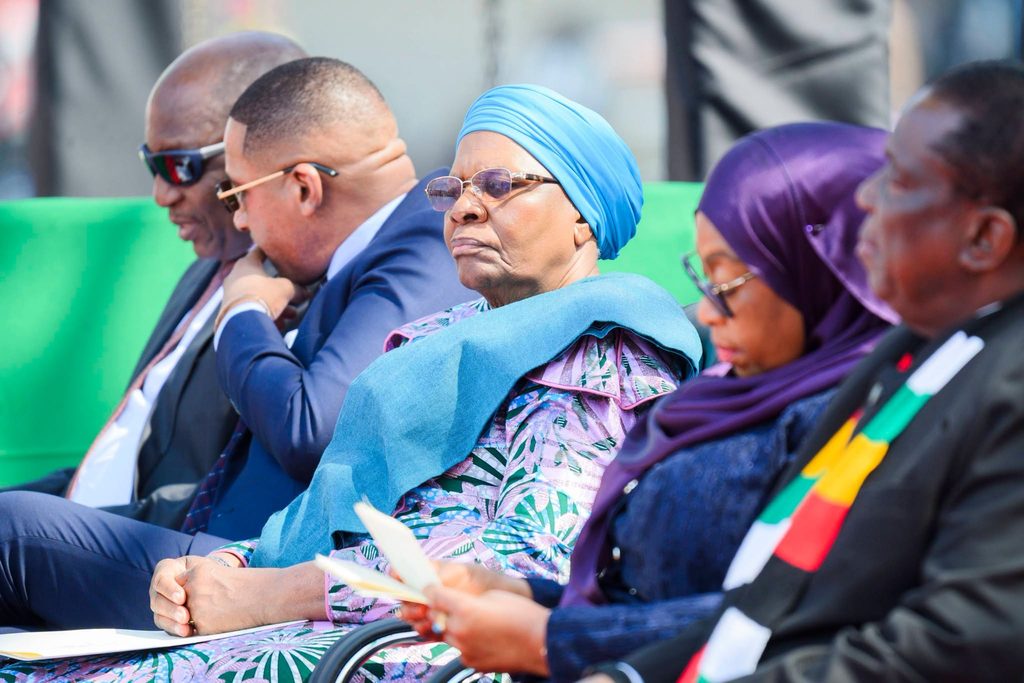
Zimbabwean President Emmerson Mnangagwa congratulated president Hichilema and underscored the deep historical and cultural ties that bind the two nations.
“Back home in Zimbabwe, we say that a country is built, governed, and prayed for by its own people,” President Mnangagwa said. “As we look to the future in the context of new and emerging realities, let us harness the opportunities presented to our SADC region and great continent of Africa. In doing so, we must remain mindful that the responsibility to build, develop, modernize, and industrialize our respective countries lies with us.”
President Mnangagwa also expressed gratitude to Zambia for its backing of Zimbabwe’s election as a non-permanent member of the United Nations Security Council for the 2027–2028 tenure, noting the growing bilateral collaboration forged through the Bi-National Commission.
Kenyan President William Ruto commended Zambia for conducting peaceful and credible elections. President Ruto highlighted that President Hichilema’s renewed mandate provides critical continuity for accelerating regional trade, industrialization, and cross-border infrastructure connectivity under the African Continental Free Trade Area (AfCFTA) framework, noting that Zambia remains a pillar of peace and democratic stability within the COMESA and SADC blocs.
Delivering the message of the African Union Commission on behalf of AUC Chairperson Mahmoud Ali Youssouf, Special Representative Ambassador Hilda Suka-Mafudze praised Zambia’s unbroken tradition of peaceful democratic governance.
“Zambia has a good record of peace, unity, stability, and democratic governance. These are important national assets, and we trust that your Excellency will build upon these strong foundations during the next five years,” Ambassador Suka-Mafudze stated.
She highlighted the deployment of the AU election assessment and observation missions led by former Ethiopian Prime Minister Hailemariam Desalegn and reiterated the AU’s backing of Zambia’s domestic reforms.
“We also recognize Zambia’s important economic reforms. We hope that the next phase will further promote inclusive growth, create opportunities for all citizens, and advance sustainable development. The African Union looks forward to working closely with your Excellency and the government of Zambia in advancing Agenda 2063 and building an Africa that is peaceful, integrated, prosperous, and able to shape its own future.”
Fonte: State House