Compartilhar
ሉለይ / My Pearl: The Timeless Beauty and Resilience of Eritrean Women
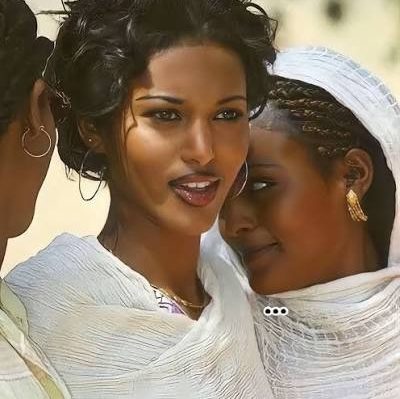
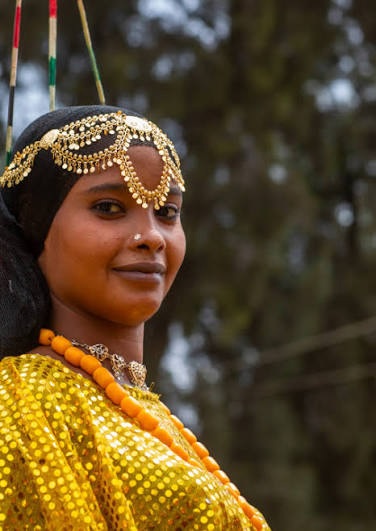
In May 2005, French photographer Eric Lafforgue traveled to the historic and picturesque town of Keren during its vibrant annual festival of Maryam Dearit. Captivated by the sea of pilgrims, his lens was drawn to an Eritrean woman whose striking appearance would soon captivate a global audience. When Lafforgue published the portrait, it went viral across international media, frequently shared with captions crowning her “the most beautiful woman in the world.” Long after internet trends and algorithms have shifted, the portrait endures.
When viewed closely, the image reveals soft, natural light illuminating features defined by a soulful gaze and serene dignity—a striking visual metaphor for the Red Sea pearl (ሉል ቀይሕ ባሕሪ). Perfectly formed, brilliantly radiant without artificial enhancement, and carrying an unforced grace born from deep-rooted resilience, she embodies an enduring symbol. A fitting moniker for her is ሉለይ (“My Pearl”), echoing a beloved traditional song celebrating the quiet grace of Eritrean women.
This iconic photograph does more than capture a face; it introduces a profound truth: the true “Pearls of the Red Sea” are not hidden within ocean shells, but live within the enduring spirit, self-reliance, and sacred strength of Eritrean women.
A pearl is unique among precious gems. It requires no diamond cutters, synthetic polishing, or artificial enhancement to reveal its splendor. Emerging fully formed from the dark depths of the ocean, it possesses a soft, hypnotic nacre that reflects light organically.
This mirrors the timeless essence of Eritrean beauty. From the sweeping plains of the western lowlands to the cool highlands of Asmara, the local aesthetic relies on natural grace and a regal posture passed down through generations. Draped in traditional attire and adorned with the distinct, elegant hairstyles of the nation’s diverse ethnic groups, their elegance commands a room through quiet, understated dignity. Like the pearl, it does not shout for attention; its brilliance is entirely authentic.
A pearl is never born in comfortable surroundings. It begins as an intrusion—a harsh grain of sand or a sharp irritant trapped inside a shell. Rather than allowing the irritant to destroy it, the mollusk wraps the hardship in layer after layer of smooth, protective nacre. Over years of relentless oceanic pressure, a painful trial is transformed into a breathtaking masterpiece.
This biological miracle mirrors the core of avoiding deliberative structural dependency. The history of the nation is a testament to overcoming immense challenges; decades of liberation struggles, sacrifices, and complex geopolitical landscapes have acted as history’s “grain of sand.” Rather than breaking, Eritrean women wrapped these trials in layers of unity, courage, and cultural pride. Their beauty is not fragile—it is forged on the frontlines of history, turning centuries of struggle into a brilliant narrative of national triumph.
The creation of a pearl is an entirely solitary process. The oyster does not look to the surrounding ocean for materials, nor does it rely on external forces to build its prize. Everything required to birth the gem comes from within its own biological architecture, relying strictly on internal resources to survive and create value.
This independent genesis encapsulates the foundational Eritrean principle of self-reliance. Eritrea’s path has long been walked with fierce independence, relying on the dedication of its own people rather than external dependencies. Like a tightly closed oyster shell, the nation protects its inner sovereignty, proving to the world that true worth, sustainable progress, and cultural integrity are generated entirely from internal strength.
A pearl does not appear overnight. It is the result of years of continuous, microscopic labor. Day after day, the mollusk secretes thousands of impossibly thin crystalline layers. If the organism stops working, the pearl loses its luster and structural integrity, demanding unwavering consistency and quiet endurance.
This tireless dedication is mirrored in the work ethic of Eritrean women. From farmers meticulously cultivating crops on rugged mountain hillsides to professionals driving national development, their labor is steadfast and vital. It is a culture that values the dignity of hard work, understanding that a great society— much like a luminous pearl—is built one dedicated action at a time, away from the spotlight.
At its core, the oyster shell is a nurturing fortress. It shelters, shields, and cares for the developing gem against the turbulent currents and unpredictable temperatures of the open sea, dedicating its entire life cycle to harboring the treasure within until it is ready to shine.
This sanctuary represents the monumental weight of Eritrean motherhood. Historically, Eritrean mothers have been the fierce protectors of the household, stepping up during times of conflict and serving as the emotional anchors of families during times of peace. They insulate the next generation from life’s storms, passing down values of unity, hospitality, and honor. The Eritrean mother is the living shell, enduring the pressures of the world so that her children can emerge as the shining pearls of tomorrow.
Ultimately, a pearl is valuable not simply because it is rare, but because of what it endured to exist. When the world looks at Eric Lafforgue’s iconic photograph from Keren, it sees the arresting beauty of a single face. But when one looks deeper into the collective soul of Eritrean women, one sees the living embodiment of the pearl’s entire journey: a society of natural grace, built by independent hands, fortified by hard work, protected by sacred maternal bonds, and glowing brightly with the light of an unbreakable spirit.
Fonte: Shabait