
Compartilhar
Government Moves to Address Traders’ Concerns Over Taxes on Imported Garments and Textiles
By Ismael Kasooha
KAMPALA
The Government of Uganda has initiated a review of the tax policy on imported garments and textiles following concerns raised by traders over high taxes and delays in clearing imported goods.
The move follows a directive by President Yoweri Museveni to Prime Minister Robinah Nabbanja to address grievances raised by traders in Kampala regarding the taxation of imported garments and textiles.
During an emergency meeting convened by the Prime Minister at her office in Kampala on Tuesday, it was agreed that an inter-agency committee be established to review the existing tax policy and recommend measures to resolve the ongoing standoff between traders and the Uganda Revenue Authority (URA).
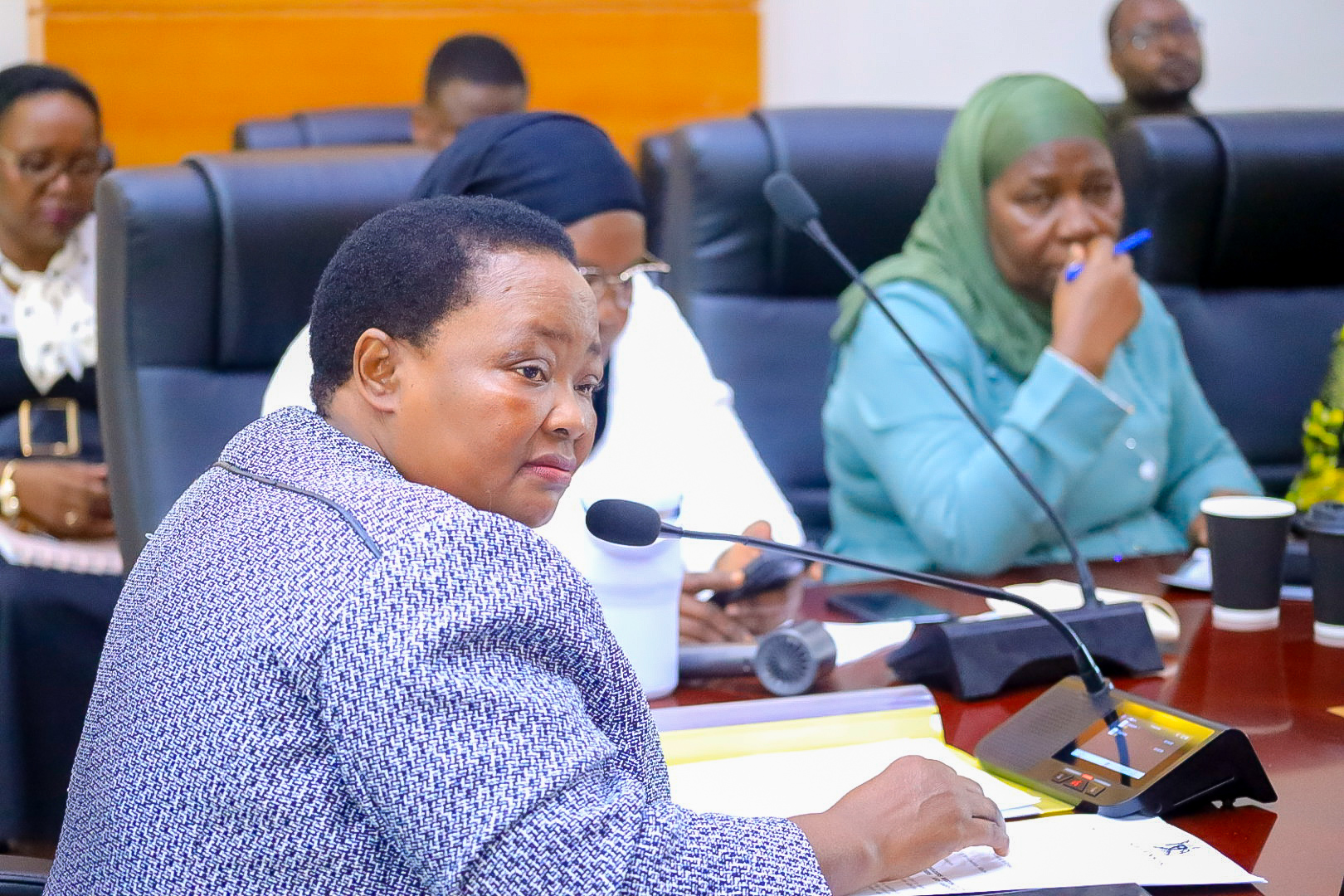
Prime Minister Rt. Hon. Robinah Nabbanja chairing the emergency meeting at OPM, Kampala
The meeting followed protests by traders, particularly those dealing in garments and textiles, who closed their shops on Tuesday in protest against what they described as excessive import taxes and prolonged delays in the clearance of their goods by URA.
The committee, designated the Inter-Agency Tax Harmonisation Committee, will be chaired by the Minister of Trade, Industry and Cooperatives, Sanjay Tana. Its membership includes the Minister of State for Finance in charge of Planning, Amos Lugoloobi; Deputy Attorney General Jackson Kafuuzi; URA Commissioner General John Musinguzi; and representatives of the traders and landlords, John Kabanda and Godfrey Kirumira, respectively.
During the meeting, Musinguzi informed participants that some Ugandan traders had resorted to importing garments through neighbouring countries, particularly Kenya and Tanzania, where they pay import taxes before transporting the goods into Uganda.
He explained that differences in the taxation regimes between Uganda and its neighbouring countries had encouraged traders to clear their goods outside Uganda, resulting in a loss of potential tax revenue.
According to Musinguzi, some traders subsequently transport the goods into Uganda by bus, taking advantage of the differences in tax treatment and clearance procedures.
In response, Prime Minister Nabbanja directed the Ministry of Finance, Planning and Economic Development and the Ministry of Trade, Industry and Cooperatives to undertake a comprehensive review of the tax policy on imported garments and textiles.
The review is intended to address concerns raised by traders, promote fair and competitive taxation, discourage tax avoidance and safeguard government revenue.
The Prime Minister, accompanied by several ministers and senior government officials, engaged representatives of Kampala traders and commercial property landlords to explore practical solutions to the impasse.
During the discussions, traders expressed concern over what they described as high import duties and the impounding of textile consignments, particularly those originating from China. They appealed to the Government to review the applicable taxes and streamline customs clearance procedures to facilitate trade.
Ministers attending the meeting acknowledged the concerns and emphasised the need for a balanced tax policy that supports local manufacturing while ensuring a conducive business environment for traders.
The Prime Minister also assured traders whose merchandise was destroyed by flooding in Kampala that the Government would facilitate compensation for the affected businesses.
Uganda’s taxation framework for imported garments and textiles includes import duties and other applicable taxes and levies. These measures are partly intended to promote domestic production and support the Government’s Buy Uganda, Build Uganda (BUBU) policy.
The proposed review is expected to provide recommendations aimed at harmonising the taxation framework, improving compliance, protecting domestic industries and strengthening Uganda’s competitiveness in regional trade.
Fonte: Office of the Prime Minister


