Compartilhar
A Journey of Duty: From Calgary to Sawa
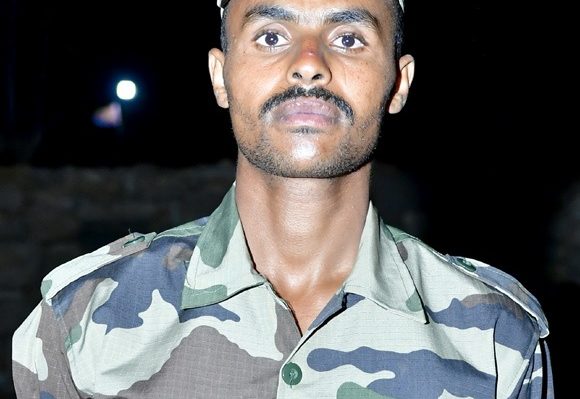
Eritrea Profile features an interview today with Henok Tsegazeab, who traveled from Calgary, Canada, to fulfill his national service obligations. Having built a successful professional life and business in Canada, Henok felt a deep-seated pull to return home and complete the rite of passage that defines his generation. We sat down with him to discuss his motivations, his experiences in Sawa, and his vision for the future.
* * *
Could you introduce yourself and explain the journey that eventually led you back to Eritrea to join the 38th round of National Service?
I am 28 years old and originally from Dekemhare. My journey has been a long one. Before moving to Canada, I lived in Sudan until 2014, where I completed 11th grade. I always had it in the back of my mind to do my national service alongside my peers. I wanted to experience Sawa just like every other Eritrean.
However, when my family moved to Canada, I had to put those dreams aside temporarily. As the only person able to support my family at the time, I had to work while pursuing my college studies. This extended my timeline, which is why I am here at 28—much older than the typical age for Sawa. But I believe it is never too late to accomplish a dream that keeps you awake at night. If you have a goal in mind, you will never find true peace until you achieve it.
Coming from the diaspora, you must have encountered many different opinions about Sawa. What influenced your decision to come, and how did your family’s history shape your patriotic outlook?
When I told people in Canada I was going to Sawa, many were skeptical. There are so many rumors—some say it’s a correction camp, while others warn about a harsh environment and strict punishments. They even doubted I could fit in because of my age. But I also had good friends who had been through Sawa; they told me the truth about how it makes you a better version of yourself, both mentally and physically.
Ultimately, my motivation came from my roots. I was born in Addis Ababa, and my mother and I were expelled during the 1998 war under very harsh conditions. I was raised by my grandmother, who was a member of the EPLF’s underground cells in Asmara during the struggle for independence. She lost her son— my uncle—in the war. She always reminded me never to forget my roots and that my uncle would have been here if not for his sacrifice for our independence. As the only boy in the family, I felt it was my duty to honor this legacy. I wanted to make him proud and ensure that my own children will one day continue this journey.
Can you describe your first impressions of Sawa and the camaraderie you found there? How did you adapt to the training alongside your section-mates?
My arrival was met with great enthusiasm by my relatives in Asmara. When I finally reached Sawa, the reception from my section-mates was incredible. They took my bags, helped me settle in, and even prepared my bed and shower area. Living in a company with hundreds of people—and in Sawa at large—is a very special experience. You get to know people from every ethnicity and background in one shared space.
The physical transition was a challenge at first. On our second day, we had to go for a long run. I wasn’t used to running such distances, especially in plastic sandals. But my section-mates and company-mates were amazing. They told me, “Henok, just stay by our side.” They even took my gun and carried it for me when I got tired, slowing down their pace to match mine.
This is where true camaraderie is built—checking on each other and ensuring no one is left behind. This spirit of uplifting one another is something we should apply to every aspect of our lives. Even the mentors and teachers, many of whom are from the 34th or 35th rounds and younger than me, are great inspirations. Their discipline and dedication without complaint made me even prouder of my decision.
You have a background in Mechanical Engineering and run a business in Canada. How do you plan to use these skills to contribute to Eritrea, and what did you learn about professional discipline while in Sawa?
In Canada, I studied Mechanical Engineering Technology and eventually started my own garage door company. My father is a mechanic, and he taught me the foundational skills, which I later refined through my education. In my business, I make it a point to hire and train newly arrived Eritreans to help them adapt to the system and build their resumes.
However, while in Sawa, I reflected deeply on my future. I’ve realized that I want to contribute to Eritrea in the fields of political science and education. I am fortunate to speak Tigrinya, Amharic, Arabic, English, and French. My goal is to complete my higher education and return here to teach. Those of us in developed countries have so much to offer if we pool our human resources.
Sawa taught me that time management is vital—everything is done on the dot, and no time is wasted. This level of self-discipline, combined with national values, acts as a bridge between who you were and who you want to become.
As someone who has lived in Sudan and Canada, and now in Sawa, what is your final message to fellow Eritreans, particularly those in the diaspora?
Sawa is a melting pot. It is a place where generations meet—the veterans of the struggle, those who fought in later conflicts, and the young generation now filling the ranks. It is a defining rite of passage.
To those in the diaspora who hold different views, I say: come and see it for yourselves. Experience real life here firsthand. Wherever I went in the world, even when I spoke the local language fluently, I often felt like an outsider. But here, I am home. This country was secured through immense sacrifice, and it is the responsibility of every son and daughter of the soil to protect it and carry that duty forward. Sawa is where you truly learn to be a guardian of the nation.
Fonte: Shabait