Compartilhar
A Quiet Victory: Eritrea’s Elimination of Trachoma
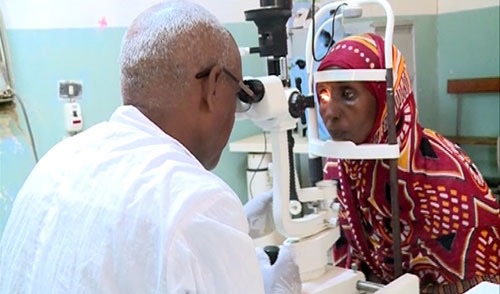
After decades of determined effort, Eritrea has achieved a major public health milestone: the elimination of trachoma as a public health problem. Recently validated by the World Health Organization (WHO), the achievement makes Eritrea the 11th country in the WHO African Region and the 34th globally to reach this milestone, marking a significant victory in the fight against one of the world’s leading infectious causes of blindness. Behind this historic success lies a story of national determination, collective action, and resilience in the face of longstanding public health challenges. Eritrea’s achievement is not only a moment of national pride but also a powerful reminder of what sustained commitment can accomplish in the fight against neglected tropical diseases.
Trachoma is a neglected tropical disease (NTD) caused by the bacterium Chlamydia trachomatis and remains one of the leading infectious causes of blindness worldwide. The disease is transmitted through contact with discharge from the eyes and nose of infected individuals, either directly or through contaminated objects and flies. Repeated infections over time can cause the eyelashes to turn inward and rub against the eye, a painful condition known as trachomatous trichiasis. If left untreated, this can lead to permanent damage to the cornea and irreversible blindness.
The disease is closely associated with inadequate access to basic services, particularly clean water, sanitation and hygiene. Communities living in overcrowded conditions and areas with limited access to these essential services are especially vulnerable. Children are particularly susceptible to infection, while women often face a disproportionate burden due to their close contact with young children.
These circumstances have made tackling trachoma an important public health priority in Eritrea. With many people living in remote rural communities, where access to healthcare, clean water and adequate sanitation has historically been limited, addressing the disease has required sustained attention and interventions extending beyond conventional medical treatment.
For many years, Eritrea has undertaken concerted efforts to address trachoma and reduce its impact on communities across the country. Recognising the disease as an important public health challenge, the country progressively expanded interventions aimed at treating affected individuals, preventing further infections, and addressing the underlying conditions that facilitate transmission.
An important foundation of these efforts was the systematic assessment of the disease across the country. Following baseline surveys conducted in different parts of Eritrea between 2006 and 2020, the country progressively expanded interventions in communities where trachoma remained endemic. Ultimately, all 58 sub-zobas, the country’s second-level administrative areas, were surveyed, helping establish a clearer picture of the disease’s distribution and identify where resources and interventions were most needed.
Eritrea’s response incorporated the four complementary components of the “SAFE” strategy: surgery to treat trachomatous trichiasis, antibiotics to clear infection, facial cleanliness to reduce transmission, and environmental improvements, particularly better access to water and sanitation. This comprehensive approach recognised that addressing trachoma required not only treating those already affected but also tackling the wider circumstances that allow the disease to persist and spread.
Through sustained efforts over the years, Eritrea expanded these interventions across affected areas, including remote and hard-to-reach communities. The country’s experience reflects a long-term commitment to addressing preventable causes of blindness and improving access to essential health services, particularly for populations that face geographical and other barriers to healthcare.
A particularly important feature of Eritrea’s efforts has been the emphasis on community participation and ownership. Recognising that lasting improvements in sanitation and hygiene depend heavily on local engagement, the national programme adopted a community-led sanitation approach that contributed to significant public health gains, even with limited external funding.
This was especially important given the close relationship between trachoma transmission and environmental conditions. Improving sanitation, encouraging facial cleanliness and promoting better hygiene practices are essential not only to reducing the spread of infection but also to sustaining progress over the longer term.
The country also made effective use of available resources and practical innovations. Health workers employed digital tools for data collection and mapping, helping identify affected communities, monitor the situation and direct interventions more effectively. These tools were particularly useful in reaching remote areas and ensuring that resources could be allocated according to identified needs.
Eritrea’s approach demonstrates the value of placing communities at the centre of public health interventions and recognising that sustainable progress depends on local participation, awareness and ownership. It also illustrates how meaningful public health gains can be achieved through careful planning, effective resource utilisation and sustained national commitment.
While Eritrea’s national leadership and ownership have been central to its progress, cooperation with international partners has also contributed to the country’s efforts. The Ministry of Health has worked alongside communities, health workers and development partners, including the Fred Hollows Foundation, the International Trachoma Initiative, and the WHO, to strengthen interventions and advance the elimination objective. As one reflection of the importance of these partnerships, antibiotics, predominantly oral azithromycin, were extended through the International Trachoma Initiative. This support has helped strengthen the country’s capacity to reach affected communities with essential treatment and preventive interventions.
Additionally, the WHO has provided technical support and worked closely with the Government and other partners throughout the process, including supporting the assessment and validation of the country’s progress. Such cooperation has complemented Eritrea’s own sustained efforts, reflecting the importance of constructive partnerships in addressing public health challenges.
Ultimately, however, the achievement is rooted in the commitment and collective efforts of the Eritrean people, national institutions, communities and health workers who have contributed to this progress over many years.
Importantly, while WHO’s validation of Eritrea’s elimination of trachoma as a public health problem is a proud moment, the milestone does not mean that the work of protecting communities from the disease is over. Eritrea has established systems to identify and manage new cases of trachomatous trichiasis and will continue surveillance following validation. Maintaining these systems is important to ensuring that the gains achieved are sustained and that any emerging cases can be identified and addressed promptly.
Beyond its national significance, Eritrea’s achievement is significant as it carries an important message for other countries working to eliminate neglected tropical diseases. The country’s success demonstrates what can be accomplished through sustained political commitment, national ownership, community participation and the effective use of available resources, complemented by constructive partnerships.
With Eritrea now joining the growing number of countries that have eliminated trachoma as a public health problem, the achievement represents another important step towards a world in which no one has to suffer avoidable blindness from this preventable disease. Above all, it is a testament to the determination of a country and its people to overcome a longstanding public health challenge and improve the lives and well-being of their communities.
Fonte: Shabait