Compartilhar
An Expression of Unity, Pride, and National Resilience
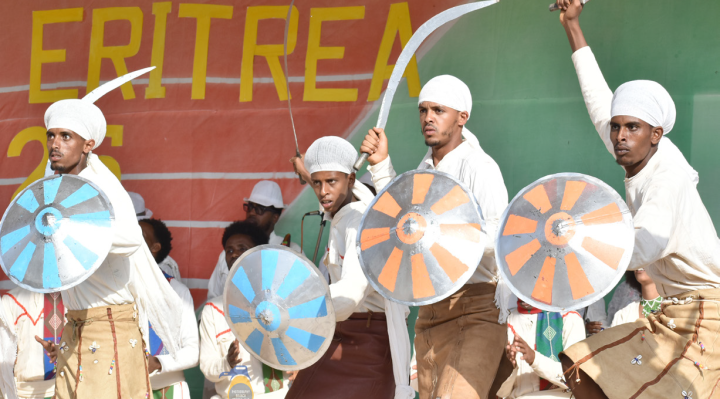
Festival Eritrea is just around the corner. Anticipation is building, and excitement is once again spreading across the country and among Eritrean communities worldwide. Each year, the opening of the festival signals far more than the arrival of a major cultural event; it marks the beginning of a nationwide celebration of history, identity, and community. Hosted at the Expo Grounds in Asmara, the festival transforms the capital into a vibrant gathering place where culture, tradition, and national pride come vividly to life.
Over the years, Festival Eritrea has evolved into one of the country’s most anticipated annual events. It brings together people from every region, generation, and walk of life, offering a rich showcase of Eritrea’s cultural heritage through traditional music and dance, historical exhibitions, regional cuisine, artisan crafts, educational forums, and community displays. More than simply entertaining its visitors, the festival provides an opportunity to reflect on the nation’s journey, celebrate its achievements, and strengthen the bonds that unite Eritreans both at home and abroad.
At its heart, Festival Eritrea is a celebration of continuity. It honors the past, embraces the present, and inspires confidence in the future, reminding Eritreans that their shared identity is rooted not only in history but also in a continuing commitment to unity, resilience, and nation-building.
One international proverb captures this spirit particularly well: “A tree without roots will fall. A people without history will perish.” These words reflect one of Festival Eritrea’s most enduring purposes: preserving the nation’s historical memory while passing it on to future generations.
Although Eritrea is a relatively young independent state, its history stretches back thousands of years. Its civilizations, traditions, and communities have developed over centuries, creating a rich cultural legacy that continues to shape the country’s identity today. Festival Eritrea provides an engaging platform through which that legacy is celebrated, explored, and shared with both Eritreans and international visitors.
Across the exhibition grounds, visitors encounter historical displays highlighting pivotal moments in Eritrea’s national journey, from the country’s long struggle for independence to exhibitions showcasing the distinct contributions of its various regions and communities. These exhibits transform history from something confined to books into a living story that visitors can experience firsthand.
Learning extends well beyond the exhibition halls. Festival attendees can browse a wide selection of books covering Eritrean history, culture, and national development. At the same time, lectures, seminars, and panel discussions led by historians, academics, and cultural experts encourage thoughtful discussion and deeper understanding. Together, these activities ensure that the festival serves not only as entertainment but also as an important educational forum.
At a time when globalization and rapid technological change can sometimes weaken historical awareness or blur cultural identity, Festival Eritrea reinforces the importance of remembering where a nation has come from. By strengthening that connection to the past, the festival helps cultivate a deeper sense of belonging while inspiring future generations to build upon the achievements and sacrifices of those who came before them.
While history provides the festival with its foundation, its celebration of Eritrea’s remarkable diversity gives the event its unmistakable vitality. A walk through the festival grounds reveals the extraordinary breadth of Eritrean society: families from every administrative region, members of the country’s many ethnolinguistic communities, followers of different faiths, young and old, urban and rural residents, and Eritreans returning from abroad to reconnect with their homeland.
Despite these many differences, the atmosphere is defined by warmth, mutual respect, and shared purpose. Conversations begin effortlessly, friendships are renewed, traditional songs fill the air, and visitors participate in celebrations that transcend regional or cultural distinctions. The festival demonstrates in a tangible way that Eritrea’s diversity is not a source of division but one of its greatest strengths.
For members of the Eritrean diaspora, the festival carries particularly deep meaning. Many travel home specifically to attend, using the occasion to reconnect with family, renew friendships, and strengthen their ties to the country of their birth or heritage. For younger Eritreans raised abroad, Festival Eritrea offers an invaluable opportunity to experience firsthand the languages, customs, music, cuisine, and traditions that have shaped their national identity. In this way, the festival serves as an important cultural bridge between generations and across continents, helping preserve Eritrean heritage wherever its people may live.
Across the world, diversity has the potential to enrich societies by bringing together different perspectives, experiences, and traditions. When nurtured within a culture of equality and mutual respect, it encourages creativity, resilience, and social cohesion. History also reminds us, however, that diversity can become a source of conflict where exclusion, discrimination, or inequality are allowed to flourish.
Notably, Eritrea’s approach has been to pursue national unity while recognizing and respecting its cultural plurality. Since independence, considerable emphasis has been placed on building an inclusive society in which all citizens can contribute to national development regardless of ethnicity, religion, language, gender, economic status, or physical ability.
This commitment is reflected through laws, public policies, and social initiatives that seek to discourage discrimination while expanding access to essential services and opportunities. These efforts are supported by longstanding cultural values that emphasize solidarity, cooperation, and mutual responsibility.
Over the past three decades, Eritrea has also introduced numerous initiatives designed to support groups facing greater social or economic challenges, including women, children, people with disabilities, pastoral communities, low-income households, and residents of remote areas. The broader objective has been to reduce disparities while encouraging more balanced national development.
Among these initiatives, access to healthcare and education has remained a central priority. Essential healthcare services are provided free of charge, while individuals living with chronic illnesses receive ongoing medical care and treatment. Likewise, education is offered free from the primary through tertiary levels, complemented by adult education and literacy programs that expand educational opportunities throughout the country. The continued use of mother-tongue instruction in early education further reinforces both inclusion and respect for Eritrea’s linguistic diversity.
Another notable example of community-focused development is the Minimum Integrated Household Agricultural Package (MIHAP), introduced in 2007. Designed primarily for rural households – many headed by women – the program combines livestock, poultry, beekeeping, fruit trees, vegetable cultivation, and ongoing technical assistance into a single integrated support package. By strengthening household food production and creating sustainable sources of income, MIHAP has helped improve livelihoods while contributing to broader rural development.
Collectively, these initiatives reflect a long-term commitment to social inclusion and equitable development. They also help explain why Festival Eritrea resonates so strongly with the public: the festival celebrates not only cultural diversity but also the shared national vision that seeks to ensure every citizen has a place within Eritrea’s future.
If history provides the festival with its intellectual heart, then its food, craftsmanship, music, and entrepreneurial spirit provide its unmistakable soul. Beyond its historical exhibitions and educational programs, Festival Eritrea offers visitors the opportunity to experience the living traditions that continue to define everyday Eritrean life. Throughout the festival grounds, food stalls representing the country’s various communities prepare an impressive variety of traditional dishes using regional ingredients and cooking methods refined over generations. Whether enjoying familiar favorites or discovering new flavors, visitors gain a deeper appreciation for the culinary diversity that mirrors Eritrea’s broader cultural landscape.
Traditional coffee ceremonies and communal dining further enrich the experience, demonstrating how hospitality remains one of the enduring hallmarks of Eritrean society.
The festival also provides an important platform for local artisans, entrepreneurs, farmers, cooperatives, and small businesses. Exhibitors showcase handmade textiles, jewelry, pottery, woodwork, woven goods, agricultural products, and decorative art that reflect both creativity and cultural continuity. For many participants, Festival Eritrea offers an invaluable opportunity to introduce their products to thousands of visitors, expand their customer base, establish new business relationships, and generate additional income. In doing so, the festival not only preserves traditional craftsmanship but also supports local enterprise and contributes to economic activity within the community.
Many government institutions, development programs, educational organizations, and private enterprises also participate through informational exhibitions that highlight ongoing projects, technological advances, and investment opportunities. These displays demonstrate that the festival is not solely a celebration of culture and history but also a showcase of Eritrea’s continuing social and economic development.
Together, these experiences illustrate that culture is not confined to museums or commemorative events. Rather, it is expressed through the food people prepare, the crafts they create, the businesses they build, the knowledge they share, and the traditions they pass from one generation to the next.
Ultimately, Festival Eritrea is far more than an annual gathering. It is a powerful expression of the country’s character and an enduring symbol of the values that continue to shape its national journey. By bringing together history, culture, education, entrepreneurship, and community, the festival creates a unique space where Eritreans celebrate both the diversity that enriches their society and the shared identity that binds them together.
Fonte: Shabait