Compartilhar
Born in Beijing and Raised in Geneva, but Dreaming of Eritrea: Dr. Helen Awet
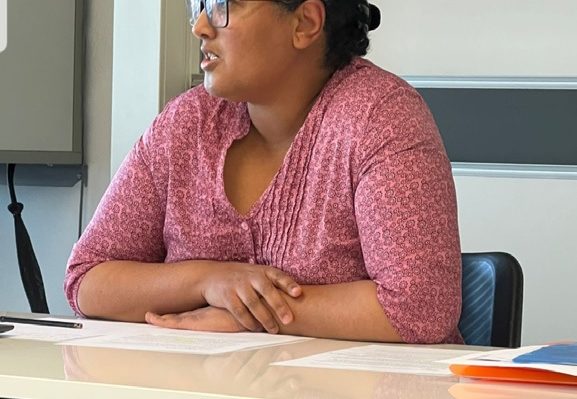
Eritreans across the diaspora continue to return to their homeland with inspiring missions, bringing their professional expertise, global insights, and personal assets home to address local challenges. Dr. Helen Awet Weldeyohannes is a prime example of this enduring commitment. Born in Beijing and raised in Geneva, she has always had her heart set on Eritrea. Last month, she visited home to share her doctoral research on the engagement and mobilization of the Eritrean diaspora. Eritrea Profile sat down with her to discuss her personal background, career journey, and ongoing research.
* * *
Please, begin by introducing yourself and sharing your background.
I was born in Beijing, China, and my parents brought me to Geneva, Switzerland, when I was five months old. I was born in China because my father was working as a station manager for Ethiopian Airlines at the time. When the colonial situation and conflict escalated in Eritrea, my parents decided to relocate our family to Switzerland.
In Switzerland, I completed my education from elementary school to higher education. I grew up largely within white European communities, but despite the small size of the Eritrean community in Geneva, I attended mother-tongue language classes every Sunday. That experience allowed me to establish a profound connection with my home country’s heritage and national values.
At community meetings and cultural activities, I had the opportunity to reconnect with peers and learn Eritrean traditions. At home, my mother regularly prepared traditional dishes like injera and shiro. Together, these two influences— community engagement and family life—shaped my personal political consciousness and sense of national identity.
Since the time of the Eritrean armed struggle, the diaspora community has maintained a remarkably strong and united bond. Growing up in that environment was a true blessing; it instilled in me a deep sense of solidarity. Every summer, we traveled to the famous Bologna Festival in Italy, where we met Eritreans from across Europe. As children, we spent endless hours playing in open fields and making new friends. Those unforgettable memories still bring me boundless joy as a member of the diaspora.
Could you walk us through your academic and professional journey leading up to your doctoral work?
Before earning my degree in International Relations, I had the opportunity to work with the Eritrean Red Cross Society in Asmara in 2002. Following my graduation, I joined the headquarters of the International Federation of Red Cross and Red Crescent Societies (IFRC) in Geneva. Later on, I was deployed to the Democratic Republic of the Congo as part of peacekeeping operations and subsequently worked in Serbia with the International Organization for Migration (IOM).
Upon completing those assignments, I joined the Permanent Mission of the State of Eritrea to the United Nations in New York, where I served for four and a half years. During my tenure at the UN, I focused on social, cultural, and humanitarian affairs, gaining invaluable experience in international diplomacy, global politics, and African affairs.
What are your memories of the moment Eritrea gained Independence?
Following Independence in 1991, my parents brought me home to Eritrea for the very first time. I vividly remember how emotional my parents became when we stepped off the plane—my mother bent down and kissed the ground. It remains the most unforgettable moment in my personal life and in our nation’s history.
What inspired your doctoral thesis?
Having lived the migrant experience firsthand, I am deeply familiar with both its opportunities and its challenges. Throughout my life, I participated in activities organized by Eritrean communities across Europe and North America. Growing up, I witnessed my parents and their peers actively dedicated to the national cause. My mother served as the first president of the National Union of Eritrean Women (NUEW) in Geneva, while my father represented the Eritrean Relief Association (ERA) in Switzerland. I remember meetings held at our home, where my mother prepared meals for both community members and international allies, including Dr. Toni Locher of the Swiss Support Committee for Eritrea (SUKE). That sort of environment early on provided my initial exposure to the concept of transnational solidarity.
As international interest grew regarding the role of the diasporas in migration and development, I realized that the long-standing experience of the Eritrean diaspora had much to contribute to global academic discourse. My own background motivated me to pursue this topic for my PhD research, specifically examining the underlying motivations driving Eritrean diaspora engagement in voluntary activities, both in host countries and back home.
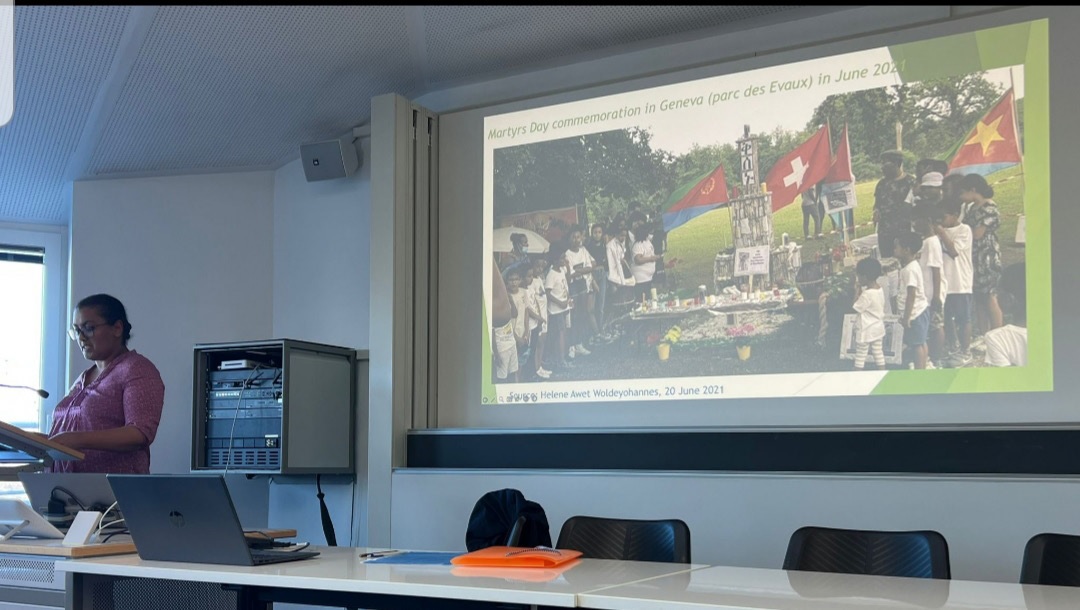
My thesis, titled “Engaging with Diaspora: Eritrean Associations in Urban Areas,” was directed by Professor Sandro Cattacin at the University of Geneva. My study focuses on Eritrean community organizations across four major metropolitan areas: Amsterdam, Milan, Stockholm, and the Washington, D.C. area. In my research, I examine social and cultural dynamics rather than strictly political ones, focusing on themes of identity, multiple belongings, transnational movement, and community solidarity.
What specific lessons can other diaspora communities draw from the Eritrean experience?
Uniquely, the Eritrean diaspora possesses an unusually resilient bond with its homeland. As a result, the community demonstrates an extraordinary capacity for mobilization, forged during the national liberation struggle and continues to thrive today in support of national development projects. This sustained connection is a testament to the high level of political consciousness, unity, and patriotism of Eritreans abroad.
At the same time, every community has insights to share. Beyond my research, I am an active member of the African Diaspora Association in Geneva, where I help promote African literature, artistic works, and intellectual achievements. Through this platform, I work to introduce Eritrean culture and identity to a broader international audience.
Any message for our readers?
I want to encourage Eritreans, both at home and across the diaspora, to continue sharing Eritrea’s authentic history, rich heritage, and natural beauty. The precious social capital forged through our national identity played a decisive role in achieving liberation and continues to drive our development today. It is a legacy well worth sharing with the world.
Thank you, Dr. Helen, for sharing your inspiring journey. We wish you success in your academic and professional endeavors.
Fonte: Shabait