Compartilhar
Continuous Learning and Improvement: Highlighting the OAG
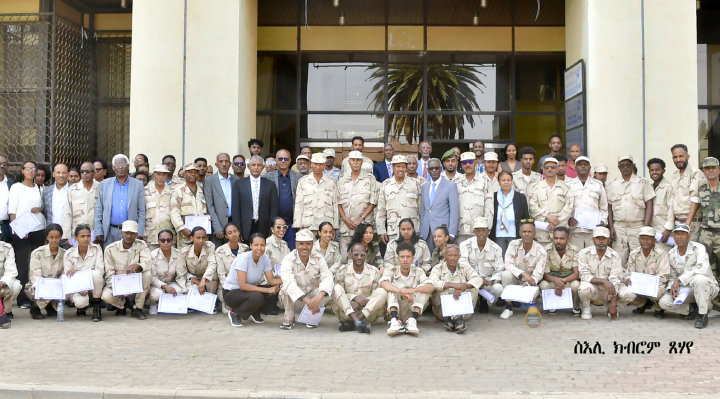
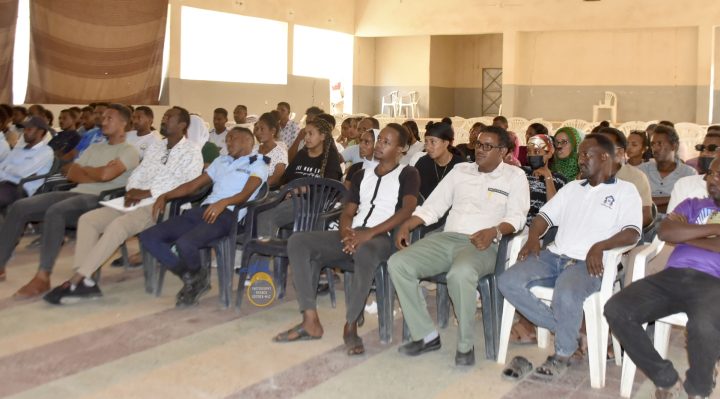
The recent training organized by the Office of the Auditor General (OAG), in collaboration with the Ministry of Finance and National Development, marks another important milestone in Eritrea’s ongoing efforts to strengthen public financial management and institutional capacity. Conducted in two phases, the program brought together 75 internal auditors, including 23 women, from the Ministry of Defense and various government institutions for intensive instruction on key aspects of public-sector auditing and financial administration. Participants received training in the fundamentals of internal auditing, professional ethics, risk-based annual audit planning, audit reporting, budget execution, government bookkeeping, procurement systems, material management and disposal, and the basic concepts of Eritrea’s new coordinated government financial management system.
While the initiative undoubtedly enhances the technical capacity of internal auditors, it also reflects something much broader. It is part of a long-standing institutional strategy that recognizes human capital development as indispensable to effective public administration, sound financial governance, and national development. Indeed, the history and evolution of the Office of the Auditor General demonstrate that sustained investment in people – their knowledge, skills, and professional competence – has been a defining factor in the institution’s steady growth and increasing effectiveness over the years.
Broadly, national auditing institutions are universally recognized as indispensable pillars of good governance and effective public administration. Beyond their traditional role of identifying waste, inefficiency, and financial irregularities, supreme audit institutions play a central role in strengthening accountability, improving public-sector performance, and safeguarding the prudent use of public resources.
In Eritrea, the Office of the Auditor General serves as the country’s supreme public auditing institution. Pursuant to Legal Notice No. 14/1993, Article 2(25), the OAG is mandated to audit government ministries, national departments, state-owned enterprises, and other public institutions and to prepare comprehensive audit reports regularly. Although the present Office was formally established following Eritrea’s independence – initially under Proclamation No. 23/1992 and subsequently reconstituted under Proclamation No. 37/1993 – the practice of public auditing in Eritrea has a much longer and richer history.
Formal auditing institutions in Eritrea date back to the Italian colonial period, when an auditing body known as the Controllore Generale dei Conti was established to oversee public accounts and state property in what Italy regarded as its colonia primogenita, or “firstborn colony.” During the subsequent British Military Administration, the institution was reorganized as the Office of the Auditor General and entrusted with auditing and supervising government revenues, expenditures, and public assets. During the period of federation with Ethiopia, the Office reported directly to the Eritrean Parliament. However, following Eritrea’s unlawful annexation, it was incorporated into Ethiopia’s national auditing framework. Following Eritrea’s liberation and the restoration of national sovereignty, an independent Office of the Auditor General was re-established, reflecting the country’s renewed commitment to accountability, transparency, and sound public financial management.
Over the past three decades, both the institutional capacity of the OAG and the professional competence of its staff have expanded considerably. The scope, quality, and sophistication of its auditing services have likewise improved, enabling the institution to carry out its mandate with increasing effectiveness. International experts who have worked alongside the OAG have consistently praised the professionalism of its personnel, describing Eritrean auditors as highly competent, motivated, and dedicated professionals. These assessments have been reinforced by the institution’s own accomplishments, including receiving Awards of Excellence from the Association of Chartered Certified Accountants (ACCA) International in 2007 and the African Organization of Supreme Audit Institutions (AFROSAI) in 2014.
A major driver of this institutional progress has been the OAG’s unwavering commitment to continuous learning and professional development. Guided by this philosophy, the OAG has, over many years, collaborated with a range of national, regional, and international partners – including the Eritrean Center for Organizational Excellence and AFROSAI-E – to organize numerous training workshops and professional development programs. These initiatives have focused on enhancing technical auditing competencies, strengthening leadership and management capabilities, and familiarizing staff with evolving international auditing standards and best practices. In addition, many auditors and support staff have been encouraged and supported to pursue professional certifications, specialized technical training, higher education, and overseas learning opportunities. Importantly, these development opportunities have been provided free of charge, ensuring equitable access for all employees while reinforcing the principles of fairness, inclusivity, and merit.
The importance of continuous professional development extends well beyond the auditing profession. A substantial body of international research demonstrates that employees across sectors consistently value opportunities to expand their knowledge and strengthen their professional capabilities. Structured learning enables individuals to perform their responsibilities more effectively while also fulfilling their aspirations for personal growth and career advancement.
Continuous learning also produces measurable organizational benefits. Employees who receive regular opportunities for professional development generally exhibit higher levels of motivation, stronger organizational commitment, and greater job satisfaction. Such investments are frequently associated with improved productivity, lower absenteeism, and enhanced institutional performance. Moreover, in an era characterized by rapid technological advancement, digital transformation, automation, climate-related risks, and increasingly complex governance challenges, lifelong learning has become indispensable for building institutions that are resilient, adaptable, and capable of responding effectively to changing circumstances.
Equally important, professional development fosters creativity and innovation. Exposure to new methodologies, emerging technologies, and evolving international standards encourages employees to challenge conventional practices, identify more efficient solutions, and adopt forward-looking approaches to problem-solving. These experiences not only enhance present-day performance but also prepare future leaders capable of guiding institutions through increasingly complex administrative and financial environments.
Viewed in this broader context, the recent training provided to internal auditors is both timely and strategically significant. Beyond equipping participants with practical knowledge that can immediately strengthen financial oversight within their respective institutions, it reflects a deeper institutional philosophy that has guided the Office of the Auditor General throughout its evolution. Rather than viewing professional development as an occasional activity, the OAG has embraced continuous learning as a defining feature of institutional excellence and a prerequisite for effective public service.
Ultimately, the evolution of Eritrea’s Office of the Auditor General illustrates the close relationship between strong institutions and sustained investment in people. The Office’s growing professionalism, expanding capabilities, and internationally recognized achievements have been built upon decades of continuous training, organizational learning, and capacity development. The recent training initiative is therefore far more than a routine professional workshop; it embodies both the OAG’s enduring commitment to institutional excellence and Eritrea’s broader commitment to developing the human capital upon which effective governance and sustainable national development ultimately depend. As public institutions confront increasingly complex challenges in a rapidly evolving world, investing in people remains one of the surest ways to build resilient institutions capable of serving the nation with competence, integrity, transparency, and accountability.
Fonte: Shabait