Compartilhar
Eritrea: A Model of a Primary Health Care System
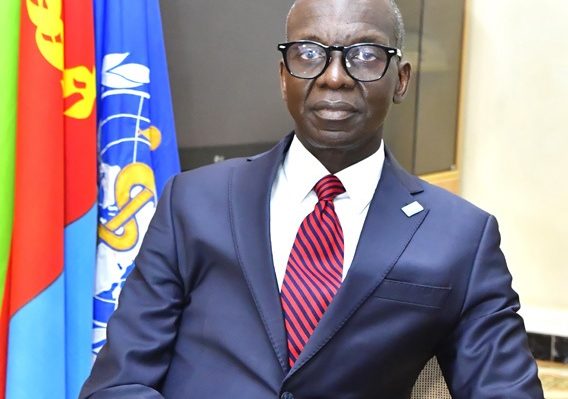
Professor Mohamed Yakub Janabi is a Tanzanian cardiologist and the current WHO Regional Director for Africa, having assumed office in June 2025. He holds an MD from Kharkiv Medical Institute (Ukraine) and a PhD in cardiology from Osaka University (Japan), and previously served as Executive Director of Tanzania’s Muhimbili National Hospital and founder of the Jakaya Kikwete Cardiac Institute. With over 30 years of experience in clinical medicine, health policy, and health systems strengthening, his regional priorities include universal health coverage, non-communicable diseases, local pharmaceutical manufacturing, and health security across Africa. He visited Eritrea last week, where he met with Ministers, government officials, and health practitioners, and toured the Azel Pharmaceutical Factory, the Orotta Cardiac Center, and several hospitals. Upon concluding his visit, he sat down with Eri-TV Raffael Guisepe and Eritrea Profile. Excerpts follow.
* * *
You have met with Ministers and other officials and toured the Azel Pharmaceutical Factory, the Orotta Cardiac Center, and several hospitals across Eritrea. What is your overall assessment of the country’s health system strengths and the key challenges that remain?
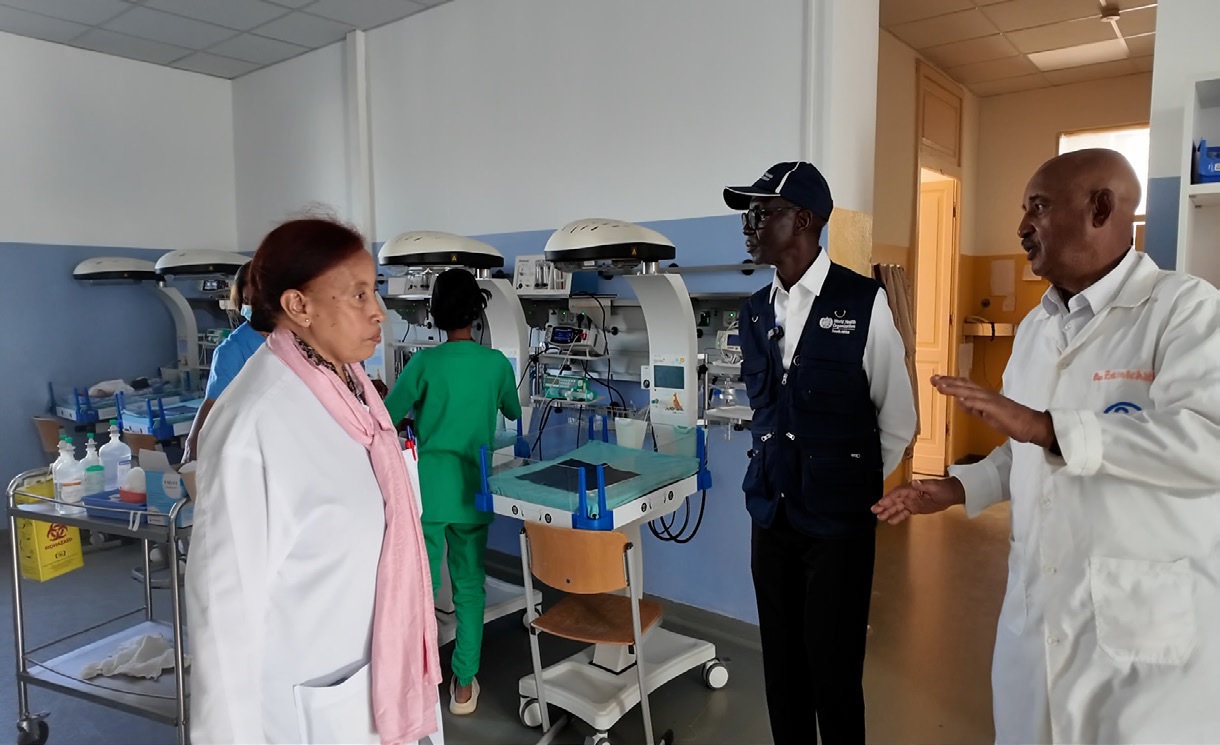
I had the opportunity to meet the Minister of Foreign Affairs, the Minister of Health, the Minister of Information, and the Executive Director of the Higher Board of Education and Research Institutes. On the same day I arrived, I went to Orotta National Referral Hospital, where I visited the cardiology and neonatology centers. The last Regional Director came to this country 20 years ago, but I had never had the chance to visit before. So it was a pleasant surprise to begin my visit at a hospital, especially since I come from public health as a cardiology interventionist. It was a pleasure to learn that they are performing such major operations. Cardiology is not as straightforward as other specialties, but knowing that sick children who come in breathe better and heal well makes me appreciate the enthusiasm and cooperation they are showing with the Italian team. That is very commendable. I had the privilege of training in highly advanced countries like Japan, the US, and Europe, and one thing I observed here is that with minimal equipment, people can improvise effectively. We have shared what we can do and how we can work together to take things to the next level. The Ministers were very clear about the country’s objective – primary health care – and they know the priorities this nation needs. So our role is to take those priorities and see how we can collaborate with the government to advance the health-for-all agenda more effectively.
And what is your overall impression of your tour of the Azel pharmaceutical factory?
To begin with, Azel Pharmaceutical is a joint venture. The government cannot do 100% on its own, so when it enters into a partnership, it naturally holds the majority stake. I believe that is the only way forward, not just in Eritrea but in any country. Public-private partnerships are advocated everywhere. During the briefing, I was impressed to learn that 30% of the medicines – or the IV drips – for Eritrea are being produced there. We also discussed the challenges, and I think we can work together because the factory is moving in the right direction. Eritrea could become one of the continent’s medicine suppliers. Given that Africa imports 80% of its medicines and diagnostics and 100% of its vaccines, it is worth praising member states like Eritrea for making such an effort. We should encourage them to reach international standards for exportation.
As a cardiologist, what is your assessment of the Orotta Cardiac Center and Eritrea’s capacity to manage cardiovascular disease?
The first question I ask countries is this: “Should you allow people to get sick to this level?” You need to invest in primary health care to prevent people from reaching such advanced stages. Moreover, it is a very cost-effective investment, because with centers like this, patients do not need to travel outside their area, which can save significant transportation costs. The barefoot doctors model has continued, and primary health care remains the backbone of universal health coverage. It is crucial to detect these diseases early, before they cause complications.
In addition, I look at Eritrea’s demographics – almost 70% of the population lives in rural areas. If you examine disease outbreaks across Africa, they often start in communities and end up there. Therefore, you must invest in the community. The barefoot doctors are vital here in Eritrea. So again, investing in primary health care is a win for Eritrea and for the entire African continent. It is promising, and it simply requires more training and a larger workforce.
Eritrea provides free healthcare to all citizens. What challenges does the country face in sustaining this model, and how can WHO assist?
Eritrea’s model of largely free or highly subsidized health care is rooted in very strong principles of health equity. It is a notable achievement. However, any free or highly subsidized program usually faces financial, structural, and system-level challenges. To sustain it, the government must work on expanding physical infrastructure and domestic financing. If you want to maintain it, you have to sustain it, and to sustain it, you need a very stable financing process – whether through tax collection and subsidizing the health budget, or by increasing the health budget directly.
How can we improve together to digitalize health? By working with WHO, we can use all the information we have – since the government must be provided with the latest data on what is happening – to plan effectively. To summarize: the free health care model I have seen here is equity-driven, with no one left behind, and it enjoys strong political commitment. But the constraints to making it sustainable, as I mentioned, should be addressed by prioritizing efficiency and targeted investments. WHO can support this through technical assistance.
What impressed you most about Eritrea’s primary healthcare system, including its network of community health workers?
As you know, we have Ebola in the Democratic Republic of Congo, which was exported to Uganda—or vice versa. WHO has classified the risk of Ebola as very high in that country and low across the rest of the African continent. Eritrea is not an island, so it is also at risk. People are still moving across borders, and being on the continent, Eritrea falls under the same rules as everyone else. Of course, the risk is higher in neighboring countries, but still, when I saw all those PCR and sequencing machines capable of diagnosing bacteria and viruses, that is what I call preparedness. Beyond airport screening, the country must have the capacity to make accurate diagnoses. I saw that capacity here in Eritrea. There are things here and there that need attention; we discussed some technicalities, and we will work with the government on those. But the basic elements needed for advanced diagnosis are already in place. Of course, there is much room for improvement, but for these highly specific tests, the country is already on track. I think that with more investment in health – and health has never been a cost; it is an investment that pays back quickly – if you have a healthy community and a healthy population, your people will be more productive. I was very impressed with this initial stage. Eritrea has 98% immunization coverage – you see that level in developed countries. Thus, investment in health is not a cost; in the long run, it contributes to the economic development of any country.
Your vision emphasizes regional and global partnerships to address Africa’s shared health challenges. Following your meetings with Eritrean Ministers and Officials, what concrete opportunities do you see for Eritrea to collaborate more deeply with the broader African region – particularly in areas like specialized training, or research and innovation?
We discussed this at length with the Honorable Minister, and we have agreed to strengthen certain areas. First, strengthen the health care system, which is the most important thing. With a resilient health care system, the country can withstand shocks and deal with them without interruption – even during an outbreak – while continuing normal services. This is what we call a resilient health care system. We agreed to work together on training to increase the workforce and to prioritize preparedness. It is more effective to prepare when there is no outbreak than to wait for one and then panic. I have seen the usefulness of that approach. We also discussed that WHO and the medical school should conduct simulation exercises with the nurses. We can contribute to that training.
We have agreed to start the process so that Eritrea can reach maturity level two and then progress to level three in the pharmaceuticals. With the infrastructure already in place, it will not take long to reach that maturity level. This is important for Eritrea because maturity levels two and three indicate the quality of products from that factory. If Eritrea uses the East African platform, accessing information will be easier. We are also here to sit with the team and identify where support is needed. I believe I am leaving with a clear picture of Eritrea’s priorities and how we can work with the government to ensure that no Eritrean is left behind; including those living in hard-to-reach areas.
Any concluding message you want to add?
Thank you for the hospitality, for hosting me here in Eritrea for four days, and for sharing so openly. I do not take that for granted, because WHO cannot succeed without such openness and transparency.
Thank you Professor Mohamed.
Fonte: Shabait