Compartilhar
“Eritrea Isn’t Just Surviving; It’s Building Something Unique. The World Should Pay Attention.”
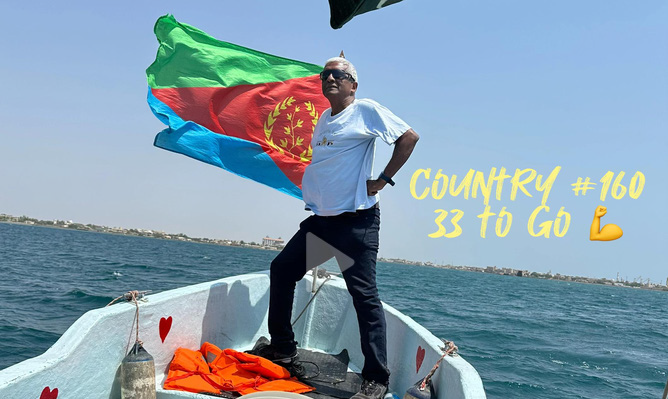
Emmanuel Daniel is a renowned global traveler, author, and founder of The Asian Banker. Trained as a lawyer, he holds degrees from the National University of Singapore and the University of London and has attended executive programs in economics at Columbia University and in artificial intelligence at MIT. Dividing his time between Singapore, Beijing, and New York, he has visited 160 countries—most recently Eritrea. His three-day trip left him deeply impressed by the nation’s history, culture, and industrious people. In this Q&A, Emmanuel shares his firsthand experiences, from touring Asmara’s UNESCO-listed architecture to witnessing the country’s remarkable resilience.
Can you describe your first impressions of Eritrea?
From the moment I arrived in Asmara, I was struck by the city’s beauty. The streets are immaculate, the people are warm, and there’s a quiet discipline in the air. It was immediately clear that Eritreans are hardworking and take genuine pride in their country.
What stood out to you about Asmara’s architecture?
Asmara is an architectural time capsule. The UNESCO-listed buildings—from elegant Art Deco facades to modernist public structures—tell a story of cosmopolitan ambition. Walking the boulevards, I felt the city’s layered identity: Italian-era design, local adaptations, and a civic pride that keeps these buildings alive. The city felt orderly and cared for.
I visited the Fiat Tagliero Service Station—it resembles an airplane about to take off, yet it was built in the 1930s! Cinema Impero and the Asmara Opera House also amazed me. These aren’t just relics; they remain functional parts of daily life. It’s rare to see history so beautifully preserved and still in use.
You visited the tank graveyard. What thoughts went through your mind?
I was speechless. Rows upon rows of rusted tanks, artillery, and military vehicles—once belonging to Ethiopia’s arsenal—stretch across the landscape, a stark reminder of conflict and sacrifice. The sheer number and variety of equipment made it clear that external support played a role in the region’s wars. Yet the story that resonated most was not the hardware but the human determination behind the struggle. Learning that Eritreans prevailed in 1991 despite overwhelming odds left a deep impression on me. Standing there, I thought: this is proof of what a people can achieve when they refuse to surrender.
What was your experience like in Massawa?
Massawa has a completely different rhythm. Where Asmara is cool, orderly, and architectural, Massawa is salt-scented, sunbaked, and steeped in maritime history. The old town’s ruins and narrow alleys speak of centuries of trade and cultural exchange. The Sheik Hanafi Mosque and the coastal ruins are evocative—they tell stories of a port that once connected the Horn of Africa to the wider world.
I was struck by how clean the coastal land was and how the sea seemed to anchor a different kind of civic memory. But the most eye-opening part was the Northern Red Sea National Museum. It houses artifacts that trace Eritrea’s ancient civilizations, including the port city of Adulis. Before visiting, I had heard competing claims about Eritrea’s historical relationship with Ethiopia. The museum’s presentation of the Adulis civilization and the archaeological record clarified a lot for me. It showed a distinct, long-standing maritime culture with its own identity and trade networks. Having visited Ethiopia first and heard a particular narrative, the museum provided context and nuance that fundamentally changed my understanding.
You called Medeber Market ‘one of the most hopeful places’ you’ve seen. Why?
Because it’s real sustainability— no gimmicks. It’s a sprawling, noisy, hands-on hub where metal is sorted, melted, and repurposed. No fancy machines, just skill and hard work. What impressed me was the scale and ingenuity: people turning discarded metal into usable goods, creating livelihoods while reducing waste. It felt ecological in the truest sense—environmentally responsible and economically empowering. Watching artisans and laborers at work gave me a glimpse of how Eritrea could build industries. If this kind of ingenuity is scaled up, the country could become a global leader in recycling industries.
You mentioned another moving moment involving cyclists. Tell us about that.
Driving down the spiral road to Massawa is an experience in itself—a ribbon of asphalt that descends from highland cool into coastal heat, with sweeping views of the Red Sea. Along that road, I saw groups of cyclists training, their silhouettes against the landscape, pushing up and down the grades with single minded intensity. I learned they were following a tradition of many successful Eritrean cyclists on the global stage—one of them being Biniam Ghirmay, the Eritrean rider who made history as the first Black cyclist to win a green jersey at the Tour de France.
What did you learn about Biniam Ghirmay?
The story I was told stayed with me. When Biniam was starting out in national competitions, his father sold one of his woodworking machines to buy him a bicycle. That sacrifice—a parent trading a livelihood tool for a child’s dream—felt emblematic of the country’s investment in its youth. Hearing that, and then watching dozens of young cyclists train on that same steep, unforgiving road, made the sacrifice real. It wasn’t just a tale of individual talent; it was a community’s belief in possibility.
How did witnessing the cyclists affect you?
It was profoundly moving. The cyclists were not merely exercising; they were rehearsing a future. Their training was disciplined and communal. Watching them climb and descend the spiral road, I felt the same hope I’d seen at Medeber: people converting limited resources into global potential. The scene was both intimate and symbolic—a living metaphor for how small acts of faith and hard work can ripple outward.
How did the people you met shape your experience?
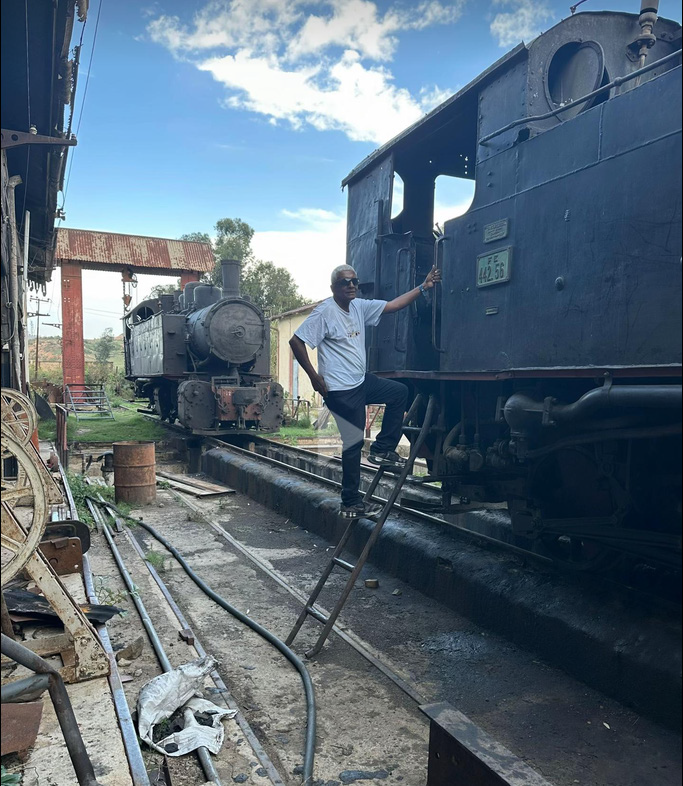
The people made the trip. From museum curators who patiently explained artifacts to market workers who showed me their craft, everyone I met was generous with their time and stories. Their hospitality was genuine; they wanted visitors to understand their country beyond the headlines. Conversations often turned to aspirations—better infrastructure, more industry, opportunities for youth. That combination of warmth and ambition is what I’ll remember most.
What misconceptions about Eritrea did this trip correct for you?
I used to hear that Eritrea is isolated, struggling, or dependent. But what I saw was the opposite—a country standing firm on its own. The people are educated, self-sufficient, and fiercely independent. Medeber Market shows how they turn limitations into innovations. Their history proves they’ve always been their own nation. And their hospitality? I felt at home from day one.
What surprised you most about Eritrea’s potential?
The sense that sustainability and industry can grow together. Medeber Market is a microcosm of that potential: it’s environmentally sensible and economically viable. Combine that with Eritrea’s strategic coastline, its historical trade links, and a population that values hard work, and you can see the outlines of a future where Eritrea builds globally relevant industries. It won’t happen overnight, but the foundations are visible.
How would you summarize Eritrea in three words?
Resilient. Innovative. Proud.
Any final message for those who’ve never been to Eritrea?
Come curious and open-minded. Listen to the stories people tell, visit the museums, walk the streets of Asmara, descend the spiral road to Massawa, and spend time at Medeber if you can. You’ll find a country shaped by struggle and sustained by work, where small acts of sacrifice and ingenuity point toward a hopeful, industrious future.
Thank you for your time!
Fonte: Shabait