Compartilhar
Findings show Grade 10 learners increasingly embrace STEM education
A new study unveiled by the Centre for Mathematics, Science and Technology Education in Africa (CEMASTEA) has revealed strong uptake of the Science, Technology, Engineering, and Mathematics (STEM) pathway among Kenya’s first cohort of Senior School learners.
The baseline study, conducted in March 2026 to assess the rollout of the STEM pathway following the transition of learners into Grade 10, revealed that more than 95 per cent of learners doing STEM subjects intend to continue pursuing the pathway beyond secondary school.
Speaking to the media during the unveiling at CEMASTEA in Karen, the Acting Director, STEM Research and Innovation at CEMASTEA, Karanja Mutitu, said the findings demonstrated that learners are now embracing STEM education and are eager to pursue careers in science, technology, engineering, and mathematics-related fields.
Dr. Mutitu divulged that the study examined key areas including learners’ and teachers’ perceptions of the STEM pathway, the pedagogical support provided by school heads, the availability and utilisation of learning resources, and how STEM subjects are taught in classrooms.
“On perception, the learners are embracing STEM. Over 95 per cent of Grade 10 learners undertaking STEM subjects indicated they would prefer to continue with the STEM pathway even after senior school,” narrated Acting Director, adding that the results highlighted the growing confidence among learners in the Competency-Based Education (CBE) curriculum uptake.
Dr. Mutitu said the findings demonstrated a growing interest in STEM education among learners, therefore indicating a promising future to nurture a skilled workforce under the Competency-Based Education reforms.
However, the researcher said that despite the strong interest in STEM among learners, the study identified significant gaps in teacher preparedness.
He revealed that approximately 27.1 per cent of teachers assessed reported that they do not feel adequately equipped to teach STEM subjects under the Competency-Based Education (CBE) framework.
They particularly attributed their concerns to insufficient capacity-building and professional development opportunities.
“When we looked at the perceptions of teachers, about 27.1% of teachers indicated they feel not adequately prepared to teach the STEM pathway, and one of the issues they raised is that they have not been capacity building in CBE,” he revealed.
Acting Director, therefore, said the findings underscored the need for institutions such as CEMASTEA and other education stakeholders to strengthen capacity-building initiatives so that teachers are well equipped to effectively deliver the STEM pathway.
Dr. Mutitu further revealed that more than 80 per cent of learners believe their school heads provide the necessary pedagogical support and create a conducive learning environment for learners.
“On pedagogical support, more than 80 percent of learners reported that their school heads provide the right support and create a conducive environment for learning,” Acting Director said.
However, the researcher revealed that a significant proportion of teachers called for additional school-based support and professional development to strengthen curriculum delivery.
“At the same time, about 27 per cent of teachers indicated they require additional resources and stronger school-based support to address areas where they do not yet feel adequately prepared to teach under the STEM pathway,” he added.
On learning resource utilisation, Dr. Mutitu said most learners reported having adequate materials to support their studies, although some schools were found to require further investment to address existing gaps.
Classroom observations indicated that teachers are increasingly adopting learner-centred approaches and making effective use of available resources.
“Our classroom observations showed that most teachers are effectively utilising available resources, engaging learners in line with the Competency-Based Education approach, and preparing the required professional documents to support quality instruction,” added the researcher.
He nevertheless concluded that continuous professional development is necessary to ensure educators consistently deliver the competencies envisioned under the CBE curriculum.
To achieve maximum results in STEM implementation in schools, Dr. Mutitu called for closer collaboration among government agencies, development partners, the private sector, and other education stakeholders to strengthen teacher capacity and provide the resources needed for successful implementation.
“There is a need for all stakeholders across the education ecosystem to work together in building teachers’ capacities and providing the necessary resources so that Competency-Based Education can be realised in schools,” he said.
“Our observations show that teachers have made significant progress in implementing the STEM pathway. However, the research underscores the need for continuous capacity development to strengthen classroom practice and ensure learners acquire the expected competencies and skills,” Dr. Mutitu said.
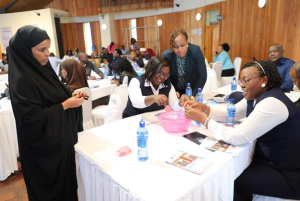
The findings come as CEMASTEA hosts a three-day training programme for Quality Assurance and Standards Officers (QASOs) in Karen, Nairobi, aimed at enhancing their capacity to monitor and support teachers of STEM subjects for effective implementation of Competency-Based Education.
The Workshop Theme is ‘Enhancing the capacity of QASO to monitor and support Teachers of STEM subjects for effective implementation of the Competency Based Education’.
The workshop seeks to equip QASOs with skills to promote learner-centred classroom practices, conduct meaningful lesson observations, strengthen teacher support mechanisms, and reinforce effective curriculum implementation in schools across the country.
By Ian Chepkuto
Fonte: Kenya News