Compartilhar
Hajayat Mendal: A Cultural Powerhouse and Inspiration for the Next Generation
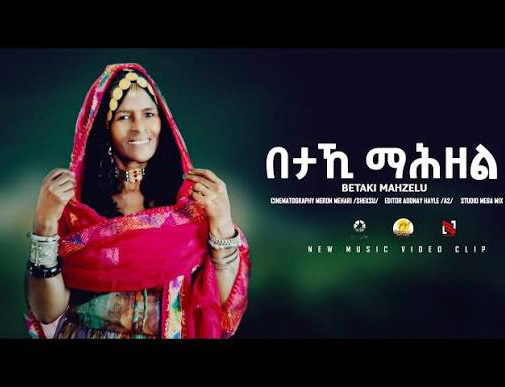
Hajayat Mendal is a name that resonates deeply across Eritrea’s cultural landscape. Celebrated as a singer, poet, dancer, instrumentalist, and, most recently, a television scriptwriter, she is a master class in resilience, creative defiance, and devotion to national heritage. From her early days on the front lines of the independence struggle to her current role as a guardian of tradition, Hajayat embodies the spirit of a woman determined to inspire youth to protect their identity and language. In this Q&A, she reflects on her remarkable path.
- Many people recognize you today as a versatile, multi-talented artist. Can you take us back to the very beginning of your journey?
I joined the Eritrean struggle for independence toward the end of 1976 when I was very young. It was a defining era of immense sacrifice, but also one of profound personal discovery. Initially, I was assigned to Brigade 70, where I served for a long time as a frontline “barefoot doctor” after completing an intensive first aid course.
Later, I was reassigned to the EPLF’s arts and crafts department, working with pottery, weaving, and traditional quilting. Those early years taught me radical discipline and resourcefulness. We quickly understood that we were not just fighting a war with conventional weapons; we were defending our right to exist through culture, art, and the unyielding spirit of our people. When I was eventually transferred to the performing arts department, my journey as a singer, songwriter, and dancer truly blossomed. I realized that art could be a potent weapon—a shield of hope and unity.
- What was it like to transition from the battlefield to the stage?
It was both incredibly challenging and deeply liberating. On the battlefield, you carry the heavy, literal weight of survival from one moment to the next. On the stage, you carry the weight of representation. I felt a profound responsibility to give an authentic voice to the complex emotions of our people and my fellow Tegadelti (freedom fighters). Singing and dancing became our mechanism to heal, to celebrate, and to remind ourselves exactly what we were risking our lives for. Every performance was a fierce declaration to the enemy: we are alive, we are proud, and we will endure.
- Following the achievement of independence in 1991, how did your artistic career evolve?
After liberation, I joined the Sibrite Cultural Group, an institution I proudly remain a part of to this day. Sibrite became my second family. Through our collective work, we have been able to preserve and share the unique ancestral traditions of Eritrea with audiences across the country and around the globe. Our performances are not merely entertainment; they are a form of living education. We want to show the world that Eritrea’s multi-ethnic culture is rich, distinct, and unequivocally worth preserving.
- This year, a major script you penned was broadcast on national television (Eri-TV). Tell us about this milestone and the story behind it.
Fourteen years ago, I wrote a story based on true events. It was a narrative that waited patiently for over a decade for its right moment to be produced. The movie centers on the traditional coming-of-age ritual of the Bilen ethnic group, known as Shingali. This sacred ceremony marks a young man’s transition from childhood into mature adulthood, filled with deep community symbolism and traditional rites.
The film is specifically set during the brutal era of the occupying Derg regime, showcasing how difficult it was for young men to fulfill this cultural obligation. The occupying Ethiopian soldiers viewed any organized gathering of young Eritrean men with immense suspicion and hostility, often opening fire on celebrations under the assumption that they were insurgent meetings.
Because of this constant danger, many Bilen families reluctantly canceled their children’s ceremonies. However, any man who did not pass through the Shingali was mocked and denied adult recognition by society. My script explores that agonizing cultural conundrum. Seeing it finally broadcast on television was an incredibly emotional milestone for me. It wasn’t just my story; it was the documented struggle of my people.
- What ultimately inspired you to write a screenplay centered specifically on the Shingali tradition?
My ultimate inspiration came from observing the youth at Sawa. I see Sawa as the modern evolution of our historical coming-of-age tradition—a contemporary national Shingali. In my script, I wanted to draw a conceptual line connecting the ancestral ritual with the modern service of today’s generation.
Growing up surrounded by Bilen customs, I knew that Shingali is far more than a party; it is an intensive lesson in foundational identity. It teaches young people exactly who they are, where they come from, and the core moral values they are expected to carry forward. Writing this was my way of telling the next generation: never lose sight of your roots.
- We understand you are already hard at work on a second screenplay. What can you share about this upcoming project?
Yes, I am currently in the final development stages of my second script. We are currently scouting for the perfect historical settings to begin filming. This project will continue to aggressively explore themes of national identity, historical memory, and the unbreakable resilience of our people. Stories possess immense power; they shape how we think. My long-term goal is to write screenplays that move beyond pure entertainment to serve as permanent archives of our national heritage.
- You have worn so many distinct hats throughout your life— medic, artisan, singer, poet, dancer, and now scriptwriter. How do you view your identity today?
Today, I see myself primarily as a bridge. A bridge spanning the past and the future, connecting ancient tradition with modern life, and passing the torch between generations. I am proud of the various roles I have played on the field and the stage, but I am far more proud of the generational impact they leave behind. I do not view myself merely as a conventional artist; I see myself as a custodian of our culture.
- What has been the most deeply rewarding aspect of this lifelong journey?
Without a doubt, the most rewarding part is seeing the spark of recognition in the eyes of our young people when they connect with their history. When I see the youth singing our traditional songs, practicing our dances, or speaking our native languages with fierce pride, I feel completely fulfilled. True art is never about chasing fame or personal recognition; it is strictly about impact. And the greatest impact an artist can have is inspiring the generation that comes next.
- What final message would you like to impart to the younger generation of Eritreans?
My message is simple and uncompromising: be deeply proud of your country, protect your national sovereignty, and never allow our multi-cultural values and traditions to fade. Our heritage is our ultimate shield. In a rapidly changing, globalized world, it is incredibly easy to lose your footing and forget who you are. But if you hold fast to your traditions, you can never be lost.
- Any closing thoughts or acknowledgments you would like to share?
I want to express my profound gratitude to the people of Ferhiene, the beautiful village where we shot my first film. The community, especially Aba Kebri, were our greatest cheerleaders. They eagerly served as background extras, provided our cast and production crew with every facility imaginable, and supported our daily logistics throughout our entire stay.
Finally, I want to thank my husband for unlocking my voice as a writer. He was the very first person to push me to write, originally demanding that I express my love to him through handwritten poetry. That intimate exercise blossomed into the creative writing career I possess today.
- Thank you so much for your time, Hajayat, and we wish you the absolute best of luck on your upcoming cinematic projects!
Fonte: Shabait