Compartilhar
KING INAUGURATES NUL COUNCIL
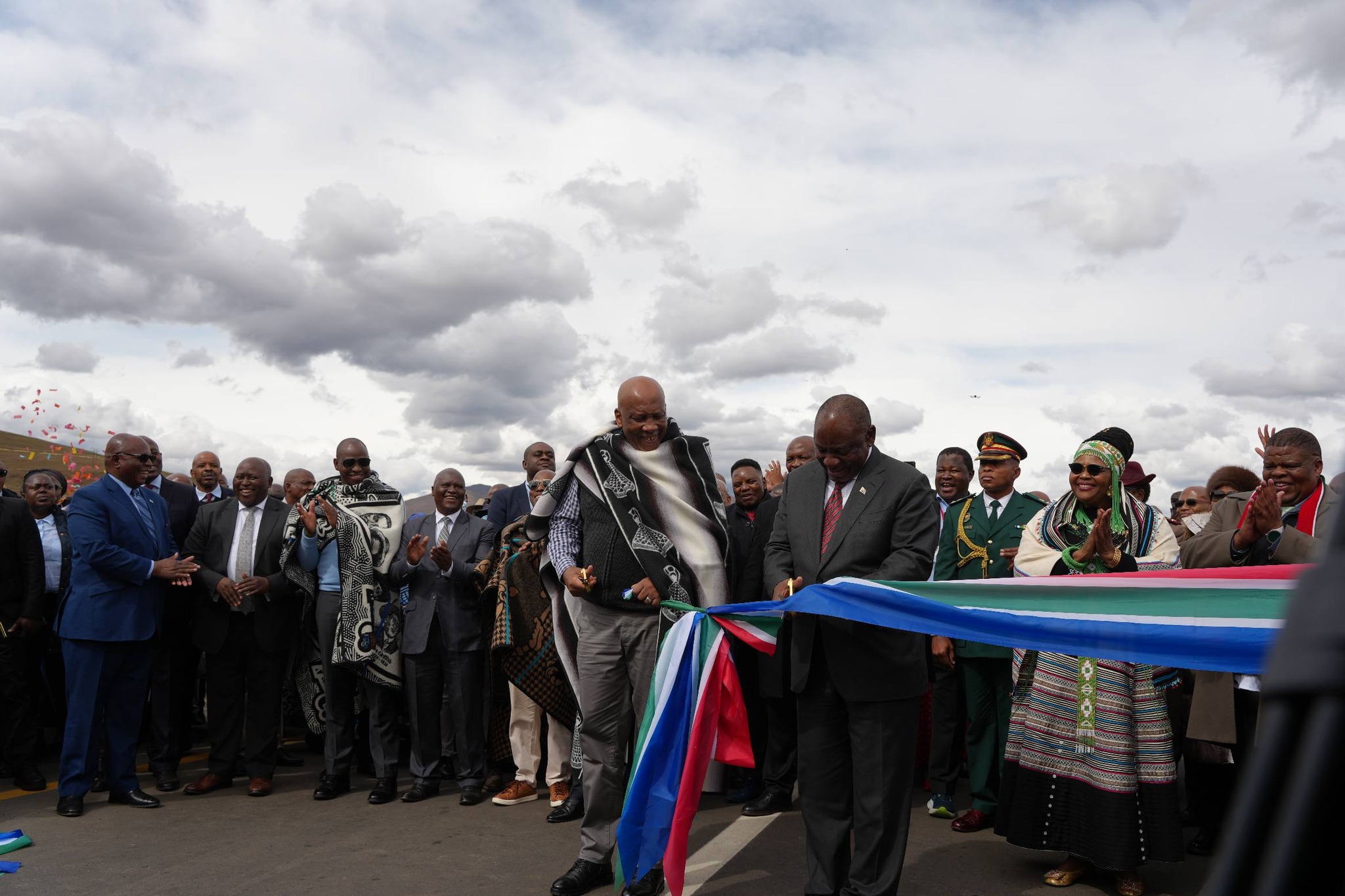
His Majesty King Letsie III inaugurated the 16th council of the National University of Lesotho (NUL) at the institution premises.
The inauguration follows a court battle between the institution, its Student Union (SU) and the Student Representative Council (SRC) where the latter had filed an application before the High Court arguing that the elected Council was not appropriately constituted.
The High Court referred them back to make corrections on their affidavit, but they took the matter to the Appeal Court which dismissed it hours before the inauguration.
In his speech, King Letsie III said the inauguration of this council is far more than a ceremonial event as it represents a solemn entrustment of authority to guide, govern, and safeguard the university on behalf of the Basotho nation.
He highlighted that higher education remains central to the Kingdom of Lesotho’s development aspirations and the university plays a unique and critical role in advancing knowledge, shaping leadership and driving socio-economic transformation.
He told those appointed to the council that they carry a responsibility of national trust and are always entrusted with stewardship of one of the Kingdom’s important public institutions.
He reminded them that they assume office at a time when universities across the continent and the world are operating in an increasingly complex environment, adding that public resources are constrained, technological change is rapid and competition for talent is intense and impact of higher education continue to grow.
His Majesty noted that these challenges require a council that is strategic, forward looking and committed to the success of the university.
The King reiterated that with this formal inauguration of the 16th Council, he charges them to exercise their duties diligently, with integrity, discipline and unity of purpose as the highest governing authority of the university.
“Your decisions must be guided by fairness, transparency, accountability and the public good. You must ensure that the university’s policies, systems and leadership frameworks support excellence in teaching, research, innovation and community engagement.”
Furthermore, the King observed that while diversity of opinion is both natural and valuable, it must never compromise institutional stability or collective responsibility, further advising that the strength of this council will be found in its ability to deliberate with rigour management of differences, constructively and to act decisively as one body in service of the university and the nation.
He said NUL operates in a demanding environment of rising needs and limited resources, therefore it is essential that the council gives urgent and sustained attention to the critical issue of financial sustainability.
“I have stated many times before that our reliance on a single source of funding cannot sustain NUL in the future. The council has a fiduciary responsibility to ensure the long-term financial health and sustainability of the university. I expect you to champion resource mobilization, strategic partnerships, research collaborations, alumni engagement and responsible commercial ventures that are aligned with our academic mission. You must also ensure sound financial governance, effective risk management, and the prudent management of the university’s assets.’’
He also pleaded that every Loti must be spent wisely, every investment must advance the university’s strategic objectives, and every asset must work for the benefit of the institution, further saying this council must be remembered as the one that strengthened NUL’s financial resilience and positioned it for long-term growth.
He however, said, for all these aspirations to be achieved, there is need to create an environment of peace, stability and mutual respect, and he implored the council to lead the institution with unity of purpose and to nurture a governance culture that promotes trust, collegiality and constructive engagement.
“I hope every decision that this council makes will be guided by the principles of fairness, justice and ethical conduct when the university is led with courage, integrity and honesty, it will earn the confidence of students, staff, parents and the nation at large.”
Speaking of the institution itself, King Letsie III said NUL has a proud history built by noble men and women who came before, and as the 16th council takes office, its duty is not only to protect that legacy but also to strengthen it for future generations, support continuity of programmes and reforms that are delivering positive results, while at the same time remaining courageous enough to embrace new ideas where change is needed, so that the institution continues to adapt to the evolving needs of the students, the labour market and society.
At the same event, Education Minister, Professor Ntoi Rapapa acknowledged that NUL is the only institution of higher learning that the country has and with its long history he can comfortably say a huge part of the human capital is from the institution.
He cautioned that the council members need discipline for effective delivery of the institution’s mandate.
He indicated that higher education means economic diversification, and digital transformation among others and the university must ensure that it produces innovative students.
Professor Rapapa further commented that the autonomy of the university remains important and must be maintained as it is given under the impression that learners are taught to be independent and this element must be protected at all times.
He said NUL must be a living example of all institutions of higher learning and one that they look up to in terms of accountability, compliance and reporting.
He also mentioned that the government of Lesotho has increased the institution’s subvention by M20 million although he said it was still not enough.
Dr. Khabele Matlosa who has been elected for the second term as the Chairperson of the Council noted some lessons that he said he carries into the new assignment, and he said those are an urgent need for financial sustainability, solid resource mobilization strategy and the 15th council has already established a committee that will oversee that.
He mentioned a need for institutionalizing prudent management of the institution’s finances so that resources are used only for reasons intended for, also highlighting the importance of investing in committees of the council, and for them to be active.
He said he has also learned that there is a tendency not to engage in dialogue or exhaust all internal structures when disputes arise, but people run to courts of law, adding that this has to come to a gentle stop. He said the new council has to ensure that it works on that because it is not only financially costly but socially too.
He continued to advise that there is still a lot of work to be done in terms of digitalization especially at this era when everything is becoming digital. He further commented that performance management policies have to be adopted especially with the rising demands for students and technology that are driving forward.
The new council constitutes four members appointed by the Chancellor, who is King Letsie III are Dr. Khabele Matlosa, Mrs. Teboho Motseko, Mrs. Maselomo Pama and Mr. Retsepile Elias, with Dr. Lipalesa Mathe becoming the secretariat by virtue of her office as the Acting Registrar following the suspension of Ms. Liteboho Maqalika-Lerotholi.
Members of the congregation are Mr. Rammuso Monyolo and Associate Professor Paul Leshota while Mr. Narenyane Senekane represents the non-academic staff, Professor Motlatsi Thabane as a person who is not a member of the staff of the university or a student, then Professor Moeketsi Letseka, Dr. Petrovious Horton, Dr. Vinodh Jaichand and Professor Munyaradzi Mushonga who are elected as persons with special competencies in university education outside Lesotho.
Source: Lesotho News Agency [LENA]
Fonte: Gov