Compartilhar
LESOTHO GOVERNMENT INITIATIVE IS CREATING NEW ECONOMIC OPPORTUNITIES FOR BASOTHO YOUTH
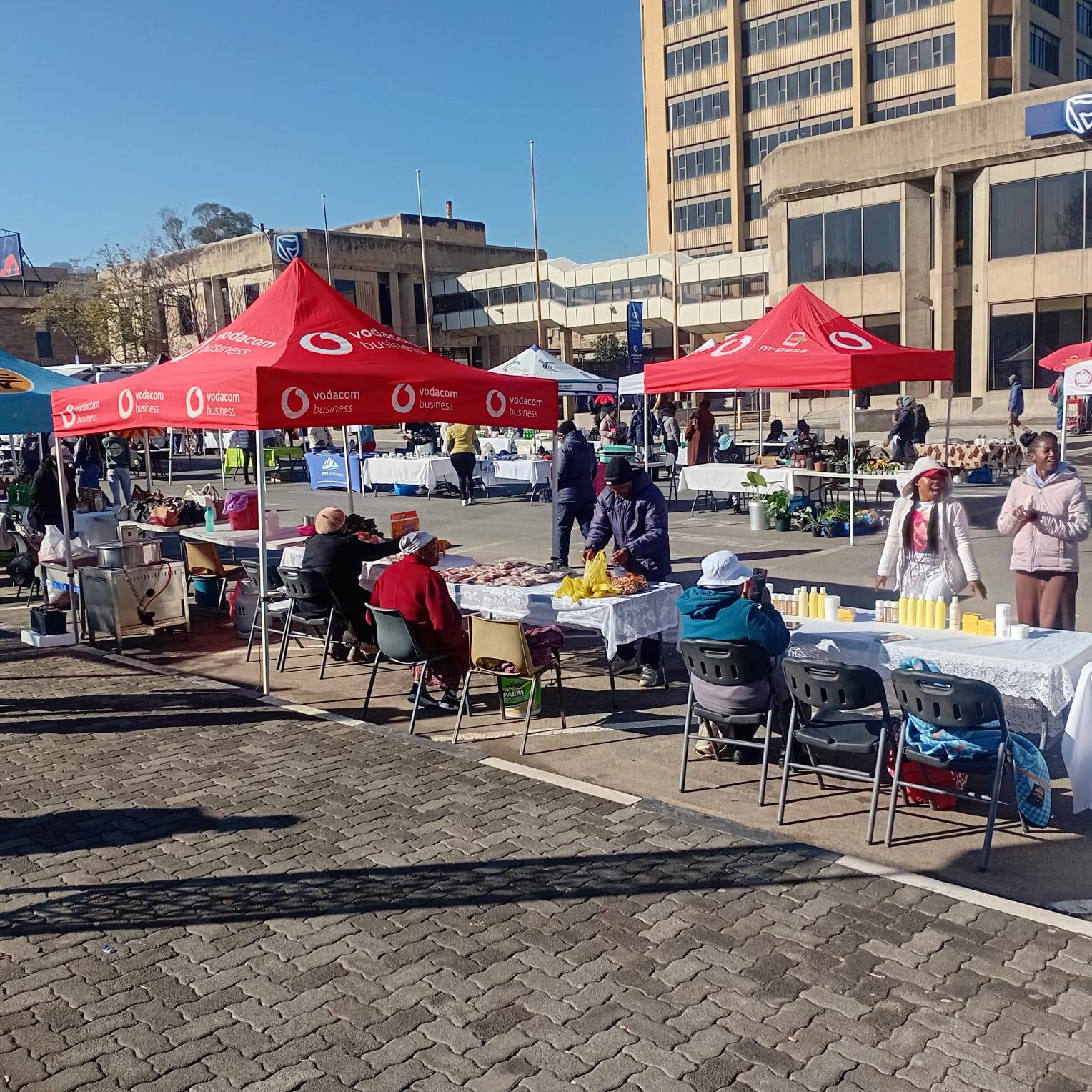
Basotho youth are gradually transforming the country’s informal markets, as they move from being consumers to producers, creating new economic opportunities through local manufacturing since the inception of flea Market initiative.
At a flea market along Kingsway, a shift was evident as stalls displayed a wide range of locally made products, including leather goods, clothing, natural cosmetics, processed foods, herbs and toiletries.
The development marks a move away from reliance on imported goods, which has long characterised Lesotho’s economy and limited the growth of local industries.
Young entrepreneurs are now entering manufacturing spaces, turning small-scale ideas into businesses and creating employment opportunities for themselves and others. This trend reflects growing awareness among youth that economic empowerment can begin at grassroots level.
Speaking in an interview, Mr. Rethabile Pitso (34), a toilet paper manufacturer from Maseru, said he holds a Bachelor of Arts in Information Technology but chose to venture into business instead of seeking formal employment.
He said he started the business in 2024 with his two siblings using their own funds, amounting to nearly half a million maloti, including the purchase of machinery.
“I have no regrets. I am now focused on creating employment rather than looking for it. This is the time for Basotho to stop being only consumers and move towards exporting,” he said.
Despite the progress, access to wider markets remains a major challenge for many entrepreneurs.
Mrs. Maitumeleng Maphathe, who produces body creams and dishwashing liquid, said her business has not grown significantly since it started last year due to limited market access.
“If we could reach bigger markets, growth would be possible. Currently, my customers are mainly villagers, and I cannot afford advertising due to high costs,” she said, appealing for government support.
Another entrepreneur, Mr. Tiheli Molato, who manufactures hair products, said local production has the potential to boost the country’s economy.
He said it keeps money circulating within the country, strengthens domestic industries, encourages innovation and reduces reliance on imports.
Mr. Molato added that even small-scale manufacturing creates jobs, supports supply chains and promotes skills development.
As Lesotho continues to seek economic diversification and sustainable growth, the rise of youth-led manufacturing presents a positive outlook, where Basotho are increasingly becoming creators and drivers of their own economic future.
Source: Lesotho News Agency [LENA]
Fonte: Gov