Compartilhar
Parents cautioned against using children for labour
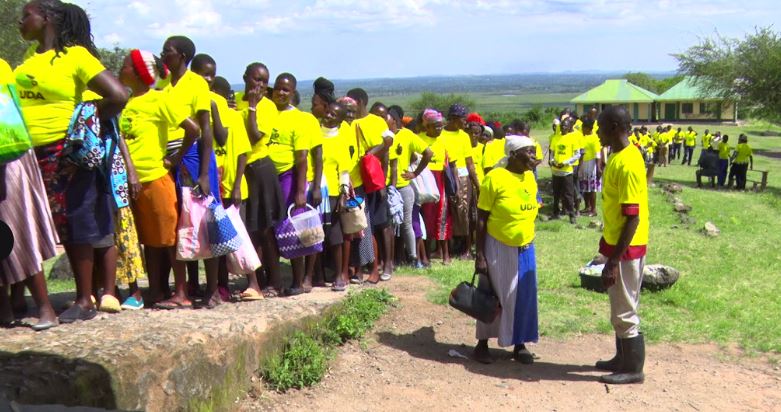
Parents in Kericho county have been cautioned against involving children in hard labour on tea and coffee farms, hawking goods in towns and working as domestic workers, even as authorities urged members of the public to report any suspected cases of child labour.
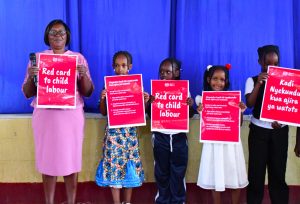
The concern emerged on Friday as Kericho joined the rest of the world in commemorating the 2026 World Day Against Child Labour at Kericho Primary and Junior School, where Deputy County Commissioner (DCC) Monicah Muli called for sustained public sensitization to help parents better understand their role in safeguarding children from exploitation.
Muli pointed out that education remains one of the most effective tools in breaking the cycle of poverty, which was identified as a key driver of child labour, noting that children who stay in school are better positioned to improve their future and uplift their families.
According to County Labour Officer Wilson Luvavo some parents continue to involve children in farm work at the expense of their education, denying them the chance to realize their full potential.
He further outlined the forms of child labour, including children working on tea and coffee farms, hawking goods in towns and working as domestic workers, noting that the worst forms involve hazardous activities such as spraying chemicals on farms that expose children to serious risks.
Luvavo further explained that light tasks such as simple home chores like washing utensils, sweeping the house or helping in meal preparation may be allowed, provided they are age-appropriate and do not interfere with schooling, rest or overall development.
“Children should be allowed to play, interact with other children, study and learn. Light home tasks should not take more than two hours and must not interfere with their education or rest,” he added.
The Labour Officer warned that parents and guardians found subjecting children to exploitative labour could face legal action under the Employment Act and the Children’s Act, both of which protect children’s rights.
Luvavo urged members of the public to report suspected cases of child labour to Village Elders, Chiefs, Assistant Chiefs, Police Officers and labour officials, adding that child labour committees at county and sub-county levels were in place to coordinate response efforts.
“We want children to get quality education and enjoy their right to play and socialize with others. Leave children to be children and do not subject them to heavy work,” he added.
Meanwhile, Kericho East Sub-County Children’s Officer Carol Ruto revealed that the county had recorded cases involving children working as street hawkers, domestic workers and boda-boda assistants.
She reiterated that many of the affected children are pushed into labour due to economic hardship and lack of basic needs at home, leaving them vulnerable to exploitation, unsafe working conditions and disruption of their education.
In the meantime, Cooperative Officer Dorrine Chepkemoi assured that the Accelerating Action for the Elimination of Child Labour in Supply Chains in Africa (ACCEL Africa) project being implemented in Kericho had made strides in reducing child labour by sensitizing parents and farmers through cooperatives so that children are kept in school instead of working in tea and coffee farms.
Chepkemoi said the project, supported by the International Labour Organization (ILO), also includes training farmers and cooperative leaders on safer farming methods (WIND training), improving workplace safety, and strengthening cooperative systems.
“This project helps families improve their incomes by sensitizing parents on better farming practices and encouraging them to work through cooperatives to earn more from tea and coffee, reducing the need for children to work on farms and allowing them to stay in school,” she said.
According to the International Labour Organization (ILO), an estimated 138 million children worldwide are still trapped in child labour with agriculture accounting for the largest share of child labour cases globally at 61 per cent, followed by the services sector at 27 per cent and industry at 13 per cent.
The 2026 World Day Against Child Labour theme was, “Red Card to Child Labour: Fair Play for Children, Decent Work for Adults,” calling for collective action to ensure children remain in school while adults access decent work and sustainable livelihoods capable of supporting their families.
By Kibe Mburu
Fonte: Kenya News