Compartilhar
Polytech, AI, and the Future: Isaias Okbai on Eritrean Innovation
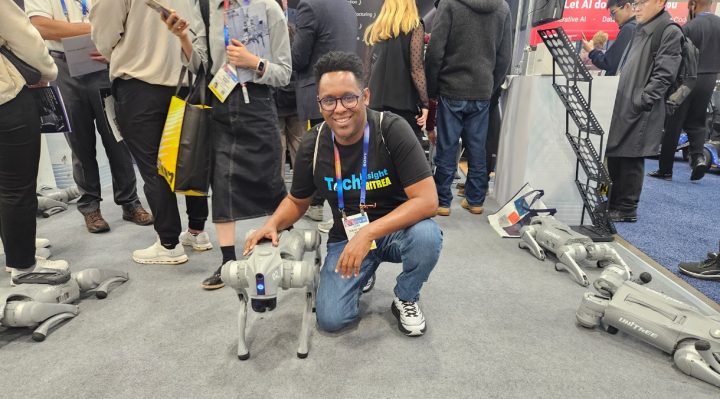
Eritrean youth, both at home and abroad, continually strive to transform their country into a hub of continental development through modern technology. Isaias Okbai is a prime example of this driven generation as attested by modest tech institutes he has opened in two regions, studying at global technology centers, and hosting a popular national television program. Eritrea Profile invited him to share his passion, journey, and ongoing success.
* * *
Please, let’s begin with your background.
I was born and raised in Asmara. In 1996, I went to Sawa with the 5th round of the National Service and sat for the Eritrean National Matriculation Examination. Unfortunately, I didn’t pass on my first attempt and was assigned to stay in Sawa as a trainer, training recruits from the 6th through the 10th rounds.
While fulfilling my duties, I never gave up on my academic goals. I retook the matriculation exam, and my perseverance paid off when I earned a score that qualified me for higher education. However, my entry into college was delayed due to the 1998–2000 war. I went to the front lines to defend our national sovereignty and sustained a back injury. Following my recovery, I finally enrolled at the college in Mai-Nefhi in 2003. I initially studied Aeronautical Engineering, later shifted to Aircraft Technology due to personal circumstances, and ultimately graduated with a diploma in Electronics Technology.
How did you discover your passion for technology?
Since childhood, I was incredibly curious. I loved watching technicians repair electronics like radios and household appliances. Every time I encountered these technicians, my mind was filled with joy and wonder. Gradually, this curiosity shaped my destiny. Before even joining college, I took several certificate courses in electronics, which fueled my passion further.
My father has also been a massive inspiration. As a former freedom fighter, his stories about the EPLF’s miraculous, self-reliant successes across all sectors during the armed struggle deeply shaped my mindset. He taught me that “everything is possible if you believe.” That attitude encouraged me to chase my dreams regardless of the challenges.
Let’s talk about your training center, Polytech.
Polytech was inaugurated in June 2009 with the grand vision of fostering a technologically literate society. Structurally, the institute is divided into three sections: a training center, a sales center, and a repair service center.
The training center comprises three main departments: Electrical and Electronic Technology, Computer Technology, and Audio-Visual Technology (video production). Through these departments, we offer a wide array of updated courses. These include Digital Electronics, Programming, Hardware and Software Development, Networking, Graphic Design, Mobile Repair, and specialized classes like AI for Beginners and AI for Content Creators.
Currently, Polytech operates three branches within Asmara and one in Massawa, with plans to expand to all other regions of the country. Every year, roughly 700 young people—ranging from high school to college students—graduate. We are already seeing the tangible impact of this, as many of our alums have gone on to open their own tech shops across Eritrea.

What supplementary courses have you taken to keep pace with rapid global tech advancements?
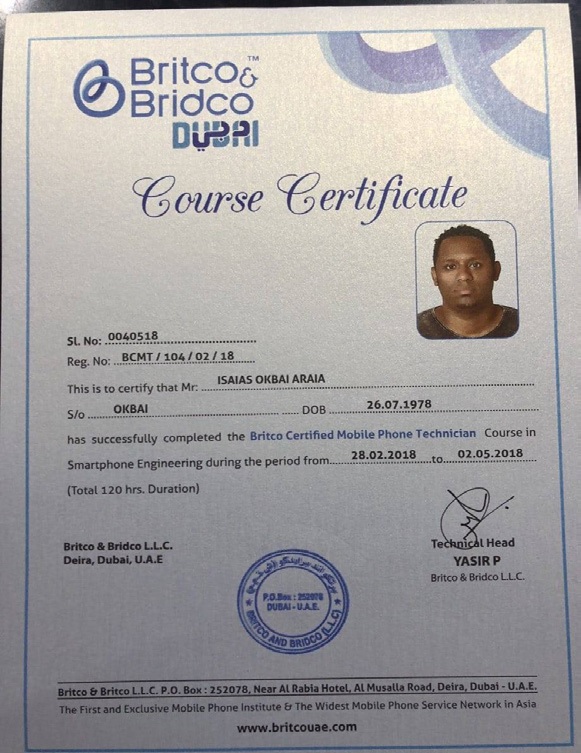
To expand my knowledge, I have visited about 20 countries for educational programs and trade exhibitions. In 2015, I earned a technical certificate in the United States. Later, in 2022, I completed courses in India associated with Purdue University, earning certifications in Mobile Forensics, Hardware Computer Engineering, Laptop Maintenance, and Data Recovery. I continue to take online and international courses to ensure our office brings the latest knowledge home.
What is your view on Artificial Intelligence (AI)?
When it comes to building proprietary AI models, this falls under the purview of national policymakers and macro-level planning. However, AI as a tool is already essential and irreplaceable.
My goal is to introduce AI tools to our youth to improve daily management and maximize productivity. This is why we launched our AI for Beginners and AI for Content Creators courses. We had about 50 students graduate from these programs this year alone. Remarkably, some of these new graduates are already producing high-quality animation videos for children, a promising body of work that we hope to see broadcast soon.
You are also a tech journalist on the Eri-TV show “Tech-Insight.” What inspired you to get into television?
My confidence in hosting a television program stems from my time as a military trainer in Sawa. In Sawa, I was highly determined to lead my team to victory, and that environment gave me the confidence to speak publicly and project my ideas clearly.
Later, in 2014, I produced an educational tutorial video on installing household satellite dishes. It was highly sought after by youth across the country, and the positive feedback inspired me to pitch a permanent television show. I want to extend my deepest gratitude to the Ministry of Information for providing the platform that allows me to share my technical experiences with the public. The program was officially launched in 2016 and continues to elevate technological awareness nationwide.
How do you evaluate Sawa’s impact on your personal success?
It is hard to overstate the essential life skills I gained in Sawa. It taught me discipline, time management, resourcefulness, and robust communication skills. When I look back at my personal history, Sawa gave birth to the mindset that shaped Polytech, and Polytech, in turn, paved the way for Tech-Insight. Sawa was truly the foundational milestone of my life.
How do you assess the general Eritrean attitude toward technology?
In Eritrea, technical creativity is practically a national passion. You can see it in the industrial legacy left by our ancestors and, most profoundly, in the brilliant improvisations born of our armed struggle. Even today, if you visit any ordinary household, you will see how resourcefully people repair and maintain their home appliances despite material shortages. As a nation, we are naturally curious and open-minded about new technology, as evidenced by how eagerly the younger generation enrolls in our tech courses.
My dream flows directly from our history. During the liberation struggle, the level of innovation guided by the principle of self-reliance earned the admiration of visiting foreign observers. The prospects for rapid progress in the technological domain are indeed enormous.
What final message do you have?
My final message to the Eritrean youth is: let us focus on our opportunities rather than our scarcities. By embracing our national principle of self-reliance, we can replicate the miraculous achievements of our past and firmly establish our country as one of the continent’s tech centers.
Thank you so much for your time, Mr. Isaias, and we wish you the best of success in all your future endeavors.
Fonte: Shabait