Compartilhar
Reflections on the National Conference on Eritrean Agricultural Studies-2026
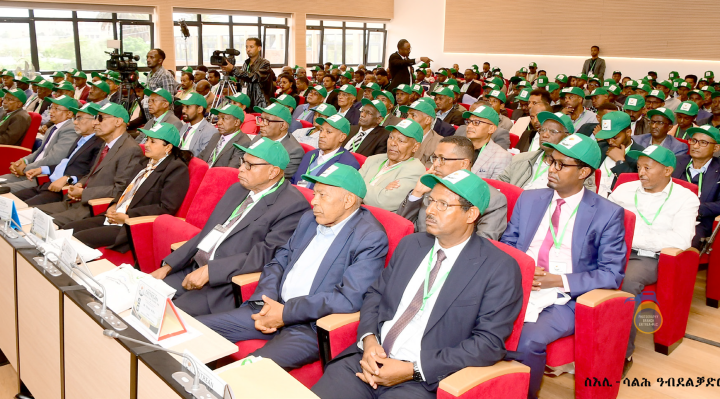
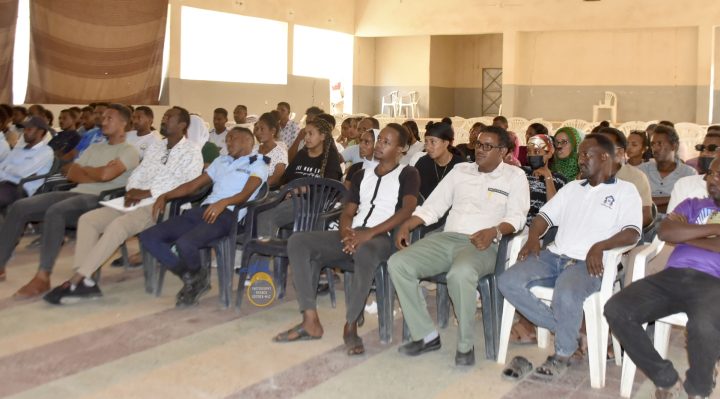
On the morning of August 20, the National Confederation of Eritrean Workers (NCEW) conference halls in Asmara were filled with professionals of different ages and backgrounds. Around 300 participants, including ministers and senior government officials, researchers, academics, young scientists, agri-food producers and representatives from different sectors came together for the National Conference on Eritrean Agricultural Studies, organized by the Ministry of Agriculture (MoA) from August 20–21 under the theme “Advancing Sustainable Agri-Food Systems for National Economic Growth.”
As a participant from the Ministry of Health, I found the conference particularly inspiring—not only because of the scientific works presented, but what the gathering implied for Eritrea’s development journey.
Seventy-six scientific papers were presented within two days—an achievement that speaks not only to the scale of the conference but also to the commitment of the organizing and scientific committees. Behind such visible success, there is usually an invisible story of preparation, coordination, trust, and teamwork. Perhaps the most encouraging thing was seeing many young professionals actively contributing to such a major national scientific undertaking. This demonstrated that when young professionals are entrusted with responsibility, they can deliver with remarkable professionalism.
The power of bringing people together
One of the conference’s greatest strengths was its inclusiveness. Agriculture does not exist in isolation. Food production is connected with nutrition, health, water, environment, education, trade, industry, livelihoods, climate resilience and economic development. What this implies is that the improvement of agri-food systems requires more than expertise in agriculture. By bringing researchers, representatives of government institutions, the academia, development partners, producers and other stakeholders into the same space, the conference created an important platform for knowledge exchange and professional networking, demonstrating the value of looking beyond institutional boundaries and recognizing that many national challenges require inter-sector solutions.
A promising generation of researchers
Another encouraging observation was the strong participation of young researchers and professionals. Many presenters demonstrated academic excellence and professional competence, with a considerable number holding master’s degrees and above. This reflects the MOA’s commitment to human-resource development.
Such platforms can be transformative. Scientific capacity is not developed only by acquiring academic qualifications. It grows through practice, mentorship, constructive criticism, collaboration and opportunities to communicate one’s work. Conferences such as this can therefore become important components of a broader national research-capacity development agenda.
From research findings to national action
Perhaps the most important question following such a conference is not how many papers were presented, but what happens to the knowledge generated afterward. Scientific research becomes truly valuable when it informs decisions, improves practice, stimulates innovation or contributes to solving real problems. Research becomes truly valuable when it moves beyond reports and conference halls and contributes to better decisions, improved practices, innovation, productivity and livelihoods. The conference could therefore evolve into a broader platform through which research findings are documented, shared, reviewed and translated into practical interventions and policies.
A benchmark for other sectors
The MoA has demonstrated that a sector-specific national scientific conference is both possible and valuable. As Minister Arefaine Berhe noted during the closing ceremony, the idea for the conference emerged only about a week after the International Conference of Eritrean Studies held in Asmara in January 2025, which brought together a large number of professionals from Eritrea and the diaspora. There is something encouraging about this progression. A successful national scientific gathering in one field can inspire similar initiatives elsewhere, creating a broader culture of professional exchange and evidence-based dialogue.
Other sectors could now consider organizing similar platforms according to their own priorities and circumstances. Such platforms can strengthen a culture in which research is not viewed as an academic exercise alone, but as an instrument for solving problems, informing decisions and advancing development.
There is always room for improvement
Institutions with a serious commitment to quality understand that continuous improvement is part of excellence. Therefore, here are some areas for improvement:
- Future conferences could benefit from continued investment in research methodology, scientific writing, presentation skills and effective communication of research findings. Structured coaching and mentorship for early-career researchers could help transform promising research ideas into stronger studies and, ultimately, findings capable of informing policy and practice.
- It was observed that researchers with several years of experience had limited publications. Research that remains within a report, presentation or institutional archive has limited reach. Knowledge gains its greatest value when it is shared, challenged, refined and ultimately put to use. Thus, supporting researchers, particularly early-career professionals, to transform completed studies into high-quality publications could greatly increase the visibility and usefulness of Eritrean research.
- A national digital repository for conference proceedings, research papers, presentations, guidelines and related materials would also be valuable. Beyond improving accessibility, such a platform would strengthen institutional memory and prevent valuable knowledge from becoming difficult to retrieve over time.
- The conference venue itself also demonstrated the country’s capacity to host sizeable professional gatherings. The NCEW halls provided an attractive and functional setting for the event.
Looking forward: from conference to movement
The next opportunity is to build on this momentum. The MOA could consider establishing a structured research coaching and mentorship program for promising researchers, linking experienced professionals with emerging scientists and providing continued support in research design, analysis, scientific writing, publication and knowledge translation.
Further engagement with Eritrean professionals in the diaspora could also be explored further in future conferences. Their participation could bring additional expertise, perspectives and networks while creating opportunities for collaboration around areas of current national interest—including livelihoods, food and nutrition security, economic development, technology and innovation.
Most importantly, the value of the conference should not end after the conference. The real measure of its success will be what happens afterward: which ideas are pursued, which findings influence decisions, which collaborations emerge, which young researchers are mentored, and which innovations eventually reach communities and contribute to national development.
A message beyond agriculture
As a participant from the health sector, I left the conference with a strong sense that the event was about much more than agricultural research. It was about recognizing that our institutions have professionals with ideas, experience and accumulated knowledge that deserve platforms where they can be presented, challenged, refined and connected to national priorities. It was also about seeing what becomes possible when people from different generations, institutions and professional backgrounds gather around a shared national purpose.
The MoA deserves recognition for setting this important event. The hope now is that the momentum created by this conference will encourage similar initiatives across other sectors, eventually contributing to a stronger national culture of scientific inquiry, professional exchange and evidence-informed action.
Fonte: Shabait