Compartilhar
Returning Home: Sinit Habteab on Culture, Purpose, and Eritrean Pride
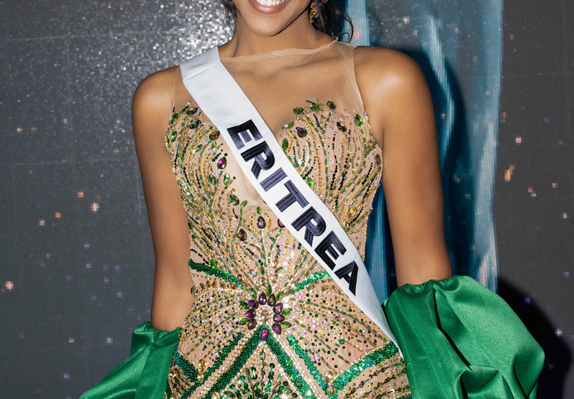
Sinit Habteab is an Eritrean neuroscientist, Montessori educator, disability rights advocate, and global pageantry pioneer. Born and raised in Asmara before moving to the United States in 2019, she earned her degree in Neuroscience from George Mason University while actively conducting research in neuropsychological testing and early childhood development. Inspired by her younger sister, who has Down syndrome, and in memory of her late mother, Sinit founded “Designing for Diversity,” a non-profit initiative dedicated to dismantling educational barriers for neurodivergent children and integrating students with special needs into mainstream classrooms. A former Miss Africa USA titleholder and Eritrea’s representative on major global beauty stages, she continues to bridge scientific knowledge and grassroots humanitarian action as an appointed ambassador for peace.
- Welcome back to Asmara. Having grown up here before moving abroad, how does it feel to step back onto Eritrean soil at this stage in your life, and how has returning home grounded your sense of identity and purpose?
Thank you so much for the opportunity to sit with you and share my story. Coming back here has been profoundly meaningful, even for a short visit. It has given me a chance to reinforce my core purpose: educating our community on how to support children with special needs at home and encouraging parents to believe in their children’s full potential. Beyond my mission, I truly missed the simple joys of Asmara— especially our local pastry shops. Even after traveling across the United States and Europe, nothing compares to what we have here. I also missed the peaceful rhythm of daily life and the ability to connect more deeply with my community.
That sense of identity guided me even during my pageantry auditions. During Miss Universe, for example, I chose to wear a burkini rather than a swimsuit to honor the morals and values I was raised with. Returning home reinforces those choices by deepening my bond with our people. As I prepare for my next competition, there is no better feeling than connecting with my roots and representing our community authentically.
- You made history as a pioneer representing Eritrea on prestigious international pageantry platforms. What were the defining moments of that journey, and what did it mean to carry the Eritrean flag before a global audience?
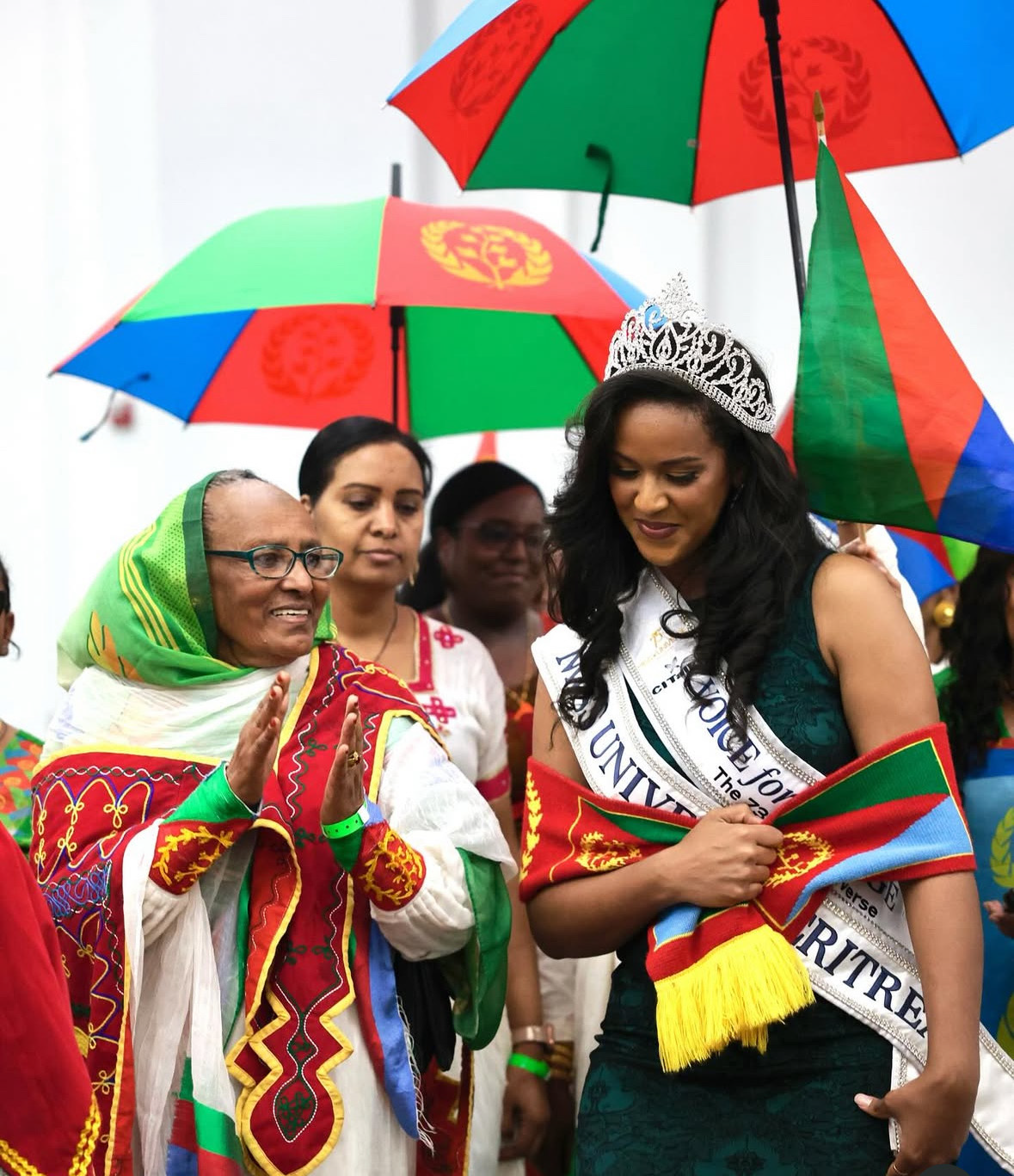 It is a profound honor. I certainly do not claim to be the most beautiful woman in Eritrea—our country is filled with extraordinary beauty— but being among the first to represent our nation internationally is something I treasure. On a global stage, I view myself as a small window through which the world can glimpse the true spirit of Eritrea. Carrying our flag and wearing traditional attire offered international audiences something fresh and unique. For our people, seeing our flag displayed with pride meant everything, and I felt that deep emotional weight as I waved it.
As I have grown within the pageantry world, I have come to realize that it extends far beyond walking a stage. It is fundamentally a platform for advocacy and social ambassadorship. My core advocacy remains centered on my sister and children like her, working to make education truly inclusive. Representing our country, culture, and people allows me to spark genuine curiosity worldwide, inspiring people to discover Eritrea for what it truly is.
- With a background in neuroscience and early childhood education, how do you practically translate brain science into accessible, inclusive teaching methods for children with learning disabilities in developing communities?
My journey actually began with Montessori education before I formally studied neuroscience. Maria Montessori, a medical doctor, founded the original Casa dei Bambini (“Children’s House”) and designed child-sized environments and tactile learning materials based on clinical observation. Although her methods yielded remarkable results, over time the pedagogy shifted away from its original target—children with special needs and lower-income communities— and became largely exclusive to those who could afford it.
I wanted to return to those roots and make these tools accessible to families with special needs. When I applied these materials while working with my sister, I noticed immediate, positive engagement. Neuroscience provided the scientific evidence behind Montessori’s philosophy, demonstrating that genetics alone do not dictate a child’s future; environment plays a crucial role. A supportive, well-structured environment can completely transform a child’s developmental trajectory. Through my advocacy, I want parents to realize that as primary caregivers, the expectations and environment we set directly shape what our children can achieve.
- Your non-profit initiative, “Designing for Diversity,” stems from a deeply personal experience with your younger sister. What structural or cultural shifts do you hope to inspire within schools and communities to ensure children with special needs are fully integrated and celebrated?
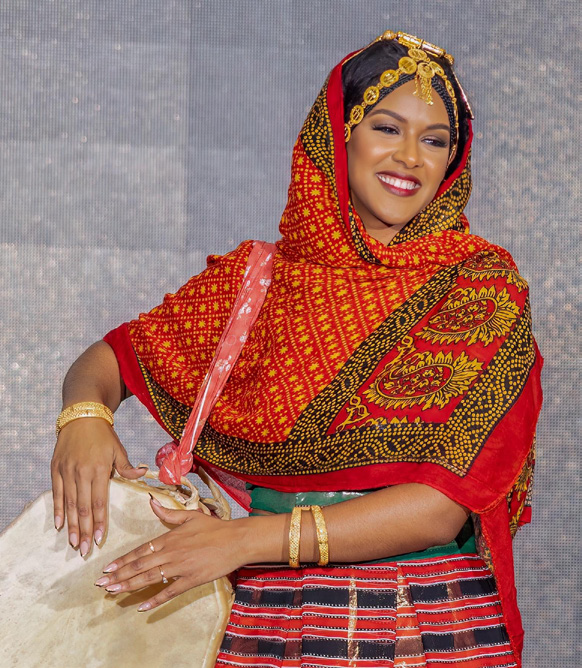 Beyond empowering parents to advocate for accommodations in school systems and workplaces, the core mission of “Designing for Diversity” is to drive the full inclusion of neurodivergent children in mainstream classrooms. While I was growing up in Asmara, my sister attended a mainstream school. She not only thrived academically, but she also had a transformative impact on her peers. The love and support she received extended far beyond our family to her classmates, who naturally stepped in to assist and include her.
Experiencing that firsthand showed me that inclusive education benefits everyone. When neurotypical children grow up alongside peers with special needs, they develop greater empathy and understanding. As adults, they build more inclusive societies— hiring individuals with disabilities and offering them meaningful support. “Designing for Diversity” exists to advocate for inclusive classrooms and to unlock the full potential of every child.
- You have also used your platform to raise awareness about breast cancer in honor of your late mother. How has turning personal loss into public advocacy shaped your resilience and humanitarian work?
Losing my mother was an incredible challenge, much like the initial adjustment my family faced when learning of my sister’s Down syndrome diagnosis. Yet, I believe that life’s hardest moments often define our ultimate purpose. Stepping into a caregiving role for my sister while carrying my mother’s memory gave my life a renewed, intentional focus. Today, my mission is to be a voice for both my sister and my mother.
If my mother were here, she would urge everyone to prioritize early detection for breast cancer, as timely diagnosis saves lives and allows mothers to spend more precious years with their families. I carry her message forward to encourage others to reframe their own hardships. Every trial we face is a trust placed in us, and we have the capacity to channel that pain into meaningful, positive action for others.
- Many young Eritreans living in the diaspora strive to maintain a strong connection to their homeland while pursuing ambitious careers abroad. How can diaspora youth effectively leverage their skills, education, and passions to contribute back home?
Finding something meaningful abroad and bringing it back to share with your family is a natural human desire, and for us, Eritrea is our collective family. Those of us in the diaspora who have been blessed with educational and professional opportunities carry a responsibility to share those resources with our homeland.
Returning to contribute not only strengthens local initiatives, but it also provides a clear model for the younger generation to follow.
- Looking ahead to your ongoing initiatives in Eritrea and beyond, what legacy do you hope to build for the next generation of Eritrean women, scholars, and advocates?
To young women, I encourage you not merely to model for outside brands, but to become ambassadors for your own values, identity, and country. Stand firmly in who you are so you can look back years from now with complete pride in the path you walked. To our scholars and professionals, keep striving for excellence and setting high standards, while always finding ways to share your expertise back home. And to our advocates: if you have been given a voice or a platform, use it courageously to stand up for those who cannot advocate for themselves.
- Thank you, Sinit. We wish you the absolute best in your upcoming international competition!
Fonte: Shabait