Compartilhar
Seed industry seeks tax and regulatory reforms to protect farmers

Kenya’s annual seed production has risen to 80 million kilogrammes from 65 million kilogrammes in 2025, as the government steps up efforts to improve farmers’ access to quality seed and strengthen food security.
Agriculture Cabinet Secretary Mutahi Kagwe said the growth is supported by government interventions, including seed and fertiliser subsidies, and contributions from 150 seed companies.
In a speech read on his behalf by Agriculture Secretary James Wanjohi during the 15th Seed Trade Association of Kenya (STAK) Congress and Expo, Kagwe said Kenya had released 1,297 seed varieties for different agroecological zones, averaging 40 new varieties annually, about half of them climate-smart.
He further said that the government was reviewing the National Seed Policy of 2010 and the Seeds and Plant Varieties Act to address seed affordability, quality assurance and last-mile distribution, particularly in underserved areas.
The review will also recognize farmer-managed seed systems and clarify the role of county governments in improving seed access.
Kagwe called for stronger surveillance and enforcement against counterfeit and substandard seed, warning that such products could cause crop failure and income losses and undermine confidence in the seed sector.
The CS urged regulators, seed companies, agro-dealers and county governments to collaborate on public awareness and digital traceability to protect farmers.
STAK Chairperson Betty Kiplagat called for urgent policy, tax and regulatory reforms to strengthen the seed industry, protect farmers and enhance food security.
“The government should review the 16 per cent VAT on vegetable seeds, as it raises production costs and limits farmers’ access to affordable inputs,” she said, calling for transparent participation of qualified seed companies in the subsidy programme, timely supplier payments and greater involvement of agro-dealers in rural distribution.
Kiplagat advocated for a balanced legal framework that protects farmers’ rights to save, use and exchange seed while safeguarding breeders’ rights and encouraging investment in commercial seed production.
She also called for stronger action against counterfeit seed, streamlined regulation and predictable timelines for variety registration and certification.
Kiplagat also called for modern, science-based regulations that support biotechnology and other emerging technologies to develop high-yielding, climate-resilient varieties.
Kenya Plant Health Inspectorate Service (KEPHIS) Head of Seed Certification and Plant Variety Protection Simon Maina said the agency was digitizing certification processes and upgrading laboratory diagnostics to speed up seed testing and approval.
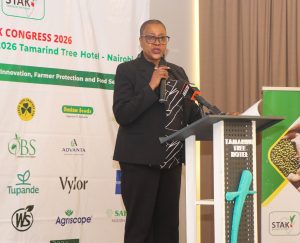
He also explained that KEPHIS had appealed to a High Court ruling that weakened some enforcement provisions against counterfeit and substandard seed, adding that the agency was working with the Agriculture Ministry and the Office of the Attorney General to address its effects.
Maina said ensuring adequate supplies of certified seed was key to curbing counterfeit products and protecting farmers from crop losses.
African Seed Trade Association Secretary-General Dr Yacouba Diallo said smallholder farmers must have reliable access to affordable, quality seed suited to local conditions.
Dr. Diallo stressed that stronger research, private-sector investment and transparent regulation were essential to protecting farmers’ rights and encouraging innovation in seed production.
He said quality seed should be treated as a strategic pillar of food security and nutrition.
The two-day congress brings together government officials, regulators, seed companies and researchers to discuss innovation, farmer protection and food security.
by Wangari Ndirangu
Fonte: Kenya News