Compartilhar
Statement by Ambassador Beyene Russom at the 13th World Urban Forum in Baku, Azerbaijan
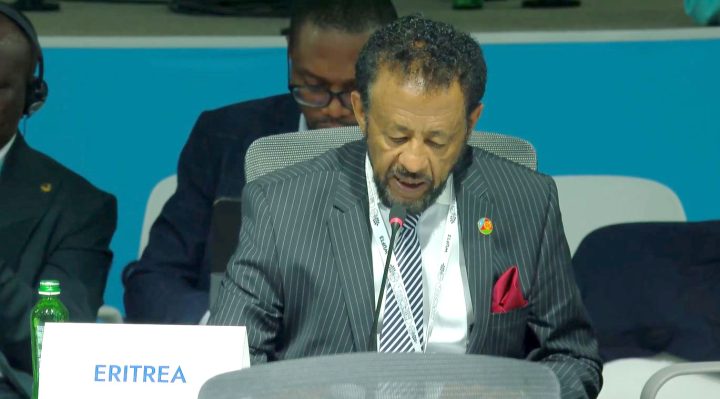
Mr Chair, Excellencies, Distinguished Delegates,
On behalf of the State of Eritrea, I thank the Government of Azerbaijan and UN-Habitat for hosting the 13th World Urban Forum in Baku.
We come to Baku with one clear message: Sustainable urbanization cannot happen if rural areas are left behind.
The theme “Housing the World: Safe and Resilient Cities and Communities”; reminds us that cities do not exist in isolation.
They are connected to towns, villages, and farming communities through people, food, markets, energy, and services. When we develop cities at the expense of rural areas, we create inequality, migration pressure, and vulnerability. When we connect them, we build resilience.
In Eritrea, our approach is based on integrated urban-rural development. We believe every citizen, whether in Asmara, Mendefera, Keren, AdiKeyih or a farming village in the highlands, should be part of the development process.
This means:
First, infrastructure that links, not separates. We are investing in rural roads, energy, and water systems that connect villages to towns and towns to regional cities. Good roads reduce post-harvest losses, open markets for farmers, and allow students and patients to reach schools and clinics.
Urbanization without rural connectivity only creates congestion and marginalization.
Second, services that are accessible across the territory.
Housing, health, education, and markets must not be concentrated only in capitals.
Through decentralized planning, we are expanding secondary towns and rural service centers so that people can access opportunities without being forced to abandon their land and communities. This reduces rural-urban drift and strengthens food systems.

Third, productive between farming and urban economies.
Our rural areas are not just sources of labor for cities. They are centers of production. We are linking farmers to urban markets through cooperatives, agro-processing, and cold chains. This keeps value in rural communities and stabilizes food prices in cities.
Fourth, community participation.
People throughout Eritrea are involved in planning and implementing local development. Urban-rural development fails when it is imposed from above. It succeeds when communities own it.
Mr Chair,
We note with appreciation Azerbaijan’s presentation of the reconstruction of Karabakh and Eastern Zangezur as models of post-conflict urban revival. Eritrea has undertaken similar work in small town and rural areas, rebuilding towns, roads, schools, and health centers to reintegrate communities and restore livelihoods.
This experience is about restoring the link between towns and surrounding rural areas, so that displaced communities can return, farm, trade, and live with dignity. We welcome the opportunity to exchange lessons with Azerbaijan or other countries and partners on how to make reconstruction inclusive and sustainable.

Eritrea recognizes that this model requires resources. Like many African countries, we face access to concessional finance for integrated rural-urban infrastructure. This is why we support the Africa Group’s call for a first-loss guarantee mechanism and reform of credit rating methodologies. Without fair finance, integrated development remains a concept.
Mr Chair,
As we move toward the midpoint of the New Urban Agenda, let us be clear: the future of urbanization in Africa and many nations globally depends on how we treat the link between cities and villages.
Eritrea commits to advancing this integrated approach. We call on partners to support investments that connect rural and urban areas through infrastructure, services, and markets. Let us ensure that no community is left behind, whether in a megacity or a mountain village.
Thank you.
Fonte: Shabait