Compartilhar
Statement by Minister Osman Saleh at UNGA81 high-level Segment to commemorate the 40th Anniversary of the Declaration on the Right to Development
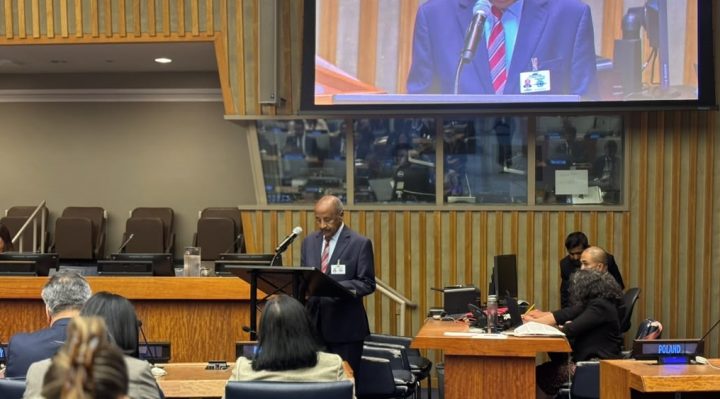
Statement by H.E. Osman Saleh, Minister of Foreign Affairs of the State of Eritrea
At the UNGA81 high-level Segment to commemorate the 40th Anniversary of the Declaration on the Right to Development
New York, 23 September 2026
Mr. President,
Excellencies,
Eritrea joins the international community in commemorating the 40th anniversary of the Declaration on the Right to Development. This gathering offers an opportunity to reaffirm our commitment and reflect on our collective progress—more importantly, to confront the structural inequalities that continue to hinder the realization of this inalienable right.
Over the past decades, we have seen advancements in science and technology that hold immense potential to bridge the development gap. Yet, these opportunities remain concentrated in the hands of a few, while many developing nations remain excluded. This digital and structural divide is a feature of the current global economic architecture that continues to prioritize the interests of the powerful over the needs of the many.
We cannot deny that the current global economic architecture continues to reflect structural imbalances that penalize developing nations. Unfair trade barriers, arbitrary financial restrictions, unsustainable debt burdens, and Unilateral coercive measures make it difficult for Global South developing nations to choose independent policies that best suit their own needs. Instead, they are forced to follow rules designed by wealthier nations. Eritrea reiterates its firm position that UCMs are incompatible with the UN Charter and violate the fundamental right of peoples to determine their own socio-economic paths.
Equally concerning is the trend in which narrow, politically motivated narratives consistently overshadow socioeconomic rights. We often witness a lecturing approach—where some place themselves on a moral high ground, assessing others’ progress through the lens of their own narrow values, while ignoring the systemic inequalities they perpetuate. This politicization undermines the spirit of cooperation needed to address the core challenges of our time.
Mr. President,
To accelerate the realization of the right to development, and to build a just and sustainable future, I wish to highlight the following points:
- Respecting the right of states to chart independent political and development policies.
- Eliminating Unilateral Coercive Measures that restrict access to resources, technology, and international markets.
- Restructuring multilateral financial and economic institutions to ensure genuine representation and fair rules for developing countries.
- Supporting the elaboration and adoption of a legally binding instrument on the right to development to enforce accountability and concrete international obligations.
Mr. President,
Eritrea’s development approach is rooted in social justice, self-reliance, and inclusive national growth, which ensures equity, community empowerment, and the full participation of all citizens in nation-building efforts.
Despite external hostilities and limited resources, Eritrea continues to prioritize expanding universal access to quality education, healthcare, and skills development. We remain committed to investing in soil conservation, water management, and agricultural infrastructure to guarantee food sovereignty and climate resilience, and enhancing rural electrification to connect communities to equitable economic opportunities.
Mr. President,
Eritrea remains steadfast in its commitment to building a resilient and self-reliant society in which the dignity and well-being of every citizen are realized. We stand ready to share our best practices and collaborate to advance the declaration.
Thank you.
Fonte: Shabait