Compartilhar
Traders demand priority in allocation of stalls at Sh373M Market
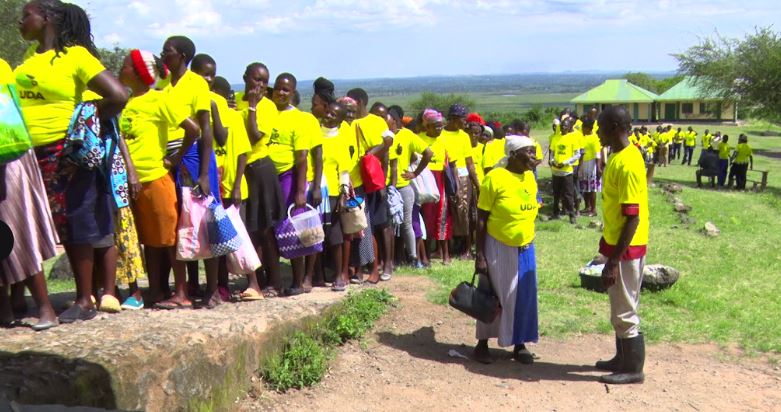
Traders at Bungoma’s new Sh373 million Soko Kubwa modern market have demanded priority in the allocation of business spaces, warning the government against bringing in outsiders at the expense of those who operated at the site before construction began.
The traders, who welcomed the three-storey facility expected to accommodate between 3,000 and 4,000 traders, said the government should ensure the investment benefits those whose livelihoods have depended on the market for years.
They said all previous occupants were known and properly documented and should therefore be given first consideration when allocation of stalls begins.
Victor Nalianya, a small-scale trader, said the government should rely on existing records to identify and prioritise those who operated at the site before construction.
“We are happy that the government has constructed this market because it is big enough to accommodate traders. However, those who were operating here before should be given priority. They are known and well documented,” he said.
Youth representative David Wanyonyi urged the government to involve local young people in securing and maintaining the facility, including providing security, cleaning services and firefighting.
He said engaging the youth would create employment opportunities while ensuring the market remained clean and secure.
Wanyonyi also called for adequate fire prevention and firefighting equipment to be installed before traders occupy the facility to protect their businesses and livelihoods.
The concerns were raised during a stakeholders’ engagement forum at the Bungoma County Commissioner’s Hall, attended by officials from the National Government Coordination Secretariat, National Government Administrative Officers and members of the public.
The meeting followed a field verification exercise in which a multi-agency team led by Senior Counsel Dan Meo from the Office of the Prime Cabinet Secretary inspected 10 government-funded projects across Bungoma County to establish their implementation status and identify challenges affecting delivery.
Meo said the government team had taken note of the concerns and agreed with the recommendation that previous occupants should be prioritised during the allocation of stalls.
Addressing the forum, Meo said the government had identified 51 high-impact projects across the country, 15 of them in Bungoma, which were being monitored through physical inspections and a national project-tracking system.
He said the exercise was also intended to give residents an opportunity to assess the impact of the projects, raise concerns and propose interventions to ensure the investments benefit communities.
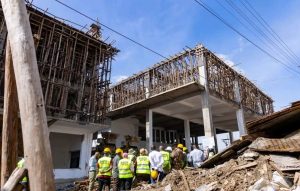
The three-storey Soko Kubwa market is designed to replace congested street vending and provide an organised trading environment.
Its facilities include modern trading stalls, banking and revenue offices, cold-storage units, an information and communications technology hub, a dedicated food court, sanitation blocks, a baby-care and breastfeeding room, as well as parking areas.
The project is 68 per cent complete, according to Housing Director Pascal Oulo, who said the contractor had failed to meet the original completion deadline but had committed to handing over the facility by March next year.
Oulo said the government was addressing challenges facing contractors, including inadequate capacity, delayed payments and difficulties accessing construction materials.
He said a borehole was being drilled at the market to address water shortages, while fire hydrants had been installed as part of measures to improve safety.
The market’s construction has also faced difficulties sourcing adequate supplies of quality ballast and sand.
The inspection team was informed that more than 20 projects in Bungoma were competing for supplies from the same quarry sources in Nzoia and Turbo, putting pressure on the availability of construction materials.
Oulo said Chwele Market was undergoing final finishing works, Naitiri Market had been completed, while Webuye Market was 99 per cent complete.
He said the government was also implementing 24 other projects, providing employment opportunities to young people, with about Sh11 million paid weekly to workers across the sites.
The team, however, was unable to inspect Talanta Stadium in Nalondo after the contractor denied them access and the gates remained locked.
Meo, who was the team leader, said the officers could not establish the project’s actual implementation status because it was not allowed into the facility.
“We were not allowed to enter, and the gates were locked. As we return to Nairobi, we cannot ascertain its status because we were not allowed in,” he said.
Speaking during the same meeting, Bungoma Maendeleo ya Wanawake chairperson Umi Maloba questioned the benefits of the Masinde Muliro Kanduyi stadium to the surrounding community, claiming it lacked water and toilets and that those using the facility accessed it without paying.
The project, jointly funded by the national government and the county government of Bungoma, she said, was in deplorable state despite consuming millions of shillings.
She also called for resources earmarked for the stalled Bungoma Smart City project to be redirected towards equipping Bungoma County Referral Hospital, which she said was struggling to meet residents’ healthcare needs.
In response, Meo said the Smart City project was among the government’s priority investments, but its implementation had been halted by a court injunction obtained by residents opposed to its construction.
He said the government was respecting the court order.
On agriculture, National Cereals and Produce Board manager Mutua Mutunga said Bungoma had distributed 1,257,982 bags of fertiliser under the national e-voucher programme, making it the leading county in the country.
He said about 700,000 farmers had benefited from the programme, which reduced the cost of a bag of fertiliser from Sh7,000 to Sh2,000.
However, Mutunga cited delayed supplies, urea shortages and challenges in serving the large number of farmers as some of the obstacles facing the programme.
He called on the county government to establish last-mile distribution centres to bring fertiliser closer to farmers, particularly those in remote areas.
The inspection exercise was coordinated through the National Government Dashboard System, an online platform used to track projects, monitor implementation and identify challenges requiring government intervention.
Anne Olubendi, an adviser on policy coordination and strategy in the Office of the Prime Cabinet Secretary, said the 51 high-impact projects had been identified through a rigorous process to ensure they aligned with Vision 2030 and the Fourth Medium-Term Plan.
She said the projects had also been incorporated into the Medium-Term Expenditure Framework to facilitate budgetary allocation and implementation.
By Chris Mahandara
Fonte: Kenya News