Compartilhar
Western Kenya harvest drops as drought hits farmers
Farmers in Western Kenya have suffered a 35 per cent drop during this year’s harvest following prolonged dry spells and changing rainfall patterns, raising concerns over food security and the need to adopt climate-smart farming practices.
Eastern Africa Grain Council (EAGC) Chief Executive Officer (CEO) Gerald Musila said satellite-based assessments had established the scale of crop losses in the region, warning that farmers could no longer depend entirely on predictable rainfall to guide their planting seasons.
He urged farmers to embrace drought-tolerant seeds, improved soil management and modern agricultural technologies to protect their crops against increasingly erratic weather conditions.
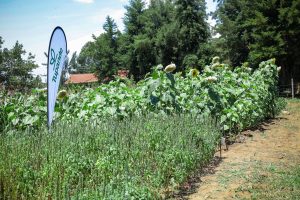
Speaking at Kibabii University during the launch of the North Rift and Western Region Agribusiness Expo, Musila said the council had established demonstration farms at the institution to expose farmers to practical techniques for sustaining production under changing climatic conditions.
The expo, scheduled for October 29 at the university, will bring together farmers, researchers, agribusinesses and agricultural experts to showcase innovations aimed at improving productivity and strengthening food systems.
It will be held under the theme ‘Climate-Smart Technologies and Practices for Sustainable Food Systems’.
“On these demonstration plots, we have seeds that are climate-adapted and are able to perform even if the rains do not come as expected,” Musila said.
He added that the plots also featured conical gardens, intercropping and improved soil preparation techniques that farmers could adopt to maximise production despite unreliable rainfall.
Musila said the EAGC was working with the Food and Agriculture Organization (FAO) and other partners to use satellite data, drone imagery and artificial intelligence to monitor weather patterns, assess drought impacts and generate information to guide agricultural decisions.
The technology, he said, was helping establish the extent of crop losses and provide information that could guide farmers on planting, crop selection and other farm management practices.
“Through this partnership with the Food and Agriculture Organization and other partners, we have been able to produce a number of drought records estimating the losses resulting from harsh drought conditions and informing farmers about the actions they can take given the prevailing climate conditions,” he said.
Musila attributed the decline in Western Kenya’s harvest to unfavourable weather conditions but said better performance in Eastern and Lower Eastern regions had helped cushion the country against a more severe food crisis.
“Because of all the crops we lost during the drought in the Western region, the Eastern and Lower Eastern regions had their long rains well and had a good harvest, and that is why the crisis is not much in the country,” he said.
He said the council was promoting climate-smart agriculture through its network of agricultural hubs, which currently serve more than one million farmers in Kenya.
Its wider regional programmes reach more than three million farmers across Eastern Africa, providing opportunities for sharing knowledge and promoting improved farming practices.
“In Kenya, through the hubs, we are working with over one million farmers to ensure that we spread climate-smart farming practices,” Musila said.
Kibabii University Deputy Vice-Chancellor in charge of Planning, Partnerships, Research and Innovation, Prof. Julius Maiyo, said the partnership with EAGC had strengthened practical training and innovation among students pursuing agriculture-related courses.
He said the demonstration plots allowed students to complement classroom learning with hands-on experience while exploring solutions to challenges affecting farmers.
Maiyo said the university was also developing and promoting the use of emerging technologies, including artificial intelligence, in agriculture, irrigation and sugarcane farming.
He disclosed that the institution had developed an artificial intelligence-based irrigation innovation that uses sensors to monitor soil moisture and trigger watering when levels fall below the required threshold.
The system can send alerts to a farmer’s phone before activating water supply, helping reduce wastage and ensure crops receive water when needed.
Maiyo said the technology would be showcased during the expo to demonstrate how farmers could improve water management, particularly in areas affected by unreliable rainfall.
“That innovation will be showcased during the expo so that farmers can buy into the idea to help them during this difficult moment of climate change,” he said.
Bungoma County Chief Officer for Agriculture Dr. Magrina Mayama welcomed the partnership between the university and EAGC, saying the expo would give farmers an opportunity to learn about new technologies, exchange experiences and establish networks with other agricultural stakeholders.
She said the event would also strengthen collaboration between researchers, county agricultural officers and farming communities, encouraging wider adoption of innovative farming methods.
The organisers said the expo would provide a platform for farmers to identify technologies and practices that could reduce production risks, improve yields and build resilience against climate change.
By Chris Mahandara
Fonte: Kenya News