Compartilhar
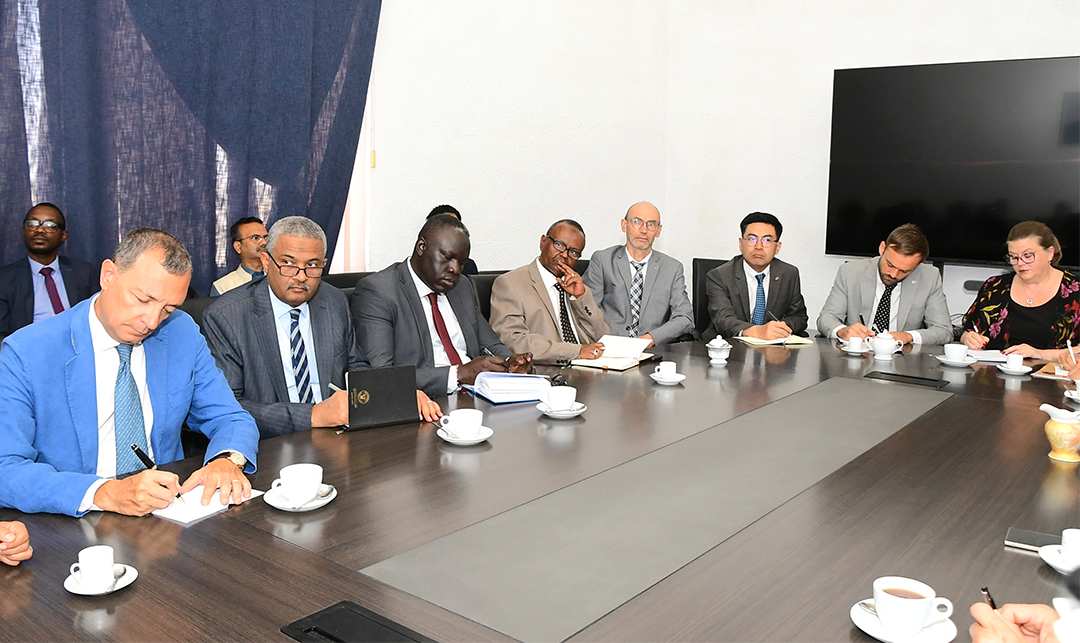
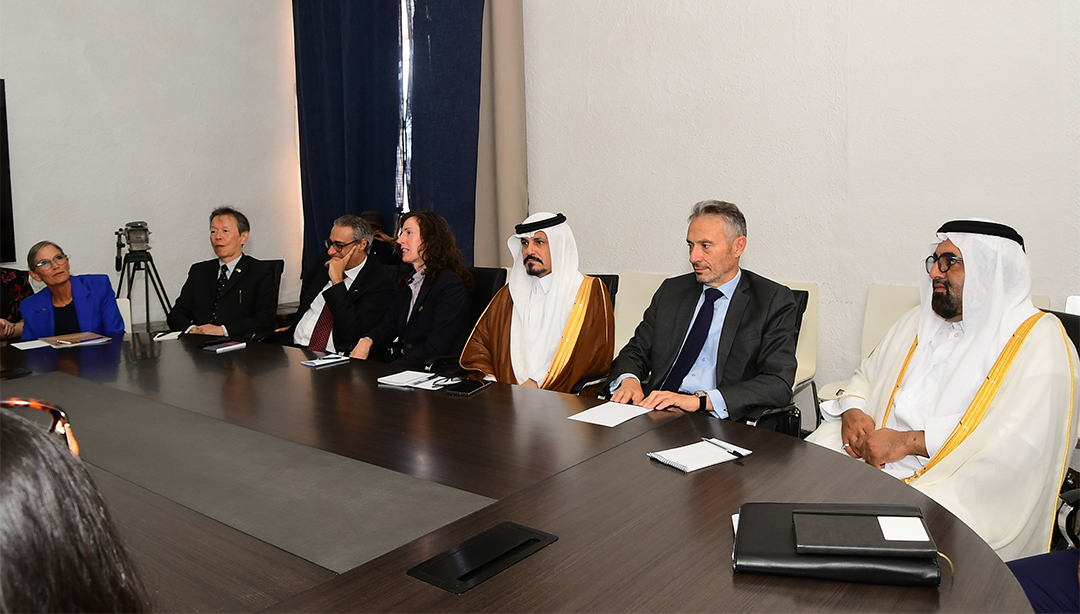
Briefing by H.E. Osman Saleh, Minister of Foreign Affairs, to the Foreign Diplomatic Community in Eritrea
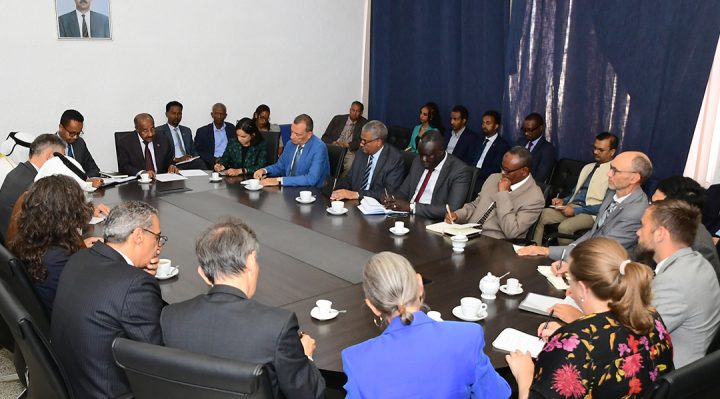
Ambassadors, Chargés d’Affaires,
Distinguished United Nations Resident Coordinator,
Ladies and Gentlemen,
Before proceeding, I wish to note that the Advisory Committee on Human Rights has fully briefed me on the substantive consultations recently held with representatives of the European Union, Member States, and the broader diplomatic community in Asmara and Geneva that are members of the human rights council. These exchanges provided Eritrea with a renewed opportunity to articulate its principled position regarding the country-specific mandate of the Special Rapporteur.
Accordingly, I do not intend to revisit arguments exhaustively presented over the past fourteen years. Rather, my focus today centers on the broader political, institutional, and fiscal implications of maintaining a mechanism that has long ceased to serve any constructive purpose, and has instead become a persistent obstacle to mutually beneficial relations between Eritrea and the European Union and the international community.
While we welcome the opportunity to engage with international partners on issues of mutual interest, Eritrea remains committed to interactions anchored on the tenets of sovereign equality, mutual respect, non-interference, and genuine cooperation. For fourteen years, Eritrea has maintained a consistent, principled stance across the Human Rights Council, the General Assembly, and bilateral channels. Our position is settled. Continuing engagement bilaterally on the Special Rapporteur yields no constructive utility, and we will no longer expend diplomatic capital or finite institutional time debating a mechanism whose continuation has evidently become an end in itself.
The mandate has evolved into a textbook case of institutional inertia and a recurring political ritual. This ongoing campaign has inflicted severe reputational damage by broadcasting a distorted, one-sided narrative through official United Nations channels, manufacturing a false global perception that overshadows our domestic realities. It has acted as a clearinghouse for state-sponsored defamation, inciting external hostility and systematically polarizing international forums. Furthermore, by painting Eritrea as a volatile, high-risk state, it has artificially stifled the country’s tourism investment climate, deterring foreign direct investment and impeding economic development.
Alarmingly, while the Human Rights Council consumes time and resources over this artificial mandate, it remains deliberately blind to genuine security threats massing on Eritrea’s borders.
Senior figures within Ethiopia’s ruling party are actively mobilizing heavy military formations along our sovereign borders and utilizing international platforms to deliver dangerous lectures targeting Eritrea’s sovereign coastal territories, seeking to normalize the reckless idea that sovereign boundaries in the Horn of Africa are negotiable under the guise of “maritime imperative.”
Equally concerning is the profound financial burden this mandate imposes. For fourteen consecutive years, the Human Rights Council and the OHCHR have funneled substantial financial and institutional resources into a failed mandate. The millions of dollars in cumulative Programme Budget Implications represent a significant expenditure of scarce UN resources at a time of acute liquidity constraints.
A rigorous evaluation underscores the stark opportunity cost of this institutional waste:
- The upwards of 8 million US dollars (more than 120 million Eritrean Nakfa) squandered on this bureaucratic exercise could have been directed toward actionable cooperation or national capacity-building.
- Under Eritrea’s self-reliance model, an equivalent resource pool has successfully funded over 40 complete, solar-powered regional water networks, securing clean water for more than 100,000 citizens in 2021-2025, alongside vital hospital reconstructions.
The pen-holders face a definitive choice: they must choose between encouraging the financing of endless, sterile political confrontation or supporting tangible, state-led capacity building that directly enhances the lives of our people.
Let me dispel a persistent misconception: Eritrea does not reject engagement with the international human rights system. We remain fully committed to fulfilling our obligations through the Universal Periodic Review (UPR), treaty body mechanisms, and consensual technical cooperation, universal, cooperative instruments predicated on equal participation and consent. What we reject is the politicization and selective targeting of that system.
Therefore, the Government of Eritrea considers the debate over the legitimacy and utility of the Special Rapporteur’s mandate to be permanently closed. The choice now rests with our partners. If they seek a mature, forward-looking relationship with Eritrea, it must be prepared to transcend the confrontational, country-specific mechanisms that have demonstrably failed. Eritrea stands ready to deepen cooperation through dialogue founded on sovereign equality and technical partnership, not through politicized instruments that have long exhausted their credibility.
Thank you.
Fonte: Shabait