
Compartilhar
Dr. Kiyonga explains how health can drive Uganda’s $500bn dream
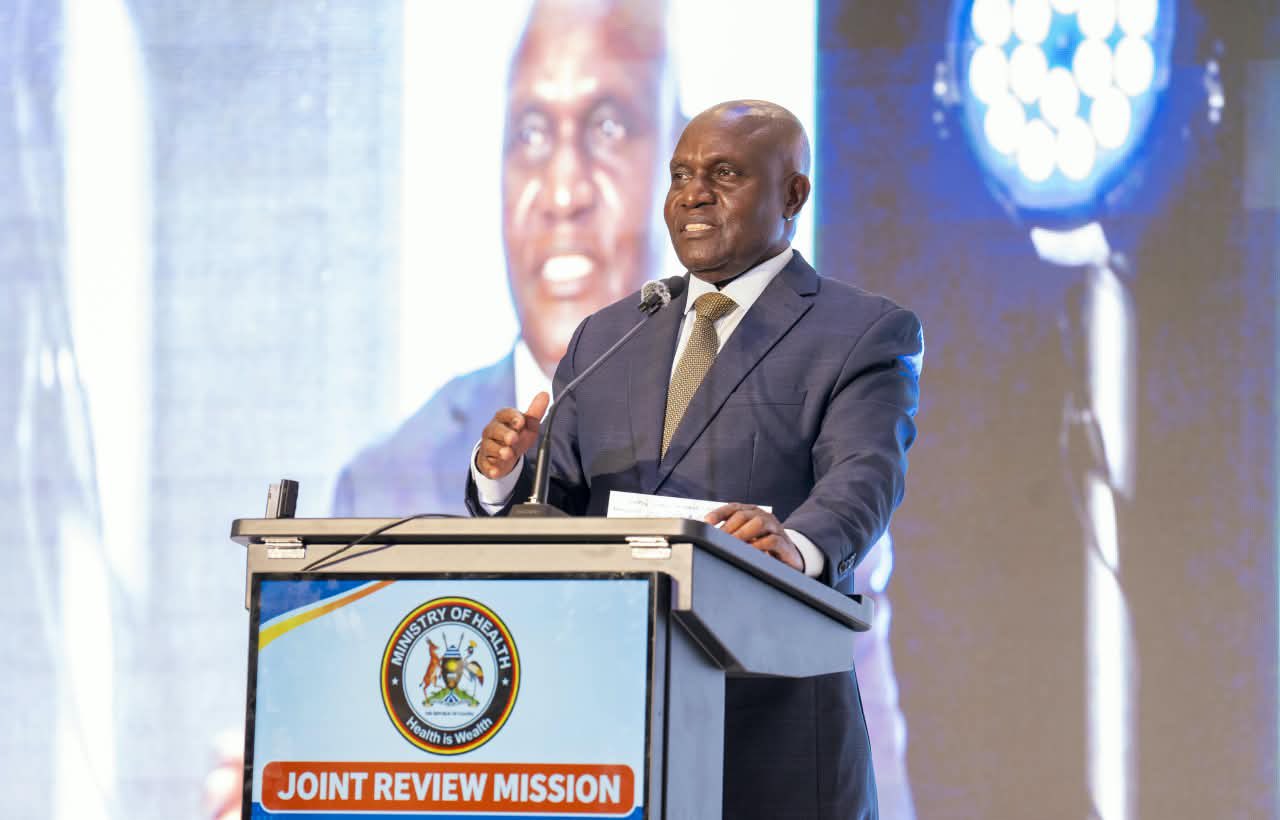
By Communications team
MUNYONYO
The 2nd Deputy Prime Minister, Rt. Hon. Dr. Chrispus Kiyonga, has said that further investment in universal access to health will significantly contribute to Uganda’s ambition of growing the economy to $500 billion by 2040.
He noted that while the tenfold growth strategy rightly prioritises agro-industrialisation, tourism, minerals, including oil and gas, and science, technology and innovation, the health sector is key to its realisation.
“In agriculture and agro-industry, preventing illness and disability helps households sustain production and earnings, while health and agricultural extension teams can work together on risks such as zoonotic disease,” Dr. Kiyonga said during the 32nd Health Joint Review Mission meeting at Speke Resort Hotel in Munyonyo, Kampala, on Wednesday.
For tourism, he stated that dependable emergency services, food safety and outbreak preparedness protect visitors, workers and Uganda’s reputation. “We have seen how a single outbreak can close markets and keep visitors away,” Dr. Kiyonga added.
Regarding mining, oil and gas, and industry, he said that occupational health, injury prevention, emergency referral and environmental protection should develop alongside production.
Rt. Hon. Dr. Chrispus Kiyonga in a group photo alongside Hon. Chris Baryomunsi, the Minister of Health, and senior technical staff in the Ministry of Health
On science and technology, Dr. Kiyonga said Uganda needs to strengthen digital health, research, diagnostics and the local production of quality-assured medical products, keeping both jobs and money at home.
Parish Development Model
He noted that the Parish Development Model presents an opportunity to connect household economic advancement with prevention, nutrition, sanitation and access to care.
Dr. Kiyonga, who held the ministerial portfolios of finance and health between 1996 and 2001, called for deeper integration of health services, enabling patients to obtain a comprehensive range of services and health workers to use their skills effectively. This also means, he said, that managers can plan across services with a clear picture of available resources.
Dr. Kiyonga noted that the decentralisation of health services in the 1990s and the abolition of user fees in public health facilities in 2001 had significantly increased access to healthcare.
He called for policies and actions that will advance universal health coverage and build a sustainable health system that can power the tenfold growth strategy.
“A strong health system will help Ugandans learn, work, care for their families and take part in the opportunities created by economic growth,” Dr. Kiyonga said. “It will also ensure that the benefits of that growth reach those whose health needs might otherwise leave them behind.”
Fonte: Office of the Prime Minister


