Compartilhar
“Eritreans are not only patriotic, but they are also Authentic” Ambassador Perseverance Mbuzeli
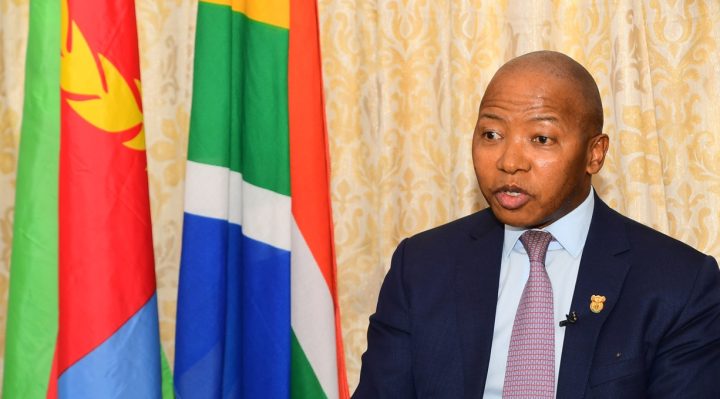
After nearly six years as South Africa’s Ambassador to Eritrea, Ambassador Perseverance Mbuzeli Kumsha is concluding his diplomatic mission with a profound sense of fulfillment and mutual respect. Throughout his tenure, he focused on strengthening bilateral and cultural ties, and he highly praised the resilience, self-reliance, and rich heritage of the Eritrean people. Ultimately, his reflections highlight a deeply fulfilling journey rooted in mutual respect, shared African unity, and a lasting commitment to regional cooperation between South Africa and Eritrea. Eri-TV’s Rafael Giuseppe and the Profile team sat down with Ambassador Kumsha for a farewell interview. Below are excerpts.
* * *
As you conclude your tenure as South Africa’s Ambassador to Eritrea, how would you characterize the current state of bilateral relations between our two countries? What do you consider to be the most significant developments achieved during your time here?
Thank you very much for the question. I wish to take this opportunity to thank you for coming as I am wrapping up my term of duty in the State of Eritrea, with immense gratitude for the years that I have spent, and for the hospitality that I have enjoyed, which has been extended to me by the authorities and the people of the State of Eritrea.
Over the past ten years, I can say that so much has been achieved. We have achieved unparalleled success, particularly in the field of diplomacy. Political relations between the two countries and their bilateral relations have reached a high level. We recall that, since my arrival, we have engaged at a high level between South Africa and Eritrea, particularly through the visit by the Deputy Minister of International Relations of South Africa to the State of Eritrea in October 2025. This was a culmination of many other engagements that have taken place at both cultural, people-to-people, and educational levels as well. So, I can characterize it as a very successful ten years. And there is still more to be done, and I am hoping my successor will follow suit.
Eritrea and South Africa share a history of liberation struggles. The late President Nelson Mandela’s granddaughter, Ms. Nandi Mandela, recently visited Eritrea, noting that the two countries are “peers” with immense potential to drive economic liberation on the continent. How does the vision of “trade, not aid” and building equal partnerships guide the work of the South African mission in Eritrea?
Ms. Nandi Mandela was here about a month ago and indeed visited various parts of the country. She toured several projects, including agricultural initiatives and infrastructure development, and met with various sectors of society. What we can regard as the most successful part of her visit is that she spoke directly to what we, as the governments of South Africa and the State of Eritrea, want to achieve. We don’t believe in aid; we believe in trade. This has always been the policy championed by Nelson Mandela, and it is a path I wish the current government of my country were still pursuing.
We believe in equal partnerships; we believe in smart partnerships. We do not believe in developing a culture of handouts. Consequently, the prospects for developing strong economic ties and potential collaborations between the Republic of South Africa and the State of Eritrea are massive and incredibly bright. I believe Eritrea stands to benefit greatly from South Africa’s strengths in both small-scale and heavy industries. We can establish it in the spirit of South-South cooperation, within the framework of the African Union, and through a thorough understanding of the concept of regional integration. While South Africa is in the south and Eritrea is in the northeast of the continent, we believe there is ample work we can do together. Eritrea is a model of functioning self-reliance; we have seen this reflected in its significant achievements in agriculture, sanitation, and small-scale, homegrown businesses. Similarly, we are doing our best to empower our own people in South Africa, especially those who are historically disadvantaged. Given our shared history and our commitment to empowering and restoring the dignity of our people, there is a tremendous amount we can achieve together.
From your perspective, which sectors are most promising for expanding economic cooperation between Eritrea and South Africa? We have seen discussions around agriculture and infrastructure. What concrete opportunities for South African investment and knowledge exchange do you foresee in the near future? What about coordination between the two countries in regional and international forums?
First, let me start with mining. Eritrea possesses a huge potential in the mining sector. Given South Africa’s long and rich history of mining, we stand a good chance of collaborating, cooperating, and joining hands to support each other’s economies.
We believe that the mining sector is key, as is the energy sector and, of course, infrastructure development on all levels, small, medium, and large-scale. This would include, for instance, the possibility of refurbishing and developing ports, where there is huge potential, as we are already active in Africa and in some parts of the world outside Africa. Beyond ports, there is also rail and road infrastructure. We possess immense potential in these areas, and we believe Eritrea can truly benefit from them.
When it comes to coordination in regional and international forums, we already have a mechanism in place; we need to strengthen it, particularly as we move from bilateral to multilateral frameworks, and from a single state to a broader region. South Africa is a very active member of SADC (the Southern African Development Community) and similarly plays an active role in the African Union. In this regard, we strongly believe that, because Eritrea is championing and encouraging the concept of regional integration, we have much to work on together.
His Excellency, the President of the State of Eritrea, is very passionate about regional integration, a point I know well because he emphasizes it during my interactions with him. There are no limits to South Africa and Eritrea working together as regional partners to expand and strengthen the institutions of the African Union and other multilateral forums. In this respect, I believe that, as far as trade and investment are concerned, we can establish highly useful platforms for the two nations to ensure that, from down south to the northeast, the east, and the Horn of Africa, we find common ground. Together, we can work to establish a very vibrant regional economic integration.
Internationally, yes, there are challenges. As part of the developing world, we face inequality, as we are not necessarily on an equal footing with developed countries, particularly in the UN Security Council and other UN institutions. For this reason, we call for the reform of the United Nations. We believe it needs a comprehensive review to benefit the majority of the world’s citizens. We must be considered equal partners in a multilateral setting. No country is small; all nations are equal.
Beyond government-to-government relations, what is the state of people-to-people ties between Eritrea and South Africa? Are there opportunities for greater cultural exchange, academic collaboration, or sporting engagements that could further strengthen the bonds between our peoples?
Perhaps you are aware that there is currently a UNDP program through INISA aimed at empowering the education sector in Eritrea, specifically within the justice department. It is working very well. Two years ago, there was a very important and remarkable graduation ceremony for several Eritrean judges who earned Master’s and junior degrees in international law and various fields of legal practice. We believe that something significant is already happening, and we are very proud of what we have established in this part of the education sector.
Similarly, we collaborate across various agricultural sectors, with our government providing opportunities for Eritreans to undertake advanced courses in food security through the University of Pretoria. We also collaborate on maritime-related matters, specifically the blue ocean economy; we have senior officials from the ministry who have undergone training at Rhodes University. Additionally, an exchange is taking place between our Department of Environmental Affairs in South Africa and the Ministry of Fisheries in Eritrea. Through this, we are exploring and learning a lot in terms of organic fertilizers, an area where Eritrea is making great strides in innovation and creativity, and we believe we have much to learn from that as well.
Furthermore, we have been promoting people-to-people relations through cultural exchanges. Last year, during Eritrea’s independence celebrations, the cultural troupe Umoja from South Africa performed. The reception they received was very impressive, and they look forward to returning to interact and continue this cultural exchange. Similarly, we are exploring cooperation in sports, particularly cycling. Eritrea is a cycling nation, and we are a cycling nation as well, making it another fantastic area where we can promote this people-to-people partnership.
In addition, there are a large number of Eritreans doing business in South Africa. In our experience, they know how to mingle and integrate smoothly with South Africans because they possess a strong social foundation for understanding other societies. We have not encountered any negative challenges with Eritreans, and we can continue to improve our people-to-people interactions through these various avenues.
Based on your experience, what is the most striking aspect of Eritrea that you believe outsiders often misunderstand? What will you take away from your time here, particularly in terms of the national development projects and the spirit of its people?
The first thing I can highlight from a highly positive perspective is that Eritreans are deeply patriotic. I discovered and learned that they are not only patriotic but also authentic. During my time here, I have interacted quite extensively with Eritreans from all walks of life,
including young people, students, women’s associations, workers, and veterans. That is why it is so easy and possible for me to call Eritrea my second home; the values Eritrea holds are very similar to those of South Africa. Therefore, in this regard, my takeaway about this country is that it has massive potential, a great potential that is still waiting to be fully harnessed, and something we can achieve jointly.
I have also interacted quite extensively and broadly with the government and senior government officials, including ministers. Similarly, the people of this country have shown immense love and admiration for South Africa. Because of this, I truly believe that we can reach greater heights in achieving our common goals for both nations.
What would be your final message to the people and government of Eritrea? What is your hope for the trajectory of Eritrea-South Africa relations in the years to come?
As I said earlier, the prospects for progress, development, and a smart partnership between these countries and their people are ever-bright. My message to Eritreans is simple: keep doing what you are doing. We are learning from you and exchanging ideas, so keep moving forward. We know we have our own challenges, but if we work together, we can overcome them.
You have allowed me to understand your country, and I leave with a sense of achievement and fulfillment. I leave knowing that this is a journey we still have a mutual responsibility to undertake together. South Africa is there for you, and the bilateral relations that exist between our countries can only spiral upward, not downward. This great partnership between Eritrea and South Africa is alive with incredible possibilities. That is exactly what I would say.
Fonte: Shabait