Compartilhar
Integrating Skills for Digitalized Future to improve Healthcare Service
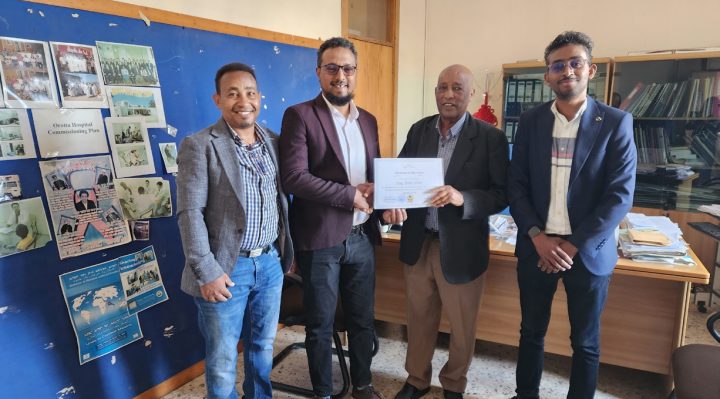
Nuru Abdu Ahmed, a pharmacist, and Bilal Adem Shelogay, a computer engineer, have recently developed an Android mobile application. Here, they talk about their initiative and future plans.
* * *
Would you introduce yourselves?
Nuru Abdu Ahmed – I graduated with distinction from Orotta College of Medicine and Health Sciences on December 19, 2020. I am now serving as a Formulary Process Officer in the Medicines Information Services Unit, Pharmacy Services Division, Department of Medical Services at the Ministry of Health. My core duties involve drafting Standard Treatment Guidelines, developing the National Formulary Manual, and revising the Eritrean National List of Medicines (ENLM), serving as secretary of the Review Subcommittee for the latest edition. In addition to my duties at the Ministry of Health, I work as a medical researcher and have had 20 peer-reviewed publications in international scientific journals.
Bilal Adem Shelogay – I have a Bachelor’s degree in Computer Engineering and am an IT professional. I have had 11 years of professional experience at Eritrea Telecommunications Services (ERITEL), working at the Internet Service Provider (ISP) section. My career has provided me with extensive experience in telecommunications and information technology, particularly internet services and network operations.
I have a lot of interest in software development, digital innovation, and entrepreneurship. I am committed to leveraging technology to develop practical solutions and contribute towards business growth and the advancement of the information and communications technology sector in Eritrea.
Nuru, let’s talk about the history of the ENLM (Eritrean National List of Medicines) and the development of the ENLM application.
The conceptualization of an essential medicines list in Eritrea started way back in 1983, during the liberation war, when the Department of Health of the Eritrean People’s Liberation Front (EPLF) drafted the initial Basic Drugs List to standardize prescription practices and manage the limited supply lines. In 1988, senior healthcare professionals formally endorsed this initiative, laying the groundwork for post-independence policy. Following Eritrea’s liberation in 1991, it was formalized as the Eritrean National List of Medicines, with the first edition published in 1993 and getting revised periodically ever since.
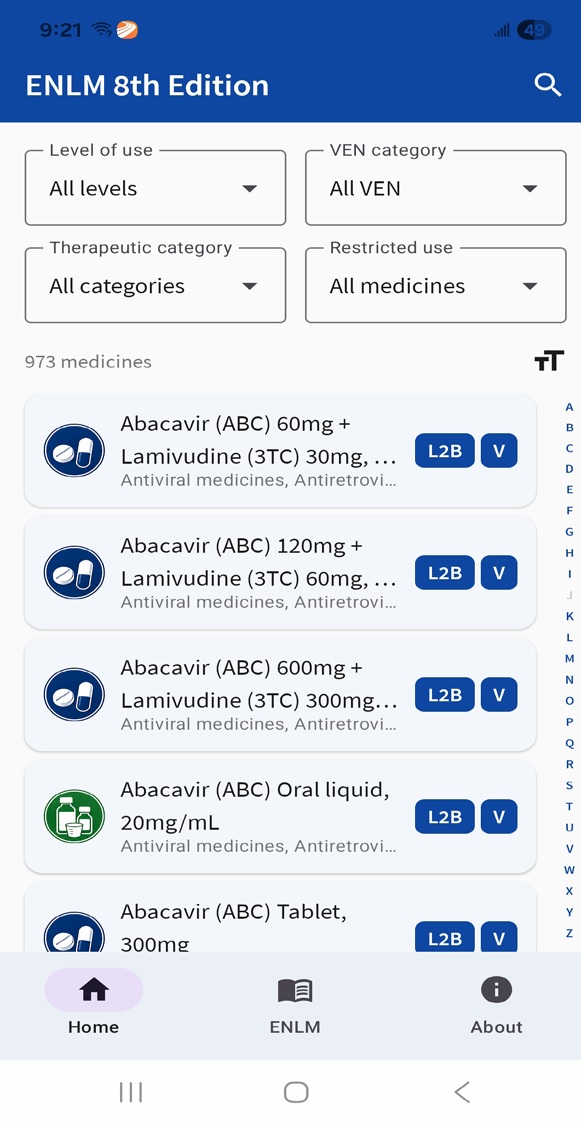
The revision process for the current [eighth] edition was finalized in 2024 to update medicine additions and deletions, revise levels of use, refine the Vital, Essential, and Necessary (VEN) classification, and align with modern therapeutic priorities. The list serves as a legal instrument governing procurement, manufacturing, prescribing, and dispensing. It categorizes medicines by level of use and therapeutic class while applying the VEN framework for optimal resource allocation.
Digitalizing the formulary process and key reference documents has long been a priority for the Pharmacy Services Division of the Ministry of Health. Although initial digital concepts were explored during the publication of the seventh edition, they were never fully deployed. The eighth edition addresses previous challenges, marking the development of an official, offline Android mobile application that has been nationally distributed. This initiative and the lessons learned along the way will lead us directly toward achieving the Division’s long-term ambitions.
Working alongside computer engineer Bilal Adem and Medicines Information Services Unit Head Mr. Tesfamariam Alem, we invested our expertise to structure the application to make it user-friendly for healthcare professionals, suggested custom icons for distinct dosage forms, and designed the official application icon. The application was continuously refined following valuable feedback from the staff of the Pharmacy Services Division and various other Ministry of Health stakeholders. This project was carried out entirely free of charge through local volunteer experts, reflecting a strong commitment to building home-grown digital healthcare solutions.
Nuru, what is the significance of developing the ENLM app.?
Digitalizing national pharmaceutical reference tools represents a vital step toward modernizing healthcare delivery across the country. Transitioning from static paper manuals to a mobile interface gives point-of-care healthcare professionals immediate access to official national medicine lists. Designing the application for offline functionality ensures easy and reliable access to the ENLM.
Furthermore, featuring clear level-of-use indications, prioritization categories (VEN), and explicit restriction warnings help ensure the rational use of medicines. By visually displaying alternative medicines within the same therapeutic category, healthcare professionals can easily identify suitable substitutes during stakeouts, maintaining continuity of patient care.
Bilal, what is the role of digitalization in the Medical Sector?
Digitalization is essential for development as it improves efficiency, transparency, and accessibility across different sectors. By adopting digital technologies, organizations can streamline operations, reduce costs, improve decision-making, and deliver better services. It also creates opportunities for innovation, economic growth, and improved quality of life.
In the medical sector, digitalization plays a vital role in improving the quality, efficiency, and accessibility of healthcare services. Digital systems help healthcare professionals manage patients’ records, medicines, medical supplies, and clinical information more effectively, reducing errors and supporting informed decisions. By strengthening information management and coordination, digitalization contributes to safer patient care and a more efficient healthcare system.
Bilal, let’s talk about your input in developing this ENLM app.
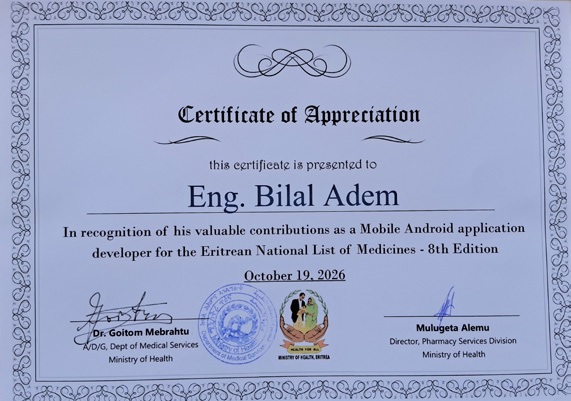
I developed an offline mobile application to improve access to the latest edition of the national list of medicines for healthcare professionals. The application provides a convenient, searchable, and well-organized digital reference, enabling users to find medicines, explore their category, and consult official medical documentation without an internet connection. Designed with usability and practical healthcare needs in mind, it simplifies information retrieval, supports medicine selection and procurement activities, and demonstrates how digital solutions can improve ease of access to reliable medical information and strengthen healthcare services.
Nuru and Bilal, what were your challenges in developing this app?
Developing and deploying a national health application within the public health system presented several operational challenges. Structuring extensive and multi-layered data into a clean, clutter-free mobile interface required careful database modelling and continuous testing to ensure the app remained intuitive for end-users. Besides, relying on voluntary expertise meant balancing development milestones alongside routine official workloads.
Nuru, what are the future plans?
Looking ahead, the Ministry of Health aims to expand this digital foundation by updating and digitizing the National Formulary Manual to provide detailed monographs containing information on dosage and indication, pharmacology, adverse effects, contraindications, and clinical precautions. Future updates will also incorporate interactive clinical tools directly into mobile platforms, such as automated drug interaction checkers and dose calculation features for paediatric care. Furthermore, digitizing updated national Standard Treatment Guidelines will provide healthcare professionals with real-time, disease-specific diagnostic and therapeutic algorithms at the bedside. Unifying these reference tools within accessible mobile applications will harmonize clinical practice, optimize resource utilization, and strengthen rational medicine use across all levels of healthcare.
Nuru and Bilal, do you have any other message you would like to put across?
Embracing digital transformation is essential for modernizing institutional workflows and improving public service delivery. We encourage all sectors and national institutions to prioritize the digitization of their standard operating procedures, guidelines, manuals, and operational datasets into user-friendly mobile applications and structured databases. Building offline-capable digital platforms ensures seamless information access, improves operational compliance, and elevates service quality. Investing in local technical capacity and user-centered technology will serve as a cornerstone for long-term institutional growth across the nation.
Pharmacist Nuru and Engineer Bilal, thank you for your time and contribution. We are looking forward to your future successes.
Fonte: Shabait